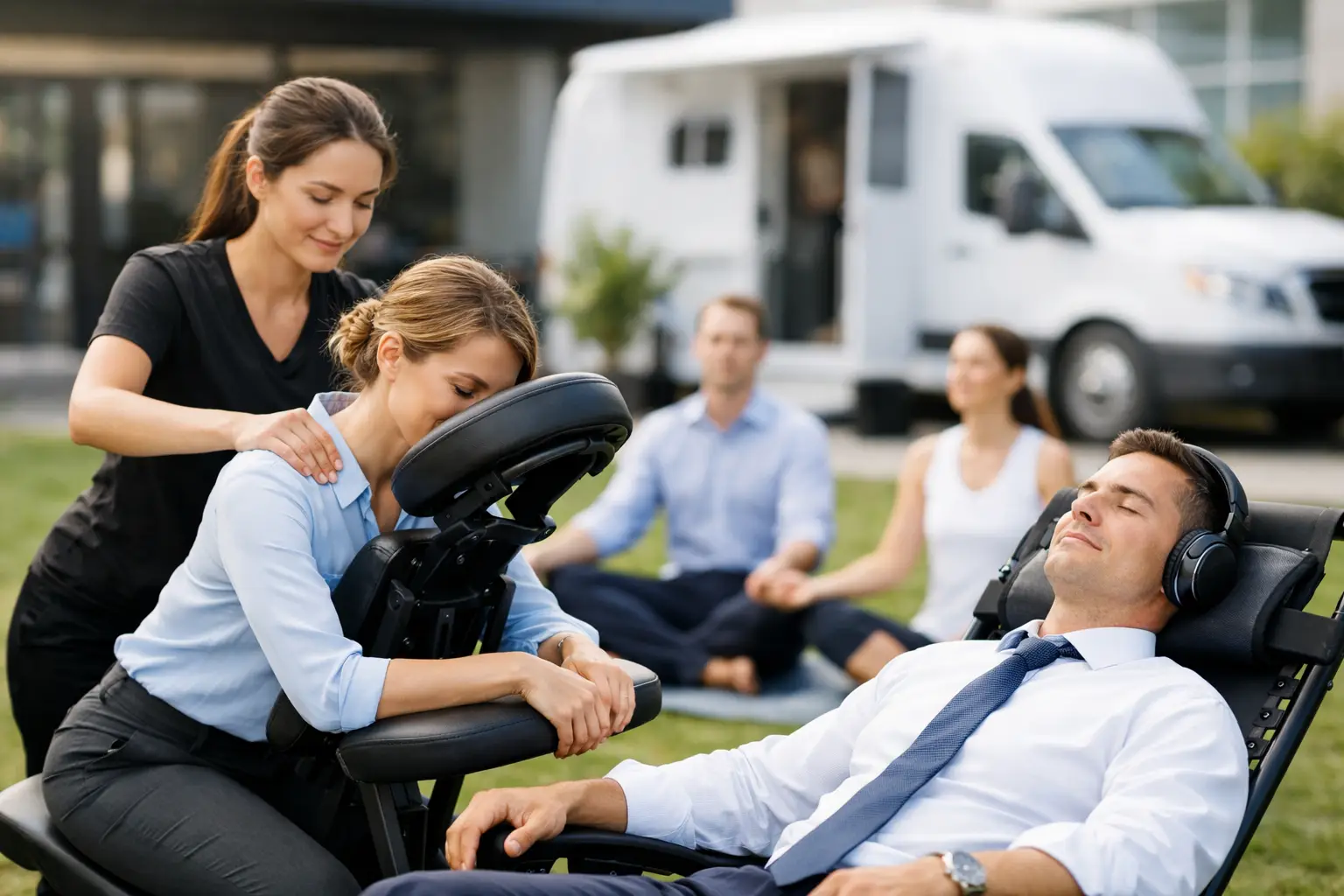
The energy of a corporate event can change quickly. A full-day conference leaves delegates stiff from theatre seating, a leadership retreat can run on adrenaline, and a client activation needs more than good coffee to feel genuinely considered. Mobile wellness for corporate events brings qualified practitioners and tailored treatments directly to the venue, giving guests an easy, restorative pause without disrupting the day.
For organisers, this is not simply a pleasant extra. Well planned wellness can help people feel welcomed, cared for and ready to re-engage. The difference lies in choosing treatments, timing and delivery that suit the event rather than adding a generic massage station at the last minute.
Why wellness earns its place at corporate events
Corporate hospitality is often judged by the details people remember after the name tags come off. Guests may forget the morning tea, but they remember a thoughtful moment that helped them reset between sessions or recover after travel.
Massage and complementary therapies create that moment in a practical way. A short seated massage can ease the neck, shoulders and upper back that tighten during long meetings. A longer treatment in a private room may suit executives, speakers or travelling guests who need dedicated recovery time. For an employee wellbeing day, a calm treatment area can signal that the business values people beyond their output.
There is also an operational benefit. Event programmes are demanding, especially when delegates are moving between presentations, networking, meals and off-site activities. A mobile service removes the need for guests to find a clinic, arrange transport or sacrifice a large part of their evening. The treatment comes to where it is needed, fully equipped and ready to deliver.
Mobile wellness for corporate events: choose the right format
The most effective format depends on the purpose of the event, the venue layout and the amount of time guests can reasonably spare. The best option is not always the longest treatment. A high-volume conference may benefit most from efficient chair massage, while a small leadership offsite may call for individual full-body sessions.
Seated massage for busy programmes
Seated massage is ideal when people have 10 to 20 minutes between sessions. The practitioner works through clothing using a purpose-designed chair, focusing on common tension areas such as the back, shoulders, arms, hands and scalp. It requires comparatively little space, keeps the schedule moving and suits conferences, trade events, office activations and staff appreciation days.
Because it is visible and accessible, seated massage can also create a positive sense of activity around a wellness zone. However, placement matters. It should feel inviting without putting guests on display in a noisy thoroughfare. A quieter corner with clear signage and a simple booking system will usually lead to a better experience.
Table massage for deeper restoration
For retreats, premium client events and multi-day conferences, table massage offers a more private and personalised treatment. Relaxation, remedial, deep tissue and sports-focused massage can be adapted to each guest’s comfort, physical condition and goals.
A treatment room, suite or screened area is necessary, along with enough time for guests to settle in and return to the programme without rushing. This format serves fewer people than seated massage, but it can deliver a more substantial recovery experience. It is particularly valuable for keynote speakers, senior leaders, event hosts and business travellers arriving with the effects of long flights or demanding schedules.
Recovery-focused add-ons
Some events have a distinctly physical element. Team challenges, golf days, sporting hospitality, product launches with long standing hours and wellness retreats may suit recovery-focused therapies alongside massage. Depending on the brief, this can include targeted bodywork, compression-style recovery support, PEMF or vibroacoustic therapy.
These options should be selected with care. They are not a substitute for medical assessment, and they will not suit every attendee. A professional provider will use a clear consultation process, respect contraindications and guide guests toward the most appropriate treatment for the time available.
Design the experience around people, not just the run sheet
A successful wellness activation begins before practitioners arrive. Start by identifying who the service is for and what you want them to feel. Is the aim to reward an internal team after a demanding quarter? Help interstate delegates recover? Create a memorable premium touchpoint for clients? The answer shapes every decision that follows.
Then consider the practical flow. Short treatments work well with advance bookings plus a small number of walk-in appointments. Advance reservations give guests certainty and help organisers manage demand, while walk-ins keep the experience relaxed for those who decide on the day. For smaller groups, a personalised schedule can be arranged around meetings, meals and travel plans.
Privacy, sound and temperature deserve as much attention as the treatment menu. A room beside a loud stage, a corridor with constant foot traffic or a space that is too cold can undermine even the best massage. A quiet, comfortable area with adequate room for equipment allows guests to switch off properly. Where a dedicated room is not possible, screens, soft lighting and thoughtful positioning can make a meaningful difference.
It is also wise to communicate the service clearly. Guests should know the treatment duration, whether they remain clothed, how to book and what to expect when they arrive. Clear information helps people feel at ease, particularly those trying massage for the first time.
What reliable delivery looks like
Corporate events carry a lot of moving parts, so wellness should reduce complexity rather than add to it. Look for qualified practitioners who are experienced in adapting their approach across workplaces, hotels and event venues. They should arrive with the required equipment, manage their setup professionally and provide treatments that feel polished from the first guest to the last.
Consistency matters when your brand is hosting the experience. Practitioners need the clinical judgement to tailor pressure and technique, as well as the warmth to make each person comfortable. They also need to work within the event environment, respecting timing, dress standards, venue requirements and guest confidentiality.
This is where an established mobile provider offers real reassurance. Rejuvenators has spent 30 years delivering professional bodywork and wellness services across homes, workplaces, hotels and event settings, with more than one million clients served. That experience supports the calm, dependable delivery organisers need when the guest experience is on the line.
Set realistic expectations for impact
Wellness at an event is most valuable when it is positioned honestly. A 15-minute seated massage can provide a welcome reset and help ease everyday muscular tension, but it is not designed to resolve a complex injury. Likewise, a recovery session may help someone feel more comfortable after travel or activity, yet it is not a replacement for medical care.
The goal is to offer thoughtful, personalised support within the reality of the event. Some guests will want quiet relaxation; others will prefer focused work on tight shoulders or tired legs. Giving people that choice makes the experience feel more considered than a one-size-fits-all perk.
Budget also affects the right approach. If your priority is reaching the greatest number of attendees, shorter rotating sessions are often the strongest investment. If the event is small and relationship-led, fewer, longer treatments may create greater value. A blended model can work well too: chair massage for the wider group, with private appointments reserved for VIPs or speakers.
A corporate event asks a lot of the people in the room. Giving them a chance to pause, recover and feel looked after can change the tone of the entire day. When the service is tailored to the venue, audience and programme, wellness becomes more than an amenity – it becomes part of the hospitality people carry with them after the event ends.