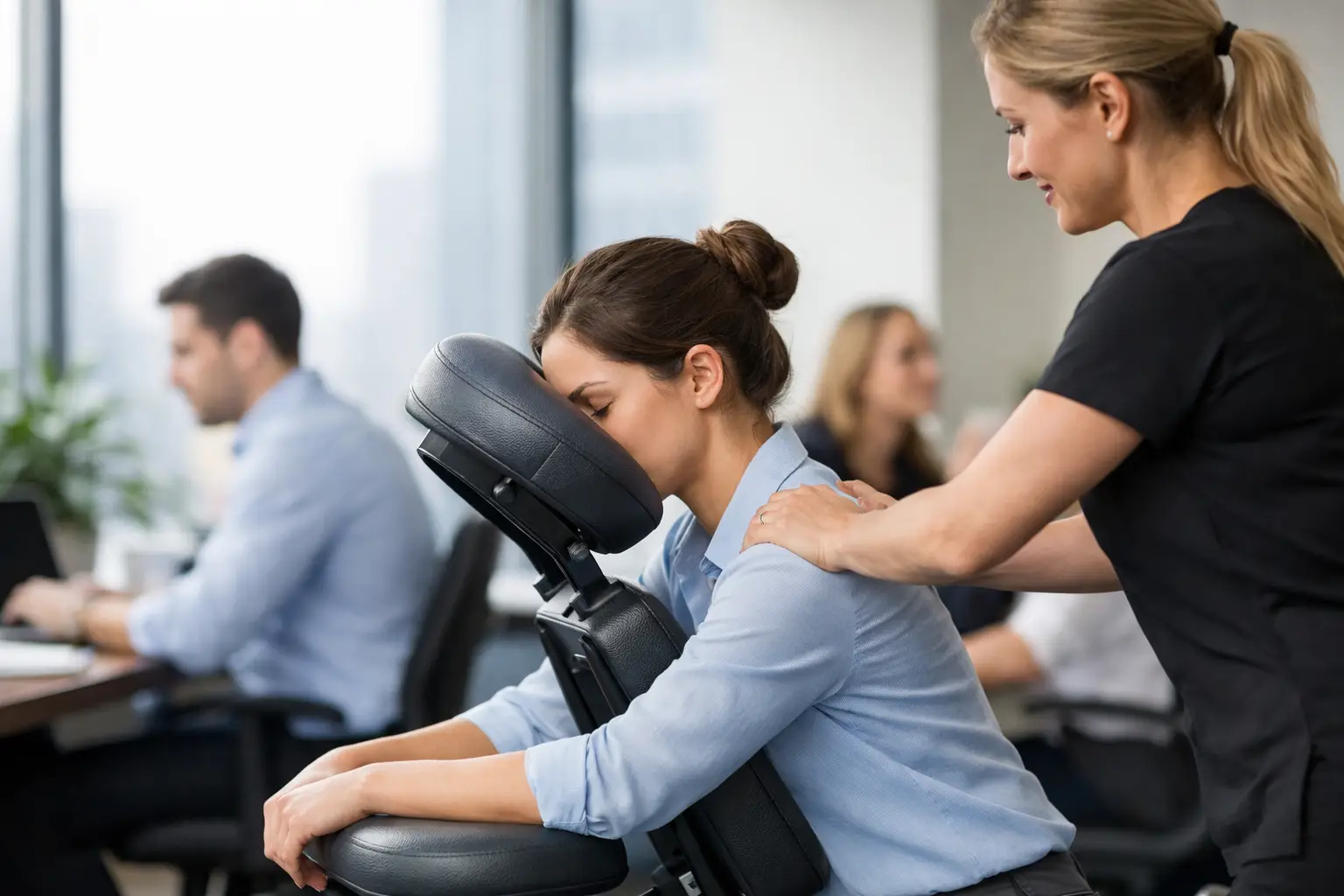
There is usually a point in the workday when posture starts to slip, shoulders creep up and concentration drops off. In many offices, that point arrives well before afternoon. Corporate massage for employees is one of the few wellbeing initiatives that addresses the problem where it actually happens – at the desk, in the meeting cycle and inside a workload that rarely pauses.
For employers, the appeal is not just that massage feels good. It is that a well-run workplace treatment program can support comfort, focus and recovery without asking staff to travel, rearrange their evening or commit to a long-term wellness plan they may never use. For employees, it offers immediate relief in a format that respects time and privacy. That combination is why corporate massage continues to hold its place as a practical benefit rather than a passing perk.
Why corporate massage for employees gets attention
Most workplace discomfort is not dramatic. It is cumulative. Hours at a laptop, repeated mobile use, long commutes, event days on your feet or back-to-back calls can all lead to tension through the neck, upper back, shoulders, forearms and lower back. Add stress on top and the body starts to stay switched on for too long.
Corporate massage for employees responds to both physical strain and nervous system load. Even a short session can help reduce the sense of tightness that builds through the day, while also giving the mind a clear pause. That matters because staff do not always need a major intervention. Often they need a timely reset that helps them feel more comfortable and more capable of finishing the day well.
There is also a visible cultural benefit. When an employer invests in wellbeing in a way that is easy to access, it signals care in practical terms. Not slogans, not a policy tucked away on an intranet, but something real that staff can experience. That tends to land well, especially in teams managing sustained pressure.
What good workplace massage actually looks like
The strongest programs are not improvised. They are structured, calm and simple to use. Practitioners arrive fully equipped, sessions run to schedule and treatments are adapted to the environment and the individual. In some workplaces that means short seated massage rotations for a larger group. In others, it means table-based treatments in a private room for deeper relief.
The right format depends on the goal. If the business wants broad participation during a team wellness day, shorter sessions can work well. If the aim is to support executives, travelling staff or teams carrying a heavy physical load, longer treatments may be more effective. There is no single best option. It depends on the space available, the number of employees, the nature of the work and whether the focus is morale, recovery or both.
A premium mobile provider makes this easier because the service comes to the workplace rather than asking the workplace to fit around the service. That convenience is not a small detail. It is often the difference between a benefit that is used and one that sounds good on paper but sees little uptake.
The outcomes employers can reasonably expect
Massage is not a cure-all, and it should not be presented as one. It will not solve poor workstation setup, excessive workloads or a culture that rewards constant overextension. Those issues need their own response. But as part of a broader wellbeing strategy, massage can play a valuable role.
Employees often report feeling less tense, more relaxed and better able to concentrate after treatment. In practical terms, that can mean fewer complaints about stiff shoulders, fewer end-of-day headaches linked to tension and a noticeable lift in mood. For some teams, especially those in high-contact client roles or long hours at a screen, that shift is meaningful.
There is also a retention and engagement angle. People remember benefits that improve their day in a tangible way. A fruit bowl disappears into the background. A well-delivered massage session tends not to. It feels considered, and that matters when businesses are trying to build a workplace people want to stay with.
Corporate massage for employees is not one-size-fits-all
This is where many employers either get it right or miss the mark. A start-up with a compact office and a younger team may want quick, energising sessions once a month. A law firm during a peak period may value quiet, restorative appointments in a private room. A conference organiser might use massage as part of an event wellness zone. A hotel hosting corporate guests may see it as an extension of premium care.
The treatment style also matters. Some employees simply want to de-stress. Others are dealing with persistent tightness from training, commuting or a desk setup that is not ideal. Qualified therapists can tailor pressure, focus areas and session style accordingly. That level of personalisation is one of the reasons workplace massage feels more worthwhile than a generic wellbeing activation.
It is also worth acknowledging that not everyone will opt in. Some people prefer not to be touched, feel self-conscious in a workplace setting or would rather use a different form of support. That is completely reasonable. A good program leaves room for choice and never pushes participation as a test of team spirit.
How to make a workplace massage program successful
The practical side deserves as much thought as the wellness message. Staff need clear information about what is offered, how long sessions run, what to wear and whether treatments are seated or table-based. Privacy should be considered from the outset, especially in open-plan offices. If there is a quiet room available, use it.
Timing is another factor. Sessions placed in the middle of the busiest period of the day can create friction rather than relief. Morning blocks, lunch windows and late afternoon often work best, but this depends on the business. For shift-based teams, the approach may need to be more flexible.
Quality matters as well. Skilled, professional practitioners make the experience feel safe, polished and worthwhile. They can adapt treatment to different comfort levels, manage health considerations appropriately and maintain a calm presence in busy environments. For employers, that professionalism protects both the employee experience and the reputation of the initiative.
When businesses want consistency across offices, events or recurring wellness days, it helps to work with an established mobile provider that can deliver at scale without losing the personal touch. That is particularly relevant in metropolitan markets where teams are dispersed and expectations are high. Rejuvenators has built its reputation in that space by delivering qualified, tailored bodywork directly to workplaces, hotels and homes, with the level of reliability corporate buyers need.
When massage makes the most sense at work
Some moments make the value of workplace treatment especially clear. High-pressure project periods, EOFY workloads, staff appreciation days, conferences and leadership off-sites are obvious examples. So are businesses with sedentary roles, frequent travel or physically demanding tasks that leave teams carrying ongoing tension.
That said, the best time is not always the most dramatic one. Regular monthly or quarterly bookings can have more impact than a once-a-year wellbeing gesture. Familiarity increases participation, and employees begin to see the service as part of a supportive work environment rather than a novelty.
There is a budget conversation here too. Not every employer can offer long sessions for every staff member, and that is fine. A smaller, well-organised program can still create value. The aim is not to overpromise. It is to provide meaningful care in a format that fits the business.
A premium benefit that feels personal
What separates workplace massage from many other employee benefits is immediacy. People can feel the difference straight away. Their shoulders drop. Their breathing slows. They return to work a little clearer, a little more comfortable and often more appreciative that someone thought about what their day actually feels like.
That is why corporate massage for employees continues to resonate. It respects time, supports wellbeing in a direct way and meets people where they are. In a working week that can be crowded, noisy and physically taxing, a calm, tailored treatment is not a luxury in the frivolous sense. It is a considered way to help people reset, recover and feel looked after while they work.