A remedial massage is not simply a chance to switch off for an hour. It is a tailored treatment designed around the way your body is feeling, moving and recovering. Knowing how to prepare for remedial massage helps your practitioner work safely and effectively, while helping you settle into a more restorative experience from the moment they arrive.
For a mobile appointment, the preparation is refreshingly simple. You do not need to navigate traffic, find parking or rush from a treatment room back into your day. A little thought given to your space, your goals and your schedule can make the treatment feel even more considered.
Be clear about what you want help with
Before your appointment, take a moment to notice what is bothering you. It may be a persistent knot between the shoulder blades after long days at a desk, tight calves after training, a stiff lower back after travel, or general muscular fatigue that has been building for weeks.
You do not need to diagnose the issue. Your practitioner will assess the relevant areas and adapt the treatment to you. Still, being able to describe when the discomfort began, what seems to aggravate it and what brings relief gives them useful context. If a movement feels restricted, mention that too.
Remedial massage can be focused and therapeutic, but it should not be a test of endurance. Let your practitioner know whether you prefer firmer pressure, have had a massage that felt too intense in the past, or are hoping to feel more mobile before a sporting event or a demanding work week. The best treatment balances your goals with what your body is ready for on the day.
Share relevant health information honestly
A professional remedial massage begins with a consultation. This is where you can discuss your health history, current symptoms, medications, previous injuries and any recent changes in your wellbeing. It is not paperwork for paperwork’s sake. These details help your practitioner choose appropriate techniques and avoid areas or approaches that may not suit you.
Tell them about recent surgery, fractures, joint replacements, skin conditions, allergies, pregnancy, blood-clotting concerns, numbness or tingling, and any medical treatment you are receiving. The same applies if you are taking blood-thinning medication or have been advised to avoid particular physical therapies.
If you have a fever, contagious illness, unexplained swelling, acute injury or severe new pain, postpone the massage and seek appropriate medical advice. Massage can support muscular recovery and comfort, but it is not a substitute for urgent assessment where symptoms need medical attention.
Create a treatment space that feels easy to use
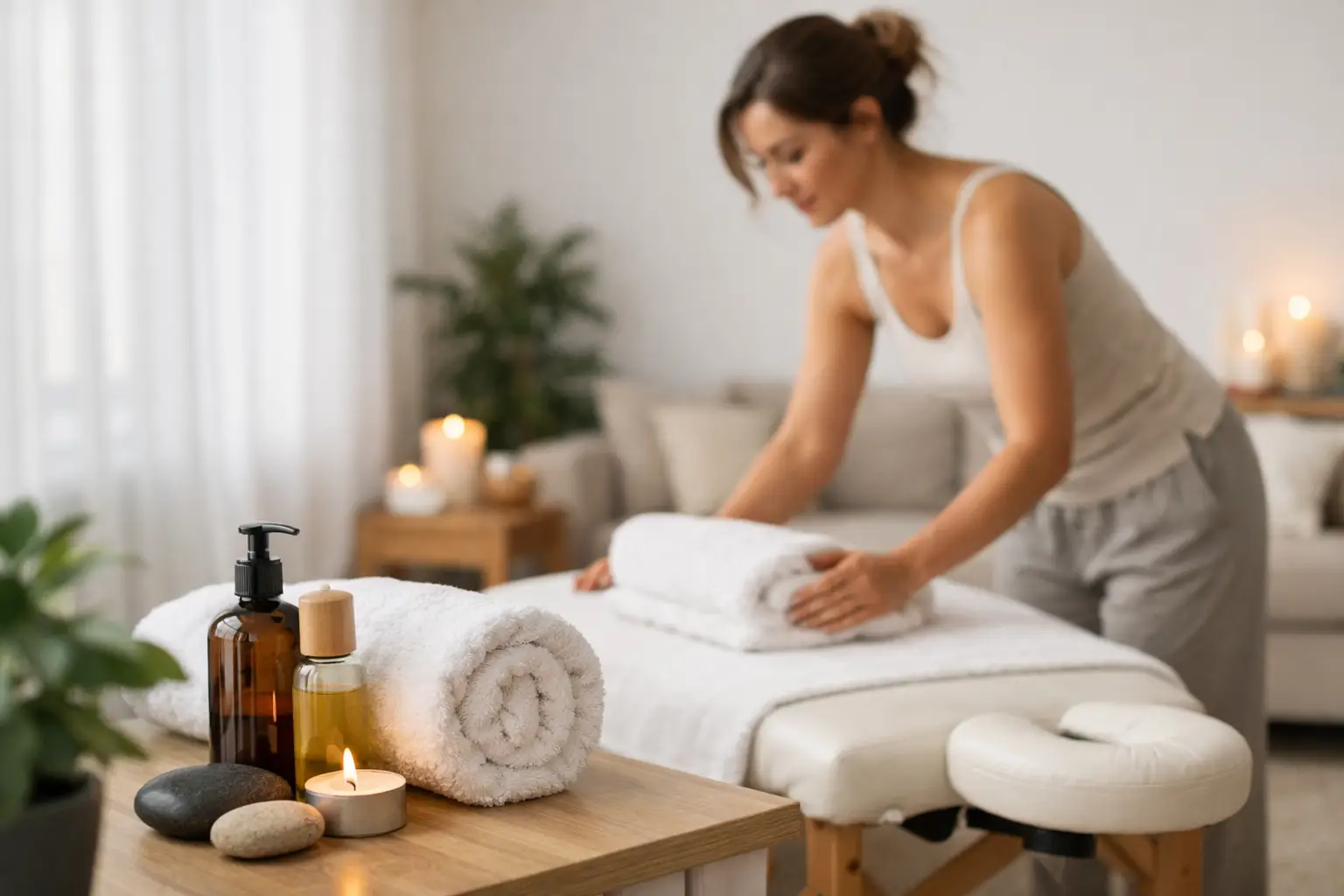
One of the advantages of an in-home remedial massage is that recovery starts without the commute. Your practitioner will bring the treatment table and professional equipment, so your role is simply to make room for a calm, practical setup.
Choose a private area with enough clear floor space for the table and for the practitioner to move comfortably around it. A living room, spare room, hotel suite or quiet office can work well. If possible, move loose items, chargers, children’s toys or bags out of the way before the appointment. This keeps the arrival smooth and lets you relax rather than organise your surroundings at the last minute.
Set the room to a comfortable temperature and reduce interruptions. Put your mobile on silent, let housemates know you are unavailable, and keep pets in another room if they are likely to be curious about the table. Soft lighting can be pleasant, although it is not essential. What matters most is feeling safe, warm and unhurried.
For workplace or hotel appointments, the same principle applies. A quiet, private room with clear access gives your practitioner the best environment to deliver a focused treatment.
Eat and drink with comfort in mind
Have a light meal or snack one to two hours before your session if you are hungry, but avoid a large, heavy meal immediately beforehand. Being overly full can make lying face down uncomfortable, particularly during work around the abdomen, hips or lower back.
Drink water normally across the day. There is no need to overdo it or force litres of water before a massage. Good hydration supports general wellbeing, while a trip to the bathroom before treatment means you can fully settle in once the session begins.
It is also wise to avoid arriving under the influence of alcohol or recreational drugs. They can affect how you perceive pressure, make it harder to communicate clearly and may not be compatible with a therapeutic treatment. If you have had a particularly tough training session, a late night or little sleep, mention it. Your practitioner can adjust the pace and intensity accordingly.
Wear what makes access and comfort simple
Wear comfortable clothing to your appointment, especially if you will have a brief assessment of posture or movement before getting on the table. Activewear or loose everyday clothing is ideal.
During the massage, professional draping is used to protect your privacy. Only the area being treated is uncovered, and you can discuss any concerns about positioning, clothing or comfort before treatment starts. If you would rather keep certain areas covered or avoid a particular area entirely, say so. A personalised treatment includes respecting your boundaries.
Remove jewellery that may get in the way around the neck, wrists or ankles, and tie back long hair if you would like neck and shoulder work. These are small details, but they make it easier to stay comfortable without interruption.
Arrive with time to spare, even at home
The benefit of mobile care is not having to leave the house. Still, try not to book your treatment into the narrow gap between a video meeting and the school run. Give yourself 10 to 15 minutes beforehand to answer the door, complete the consultation and transition out of work mode.
This is particularly valuable if stress is part of what you are carrying physically. A rushed nervous system can make muscles feel guarded. A few slow breaths, a glass of water and a quiet moment before your practitioner arrives can help you get more from the session.
If you are booking a massage after work, consider changing into comfortable clothes first and putting dinner preparations on hold. Let the appointment be a genuine pause, not another task to fit around everything else.
Know what can happen during treatment
Remedial massage may include broad, soothing work as well as more targeted techniques for particular areas of tension or restriction. Depending on your presentation, your practitioner may check how a joint moves, work through the surrounding muscles, or suggest a simple stretch or recovery approach afterwards.
You should feel able to give feedback at any time. Pressure can be adjusted, and there is no prize for tolerating discomfort that feels sharp, burning, alarming or difficult to breathe through. Productive therapeutic pressure is often noticeable, but it should remain manageable and matched to your needs.
Results can vary. Some people feel lighter and freer immediately; others notice gradual change across the following day or two. Long-standing tension, complex injuries and physically demanding training loads may need a series of treatments rather than a single appointment. Your practitioner can help you set realistic expectations based on your body and goals.
Keep the rest of the day gentle
After a remedial massage, give your body a chance to absorb the treatment. Easy walking, normal hydration and a nourishing meal are usually sensible choices. If an area has been worked deeply, mild tenderness can occur, much like the feeling after unfamiliar exercise. Gentle movement is often more helpful than remaining completely still.
Avoid scheduling an intense workout, heavy lifting session or long stretch of driving immediately afterwards if possible. This does not mean you must cancel your day, but a little breathing room supports recovery. If you are preparing for sport, the timing and intensity of your massage matter, so discuss your event schedule with your practitioner.
At Rejuvenators, qualified practitioners bring the treatment to your home, hotel or workplace, making it easier to build recovery into real life. Prepare the space, speak openly about what your body needs, then allow yourself the rare luxury of staying put after care has been delivered.