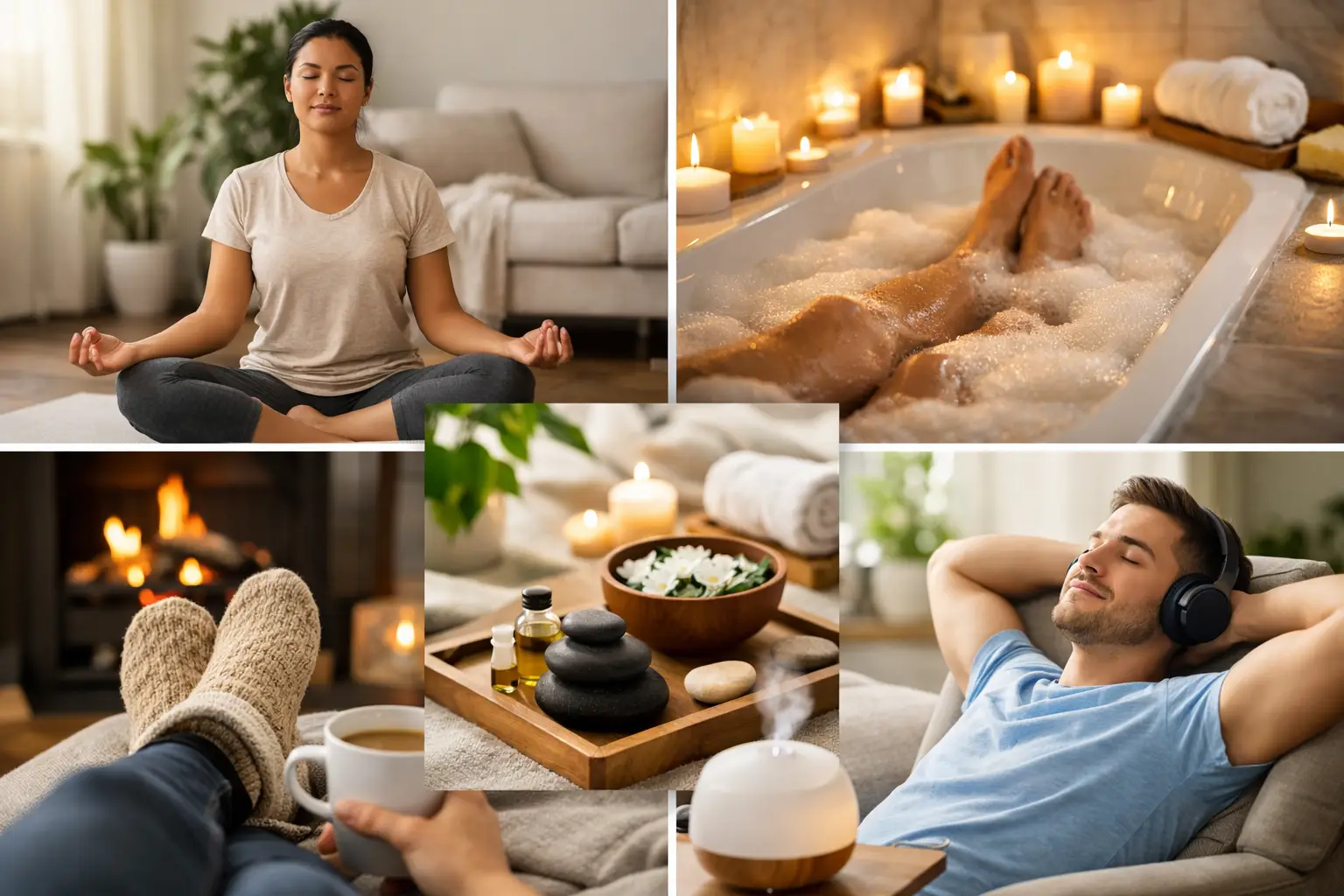
When your shoulders are sitting near your ears at 7 pm, another scroll through your mobile is unlikely to help. Real relaxation needs a clear change of pace: less stimulation, more physical comfort, and enough time for your nervous system to recognise that it can stand down.
The best relaxation methods at home are not necessarily the most elaborate. The most effective choice is the one that suits what your body needs in that moment, whether that is quieting a busy mind, easing tight muscles after a long day, or recovering after training. A considered home routine can make a meaningful difference, particularly when it is simple enough to repeat.
What makes a relaxation method work?
Relaxation is more than feeling temporarily distracted. It is the shift from being alert and braced to feeling settled, supported and comfortable. Methods tend to work best when they involve at least one of three things: a calmer breathing pattern, a reduction in sensory input, or physical relief from muscular tension.
Your needs will vary. A desk-based professional with a stiff neck may benefit most from heat and massage, while an active person may need gentle mobility work and restorative sleep. If you are mentally overloaded, a quiet bath or guided breathing practice may be more useful than trying to fit in an energetic workout. Let the state you are in guide the method you choose.
10 best relaxation methods at home
1. Slow your exhale
A few minutes of slow breathing is one of the quickest ways to create a sense of calm without needing any equipment. Sit with your feet supported, soften your jaw and breathe in gently through your nose. Let your out-breath be a little longer than your in-breath, without forcing it.
Try this for three to five minutes before bed, after a difficult meeting, or while waiting for dinner to cook. The goal is not to breathe perfectly. It is to give your attention one steady, uncomplicated place to rest.
2. Take a warm bath or shower with intention
Warm water can loosen the feeling of tight, tired muscles and creates a useful transition between work and rest. A bath gives you more time to settle, while a warm shower can be the practical option on a busy weeknight.
Keep the room dim, leave your mobile outside the bathroom if possible, and avoid making the water uncomfortably hot. If you are prone to dizziness, have a medical condition affected by heat, or are pregnant, seek appropriate advice and keep your routine gentle.
3. Use heat for everyday muscle tension
A heat pack over the upper back, lower back or hips can be deeply comforting after hours at a desk, a long commute or a demanding training session. Apply gentle warmth for around 15 to 20 minutes, with a layer between the heat source and your skin.
Heat is often better for ongoing stiffness than for a fresh injury, swelling or acute inflammation. In those situations, the right approach depends on the injury and your health history, so professional guidance is worthwhile.
4. Create a low-stimulation evening zone
Many people try to relax in the same environment where they answer emails, watch news updates and manage household tasks. A small environmental reset can be surprisingly powerful. Lower the lights, put away visible work items, choose quiet music or no music at all, and make the room comfortably cool.
This does not require a perfectly styled home. One clear chair, a throw, a glass of water and 20 minutes without notifications can signal that the day is changing pace.
5. Try a short body scan
A body scan helps bring your attention away from racing thoughts and back into physical sensation. Lie down or sit comfortably, then move your awareness slowly from your feet to your face. Notice areas that feel tight, heavy, warm or restless without judging them.
When you find tension, imagine allowing that area to soften on the next exhale. You do not need to eliminate every sensation. Simply noticing where you are holding yourself can be the first step towards releasing it.
6. Do gentle mobility, not a hard workout
Movement can settle the body, but intensity matters. If you are wired and exhausted, a punishing workout late at night may leave you more alert. Instead, try slow shoulder rolls, neck movements within a comfortable range, hip circles, a gentle forward fold or an easy walk around the block.
Aim for movements that feel spacious rather than strenuous. Persistent pain, tingling, weakness or reduced movement deserves assessment rather than being pushed through with stretching.
7. Give your hands and feet some care
Your hands and feet do a great deal of work and are often overlooked. Spend a few minutes applying moisturiser slowly, pressing through the soles of your feet with a tennis ball, or gently massaging your palms and fingers.
This is a particularly useful option for people who find it hard to sit still. It offers a tactile focus and can feel grounding after a day spent moving between screens, meetings and responsibilities.
8. Make a warm, non-caffeinated drink
The ritual matters as much as the drink. Preparing a herbal tea or warm caffeine-free beverage encourages you to pause, sit down and take your attention away from the next task.
Choose a drink that agrees with you, particularly if you have reflux, sensitivities or medication considerations. Sip it without working at the same time. Even ten unrushed minutes can become a reliable cue for your body to begin winding down.
9. Listen to sound that supports stillness
For some people, silence is restful. For others, it leaves too much room for the mind to race. Gentle instrumental music, rainfall sounds or a guided relaxation recording can help create a calmer rhythm.
Keep the volume low enough that it feels like part of the room rather than another demand on your attention. If lyrics pull you into thought, choose something wordless. The right sound is personal, so allow yourself to experiment.
10. Book professional massage at home
There is a point where a home routine is supportive but not enough to address built-up muscular tension, demanding training loads or the strain of long workdays. A tailored relaxation, remedial or deep tissue massage can provide hands-on care while removing the effort of travelling to an appointment afterwards.
In-home massage is particularly valuable when you want to remain in your own calm environment. A qualified mobile practitioner can assess what you need on the day, adapt pressure and techniques to your comfort, and help you move from tension towards genuine rest. Rejuvenators brings this level of personalised care to homes, hotels and workplaces, allowing the recovery period to begin as soon as your treatment ends.
Build a routine you will actually use
The most helpful relaxation routine is rarely an hour-long production every night. Start with a realistic 15-minute sequence. You might finish work, put your mobile on charge outside the bedroom, take a warm shower, use a heat pack while you drink tea, then spend three minutes breathing slowly before sleep.
Consistency matters more than variety. Repeating the same few cues at roughly the same time helps make relaxation feel familiar rather than something you have to earn after an exceptionally hard day. Keep a few options available for different circumstances: a five-minute breath practice for a rushed afternoon, gentle mobility after exercise, and a longer bath or massage session when your body needs more care.
It can also help to protect your relaxation time as you would any other appointment. Tell others in your household when you need 20 quiet minutes, reduce avoidable interruptions, and resist turning self-care into another item to perform perfectly.
When to seek more than relaxation
Home-based methods are excellent for everyday stress and ordinary muscular tightness, but they are not a replacement for medical care. Seek advice from an appropriate health professional for severe or worsening pain, pain after a significant injury, unexplained swelling, numbness, weakness, chest pain, shortness of breath, or symptoms that persist despite rest.
For less urgent but recurring tension, consider what may be driving it. Your workstation set-up, sleep position, training volume, stress levels and recovery habits can all contribute. A skilled practitioner can help you understand the pattern and choose care that fits your body and goals.
The best time to relax is not when every task is finished. It is when you decide that your comfort, recovery and capacity for tomorrow deserve a place in the day.