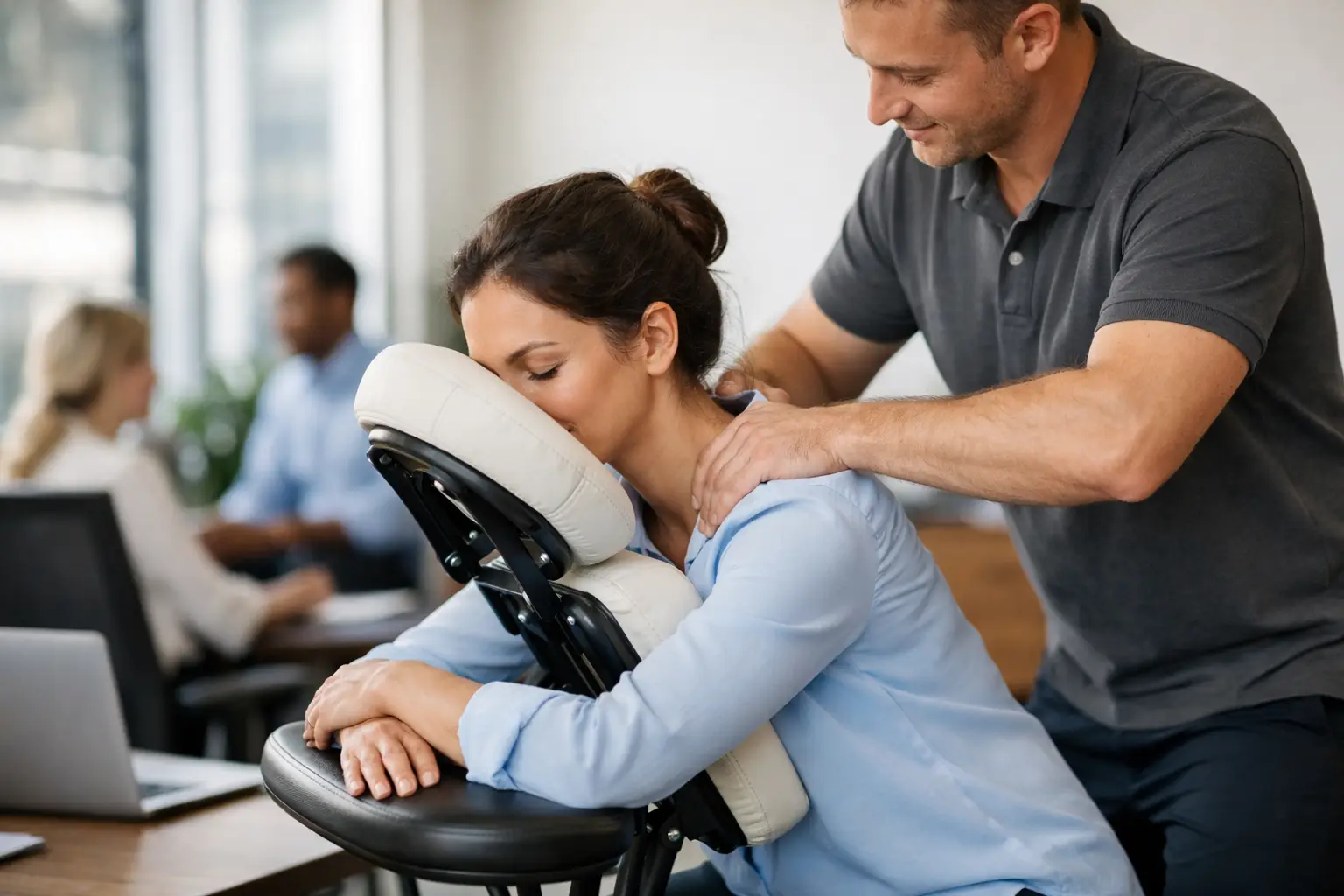
A tense team rarely needs another fruit bowl. More often, they need relief that is immediate, practical and easy to access during the workday. That is where workplace massage benefits become genuinely valuable. When delivered professionally and tailored to the pace of the office, on-site massage can help staff reset, recover and return to work feeling clearer, calmer and more comfortable in their bodies.
For employers, the appeal is simple. You are supporting wellbeing without asking people to travel across town, rearrange their diary or wait weeks for an appointment. For employees, it feels like care that meets them where they are – at their desk, between meetings or during a demanding project cycle.
Why workplace massage benefits are more than a nice extra
There is a tendency to treat office massage as a feel-good perk. It can certainly lift the mood, but that undersells its value. In many workplaces, physical tension and mental fatigue build quietly over time. Long hours at a screen, poor workstation habits, deadlines and back-to-back calls all leave a mark.
A short, well-delivered massage session can interrupt that pattern. It creates a moment for the nervous system to settle, encourages muscular release and gives people a chance to breathe properly again. Those effects may sound simple, but in a high-pressure environment, simple can be powerful.
The strongest workplace wellness initiatives are the ones people actually use. That is one reason massage works well on-site. It removes friction. Staff do not need to plan much, travel anywhere or turn self-care into another task on the list.
1. Lower stress levels in real time
One of the most recognised workplace massage benefits is stress reduction. When people are under pressure, the body tends to hold that stress in the shoulders, neck, jaw and lower back. A focused massage session can help release those areas and signal to the body that it is safe to come down from that heightened state.
This matters because stress is not only emotional. It affects concentration, patience, communication and energy. A calmer employee is often a more present employee. They are less likely to carry tension from one meeting into the next, and more likely to respond thoughtfully rather than reactively.
That said, massage is not a cure-all for a poor workplace culture or unrealistic workloads. It works best as part of a broader commitment to employee wellbeing, not as a bandage over chronic organisational issues.
2. Relief from desk-related aches and pains
Modern office work asks a lot of the body while appearing physically easy. Sitting for long periods, craning towards a laptop and using a mouse all day can lead to stiffness, headaches and muscular discomfort. These issues might not seem dramatic, but they wear people down over time.
On-site massage can help reduce the tightness that accumulates through repetitive postures and limited movement. Even brief sessions can target the upper back, shoulders, forearms and neck, which are common trouble spots in desk-based roles. For employees who are active outside work, massage may also support recovery from training or sport, especially when work habits are adding to overall body strain.
The right approach depends on the person. Some staff want gentle relaxation and nervous system support. Others benefit more from firmer remedial-style work. Tailored care matters because not every body responds well to the same pressure or technique.
3. Better focus and mental clarity
When someone has been sitting in discomfort for hours, focus usually drops before they realise it. They re-read emails, lose momentum and move through tasks with less efficiency. A short massage break can shift that pattern.
By easing physical tension and creating a pause in the day, massage often helps people return to work with improved mental clarity. They feel less scattered and more able to engage with what is in front of them. This can be especially useful during demanding periods such as end-of-quarter reporting, major presentations or conference-heavy weeks.
The benefit is not about pushing people to work harder after a treatment. It is about helping them feel more balanced, so attention comes more naturally.
4. Improved morale without forced fun
Employees can usually tell the difference between a wellbeing initiative that looks good on paper and one that genuinely supports them. Massage tends to land well because it feels useful, personal and restorative rather than performative.
Offering on-site treatment shows that a business understands the real pressures people carry at work. It can make staff feel seen, especially in teams that are working long hours, managing customer-facing roles or navigating sustained periods of change. That sense of care can contribute to stronger morale.
It also works across a wide mix of personalities. Not everyone wants to join a team challenge, attend a social event or talk openly about stress. Massage gives people a quiet, low-pressure way to access support.
5. A more attractive employee experience
In competitive labour markets, benefits matter, but only if they feel relevant. Workplace massage sits in that useful category where the experience is both memorable and practical. It helps create a workplace people talk about positively.
For some businesses, that matters in recruitment and retention. For others, it is more about reinforcing the culture they want to build – one that values performance and recovery, not performance at the expense of people. Premium wellness services can support that positioning, particularly for firms that want to offer a polished and thoughtful employee experience.
Of course, massage will not outweigh poor leadership, unclear career paths or inadequate pay. But as part of a wider wellbeing strategy, it can strengthen the everyday experience of work.
6. Support during peak periods and high-pressure events
Not every workplace needs regular weekly sessions. Sometimes the biggest value comes during specific moments. Think product launches, EOFY, large conferences, seasonal trading peaks or intensive project deadlines.
During these periods, fatigue builds quickly and staff often put their own recovery last. Bringing massage into the workplace can help people maintain energy and resilience when the pace lifts. It can also be a smart inclusion at corporate events, where attendee comfort and experience shape the overall impression.
This is one of the reasons mobile providers are so effective in a workplace setting. The service goes where it is needed, with minimal disruption and no added travel time for staff.
7. Encouragement to take meaningful breaks
A lot of employees technically take breaks while still checking emails, scrolling messages or thinking about the next task. That is not always enough for the body or mind to reset. A scheduled massage session creates a real pause.
That pause has value beyond the treatment itself. It gives people permission to step away, breathe and come back with more perspective. In fast-moving offices, that can be surprisingly rare.
There is also a cultural benefit here. When leaders support restorative breaks, employees are more likely to see wellbeing as part of work, not something they must squeeze in after hours.
8. Flexible care for different workplaces
One reason workplace massage benefits are so widely applicable is flexibility. A law firm, hotel team, tech office and event crew all experience stress differently. The delivery model can be adapted to suit the space, schedule and needs of the group.
Some workplaces prefer short seated massage sessions for convenience and high participation. Others choose longer table-based treatments for more targeted relief. The right format depends on practical factors such as time, privacy, available room setup and the type of physical strain staff are experiencing.
That flexibility also makes massage suitable for one-off activations and ongoing programs. There is no single formula. The best results usually come from matching the treatment style to the workplace rather than forcing the workplace to fit the treatment.
9. A visible investment in wellbeing
People notice where a business spends its time and money. When an employer invests in services that help staff feel better physically and mentally, it sends a clear message about priorities.
That message matters. It can help build trust, especially when the service is delivered professionally and with care. Qualified practitioners, clear communication and a calm, polished experience all shape whether massage feels like a premium wellbeing offering or just a novelty.
That is why provider quality is so important. In a workplace setting, convenience should never come at the expense of standards. Experienced mobile teams, such as Rejuvenators, understand how to deliver treatments efficiently, discreetly and with the level of professionalism that modern employers and employees expect.
Making workplace massage work well
For businesses considering on-site massage, the details matter. Timing should be easy for staff. The setup should feel private enough to relax. Communication should explain what to expect, who it suits and how sessions are tailored.
It is also worth being realistic about outcomes. Massage can support comfort, stress management and morale, but it is not a substitute for ergonomic improvements, good management or sensible workloads. It works best when it complements those foundations.
When done well, though, the impact can be immediate. People feel looser in their shoulders, clearer in their thinking and better able to move through the rest of the day. That kind of support is not indulgent. In many workplaces, it is practical care delivered at exactly the right time.
The best wellbeing initiatives are the ones people remember because they changed how the day felt. Workplace massage has a way of doing precisely that.