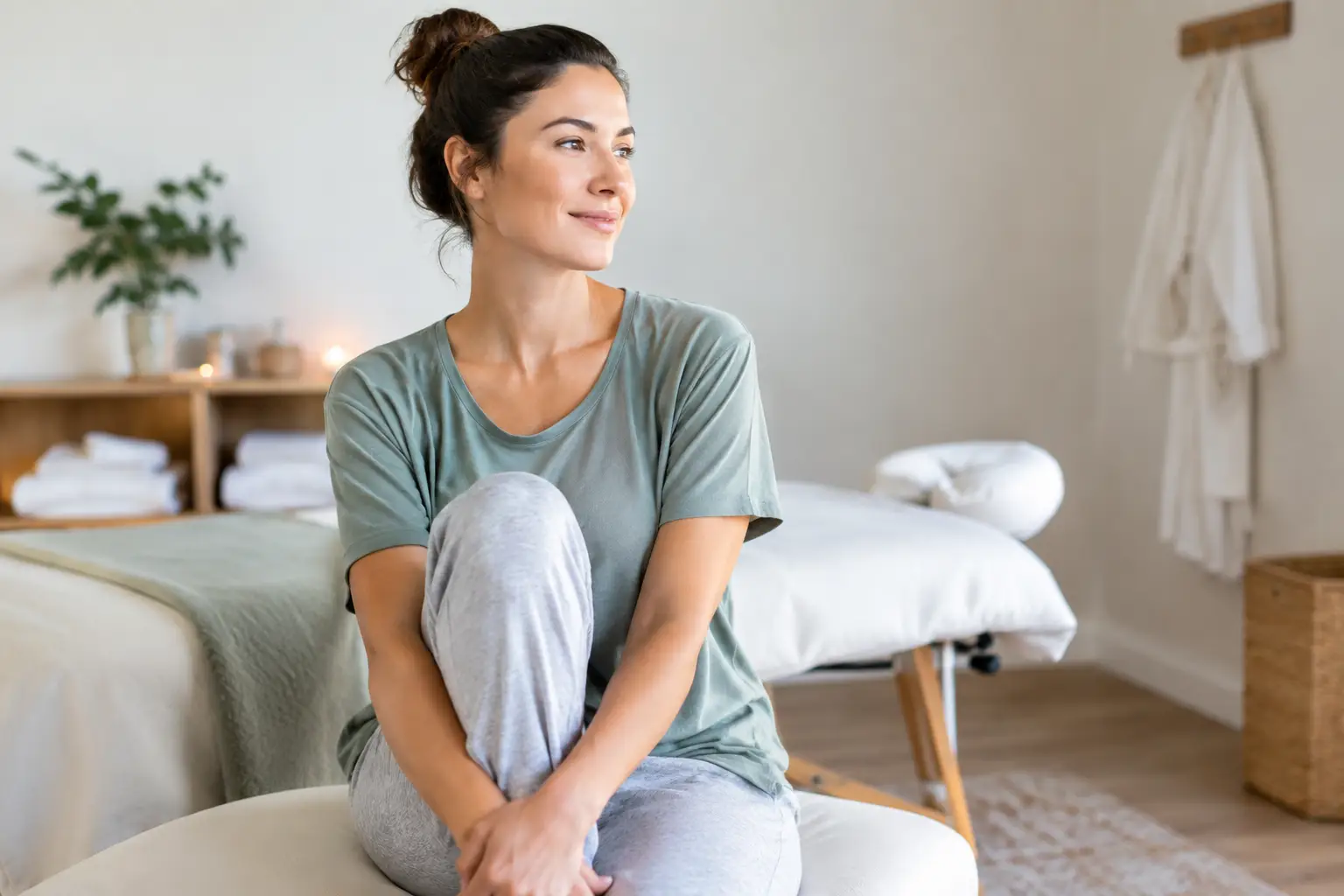
A massage should begin with relief, not a wardrobe dilemma. If you have searched what to wear massage appointment, the short answer is simple: wear whatever helps you arrive comfortably, then choose the level of clothing removal that feels right for you during treatment.
Whether your session is for deep relaxation after a demanding week, recovery following training, or targeted remedial work for tight shoulders and hips, your practitioner will tailor the treatment around your goals and comfort. You are never expected to wear less than you want to.
What to wear to a massage appointment
For most massage appointments, comfortable everyday clothing is the best choice. Think loose trousers, shorts, leggings, a T-shirt, singlet or soft jumper, depending on the weather and where your treatment is taking place. These clothes make it easy to settle in before and after your session, particularly if you are having a mobile massage at home, in a hotel or at work.
Avoid anything restrictive if you can. Tight denim, firm shapewear, complicated buttons, stiff collars and shoes that take several minutes to undo are not wrong, but they can make you feel less at ease when you are trying to switch off. Soft layers are often ideal, especially for a massage in an air-conditioned office, hotel room or during cooler weather.
What you wear to arrive in is different from what you wear during the massage. Many clients undress to their underwear for relaxation, remedial, deep tissue or sports massage. Others prefer to keep underwear on, wear shorts, or remain fully clothed. All are normal choices.
Your practitioner will step out or provide privacy while you get settled on the massage table. You will be covered with professional draping throughout the treatment, with only the area being worked on uncovered. If you would like an area avoided or prefer a particular style of draping, simply say so before the session begins.
Underwear is optional, comfort is not
There is no universal rule about underwear during a massage. Some people find it more comfortable to leave underwear on, while others prefer to remove it beneath the draping. The best decision is the one that lets you relax without feeling self-conscious.
For a back, neck and shoulder massage, underwear generally does not interfere with treatment. For glute, hip or upper-leg work, it may affect access to certain muscles, but a skilled practitioner can adapt their approach. They can work around clothing, use stretches or focus on adjacent areas without compromising your boundaries.
If you are having a pregnancy massage, you may be positioned on your side with supportive cushions. Comfortable underwear and loose clothing can help you feel more at ease before and after treatment, but your practitioner will explain positioning and draping so you know what to expect.
What to wear for different massage styles
The right choice can depend on the type of treatment you have booked. A relaxation massage is often oil-based and usually involves undressing to your preferred level under a towel or sheet. You may want to wear simple clothes that are easy to change out of afterwards, particularly if you are heading home or going to bed after your session.
For remedial, deep tissue or sports massage, the practitioner may need to assess movement, posture or muscle tension. Activewear such as shorts, a singlet or flexible leggings can be useful if part of the session involves assisted stretching, mobility work or treatment while clothed. It is also perfectly reasonable to bring shorts if you are unsure what will suit your session.
Reflexology generally focuses on the feet and lower legs. Wear clothing that can be rolled up comfortably, and choose socks and shoes that are easy to remove. For recovery-focused treatments, your practitioner may recommend clothing based on the modality and the areas being addressed.
If you have booked a massage at a workplace or event, plan for privacy and practicality. Comfortable work clothes are usually fine, but a spare T-shirt, shorts or leggings can be reassuring if you would rather change before your treatment. A professional mobile practitioner will create a calm, discreet treatment space wherever possible.
Should you wear makeup, jewellery or perfume?
You do not need to look a certain way for a massage. Arrive as you are. That said, removing bulky jewellery, watches and necklaces before your treatment can make the experience more comfortable and prevent items getting in the way when your neck, shoulders or arms are being treated.
If you wear makeup, there is no need to take it off unless you want to. Some facial or scalp work may involve oil, and resting face-down can affect makeup, lashes or hairstyle. Tying long hair back loosely can also help your practitioner access your neck and upper back without pulling or tangling it.
It is considerate to go light on perfume, cologne and strongly scented body products. Massage takes place at close range, and many people, including practitioners, can be sensitive to fragrance. A clean, comfortable body is all that is required.
Bring only what supports your session
You rarely need to bring much to a mobile massage appointment. Your practitioner typically arrives equipped with a professional table, fresh linen, oils and the items needed for your selected treatment. Keep your mobile nearby if you need it for access instructions, then consider placing it on silent for the session.
If you have relevant scans, a treatment plan from another health professional, or notes about an injury, bring them up during your consultation. You do not need to arrive with a detailed diagnosis, but clear information helps your practitioner tailor pressure, positioning and techniques to your needs.
What matters more than your outfit
The most valuable thing you can bring to a massage is clear communication. Let your practitioner know if you are managing an injury, have sensitive areas, are pregnant, are recovering from intense exercise, or simply prefer lighter pressure. Mention any allergies to oils or lotions, recent surgery, skin irritation or health changes that could affect treatment.
You can also speak up at any point during the massage. Pressure that feels therapeutic for one person can feel too intense for another. Good massage does not require you to push through sharp pain, hold your breath or feel uncomfortable. A tailored treatment should leave you feeling supported, whether your goal is to reset after travel, ease muscular tension or improve how your body moves.
It is also worth allowing a little time after your appointment if you can. You may feel wonderfully loose and sleepy after a relaxation massage, or more aware of worked areas after a focused remedial session. Have water nearby, move gently when you stand up and avoid rushing straight into a demanding task where possible.
A simple plan for your appointment
Wear comfortable clothes to arrive in, remove only what you are comfortable removing, and expect professional draping throughout an oil-based treatment. If your session may include movement work, bring or wear flexible activewear. If you are unsure, tell your practitioner what you have booked and what feels comfortable – they will guide you through the options without pressure.
At Rejuvenators, the aim is to make premium care feel easy, whether you are at home, staying in a hotel or fitting recovery into a busy week. The right outfit is the one that lets you settle in, communicate openly and give yourself permission to properly recover.