Some treatments ask you to push through discomfort before you feel better. Vibroacoustic therapy benefits tend to feel different from the outset. Instead of force, the approach uses low-frequency sound vibrations to encourage the body to settle, helping many people feel calmer, looser and more grounded during the session itself.
For busy Australians, that matters. When your week already includes deadlines, commuting, training blocks, travel or long hours on your feet, a treatment that supports recovery without adding more strain can be especially appealing. Vibroacoustic therapy sits in that space between relaxation and recovery – gentle in delivery, yet often surprisingly effective in how it supports the nervous system and physical tension.
What is vibroacoustic therapy?
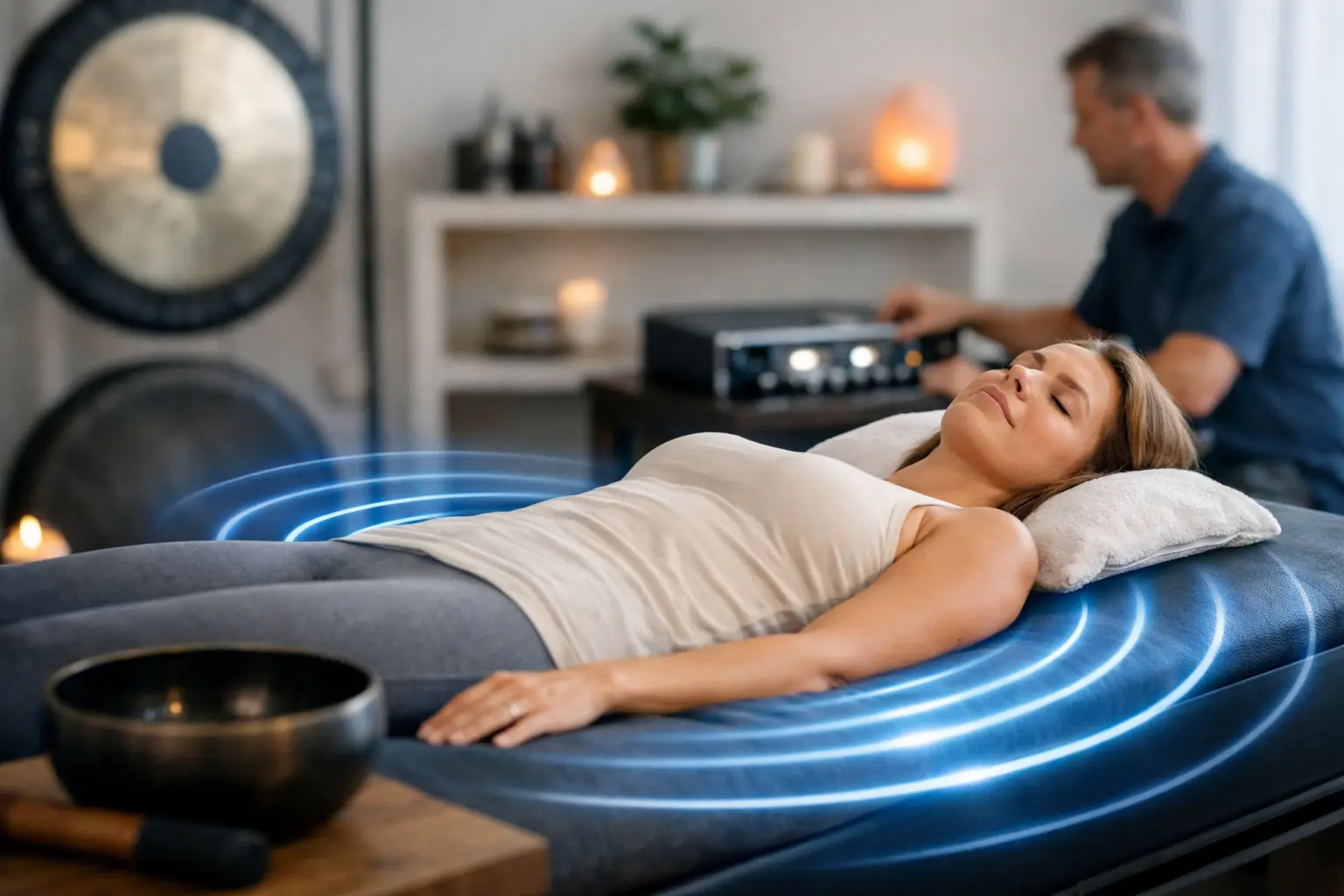
Vibroacoustic therapy uses sound frequencies and gentle vibration delivered through a specialised surface, such as a mat or treatment bed, to create a sensory experience throughout the body. You usually remain fully clothed and lie comfortably while the frequencies move through different areas, often alongside calming music or guided relaxation.
The goal is not simply to feel pampered. It is to help the body shift away from a heightened stress state and towards a more restorative one. Depending on the session design, the treatment may be used to support relaxation, muscular ease, recovery after exertion, or a general sense of reset when the body and mind feel overstimulated.
This is also why the treatment appeals to such a broad group of people. A hotel guest recovering from a demanding travel schedule, an office professional carrying neck and shoulder tension, or an athlete managing post-training fatigue may all seek different outcomes from the same modality.
The main vibroacoustic therapy benefits
One of the strongest vibroacoustic therapy benefits is nervous system downregulation. In practical terms, that means helping the body move out of a constant fight-or-flight pattern. When people are overstretched, running on poor sleep or carrying ongoing tension, they often do not respond well to aggressive treatment. A gentler approach can be more useful.
Low-frequency vibration may help create a settling effect that supports slower breathing, reduced physical guarding and a stronger sense of calm. For some clients, this translates to a clearer head and less mental agitation. For others, it shows up as heavier limbs, easier breathing and the feeling that the body has finally stopped bracing.
Pain support is another reason people explore this therapy. Vibroacoustic therapy is not a cure-all, and it should not replace medical care where that is needed, but it can be a supportive addition for people dealing with muscular discomfort, general body tension or recovery-related soreness. When the body relaxes and muscle guarding eases, pain can feel more manageable.
Sleep support is also a frequent drawcard. People who struggle to switch off at night are often not lacking tiredness – they are lacking downshift. If your system stays activated well into the evening, even exhaustion does not always produce quality rest. A deeply calming treatment can help create the kind of physical and mental quiet that makes better sleep more likely.
There is also a recovery angle that suits active clients. After hard training, competition or physically demanding work, the body often benefits from approaches that encourage circulation, muscle relaxation and rest without adding extra load. Vibroacoustic therapy can be a useful option on days when you want support, but not intense manual pressure.
Why the effects can feel so immediate
Some wellness modalities build slowly over time. Vibroacoustic therapy often stands out because the response can be felt during the first session. That does not mean every person will have the same result, but many notice a shift quickly – less tightness in the jaw, shoulders dropping, breathing softening, thoughts slowing down.
That immediate response is part of what makes it attractive for people with demanding schedules. If you only have a narrow window to recover between meetings, flights, events or training sessions, treatments that help you feel measurably better in the moment can be easier to prioritise.
The sensory element matters here too. Low-frequency sound is not just heard. It is experienced physically. That whole-body input can make it easier for some people to settle than treatments that rely on stillness alone. If meditation has always felt difficult because your mind keeps racing, this can offer a more accessible pathway into relaxation.
Who may benefit most from vibroacoustic therapy?
People under sustained stress are often strong candidates. This includes professionals with high cognitive load, parents who rarely switch off, frequent travellers navigating disrupted routines, and anyone who feels permanently wired. When the nervous system is constantly running hot, treatments that support regulation can make a real difference.
It can also suit people with muscular tension who do not always want deep pressure. Not every body responds well to firm remedial work every time. Sometimes the best next step is to reduce guarding first, then decide whether more targeted bodywork is needed later.
Athletes and active individuals may also find value in vibroacoustic therapy as part of a wider recovery routine. It is not a substitute for good programming, sleep, hydration or appropriate hands-on care, but it may complement those foundations well.
For some clients, the benefit is less about one physical complaint and more about overall restoration. They are not necessarily injured. They are depleted. In those cases, a therapy that helps the body settle can be just as valuable as one aimed at a single sore spot.
What vibroacoustic therapy can and cannot do
A premium wellness experience should be reassuring, but it should also be honest. Vibroacoustic therapy has genuine appeal, though it is not magic and results vary from person to person.
It may help with relaxation, muscle tension, recovery support, stress reduction and sleep readiness. It may also enhance how people feel in their bodies more broadly – calmer, less compressed, more balanced. But it is not designed to diagnose conditions, and it should not be positioned as a replacement for medical advice, especially where pain is severe, persistent or unexplained.
It is also worth acknowledging that some people love the sensation straight away, while others need a little time to adjust. If you are highly sensitive to sound or vibration, the treatment may need careful tailoring. The best experience is one that matches your comfort level, health status and goals rather than pushing a one-size-fits-all format.
Vibroacoustic therapy benefits compared with hands-on treatments
People often ask whether vibroacoustic therapy is better than massage or other bodywork. The more useful answer is that they do different jobs, and sometimes work well together.
Massage can be excellent for targeted soft tissue work, circulation support and addressing specific areas of tightness. Vibroacoustic therapy tends to be broader in its effect, with a stronger emphasis on nervous system calming and whole-body relaxation. If you are carrying localised muscular tension, hands-on treatment may be the clear choice. If your body feels globally wound up, overstimulated or fatigued, vibroacoustic therapy may be exactly what you need.
For some clients, the ideal approach is not either-or. It is choosing the treatment that fits the day. A high-pressure week, post-flight fatigue or sensory overload might call for sound-based recovery. A stubborn upper back issue might need more direct manual work.
Why convenience changes the experience
One often overlooked benefit is what happens when the treatment comes to you. Recovery is easier when you do not have to navigate traffic, sit in a waiting room or head straight back into the noise of the outside world afterwards.
That matters with calming therapies in particular. When a session is delivered in your home, hotel or workplace, you are more likely to hold onto the effects. You can move straight into rest, hydration, a quiet evening or a lighter work rhythm rather than losing the reset the moment you step out the door.
For a mobile wellness provider such as Rejuvenators, this is part of the value. The treatment is not only about what happens during the session, but also about how easily it can fit into real life without adding friction.
What to expect from a session
Most people find vibroacoustic therapy easy to receive. You lie down, get comfortable and allow the frequencies to move through the body. The session may feel deeply soothing, subtly meditative or physically grounding. Some people notice warmth, heaviness or a floating sensation. Others simply realise afterwards that their body is no longer holding itself as tightly.
The best results usually come when the session is matched to your needs. Someone recovering from physical exertion may want a different pace and emphasis than someone seeking stress relief before sleep. A tailored approach makes the experience more effective and more comfortable.
If you are curious but unsure whether it is right for you, that is a sensible place to start. Good care is not about forcing a modality to suit everyone. It is about choosing the treatment that best supports how you want to feel next – calmer, clearer, less tense, more rested or better recovered.
When life feels loud, the most valuable therapies are often the ones that help your system remember how to be quiet again.