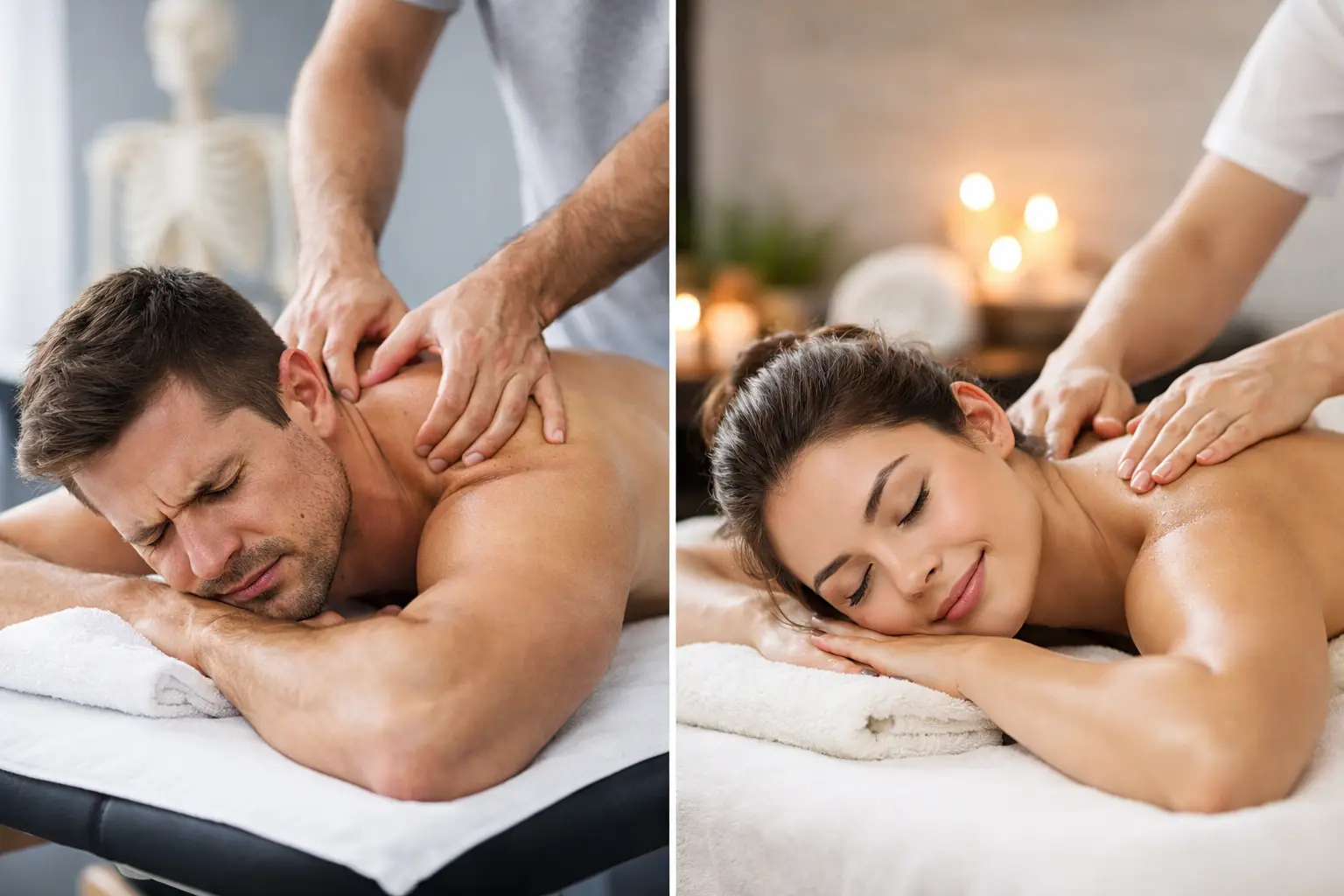
You wake up with tight shoulders, a stiff lower back and a mind that has not properly switched off in weeks. At that point, the question of remedial vs relaxation massage is not academic – you simply want the right treatment for how your body feels now. The difference matters because each style is designed with a different outcome in mind, and choosing well can make your session far more effective.
Both treatments use skilled hands-on bodywork, both can feel deeply restorative, and both can help you leave feeling better than when you started. But they are not interchangeable. One is generally more targeted and outcome-focused, while the other is designed to calm the body and settle the nervous system.
Remedial vs relaxation massage: the core difference
The simplest way to understand remedial vs relaxation massage is to look at the purpose of the treatment. Remedial massage is usually chosen to address a specific physical issue such as muscle tension, reduced mobility, postural strain, recovery from training, or ongoing discomfort in a particular area. Relaxation massage is usually chosen to reduce stress, encourage circulation, ease general tension and help the whole body unwind.
That does not mean remedial massage cannot feel relaxing, or that relaxation massage has no physical benefits. In practice, there is overlap. A good therapist adapts pressure, pace and technique to the person in front of them. Still, the main goal shapes the session. Remedial treatment tends to follow the problem. Relaxation treatment tends to support the whole person.
What remedial massage is designed to do
Remedial massage is more clinical in its intent, even when it is delivered in a calm and comfortable setting. The therapist usually begins by asking what is sore, tight or restricted, how long it has been happening, and what may be contributing to it. That could be long hours at a desk, heavy gym sessions, travel, poor sleep, old injuries or repetitive strain.
From there, the treatment is tailored. The therapist may spend more time on one region, work through layers of muscle tension, and use techniques aimed at improving function rather than simply helping you drift off. Pressure can be moderate to firm, but firm pressure alone does not make a massage remedial. What makes it remedial is the assessment, the intention and the treatment plan.
For many people, remedial massage is the better fit when there is a clear complaint. Think neck tension linked to screen time, glute and hamstring tightness affecting training, or thoracic stiffness that makes deep breathing feel restricted. In those situations, a targeted approach often delivers more value than a general full-body massage.
When remedial massage often makes sense
Remedial massage is commonly chosen for muscular pain, sports recovery, reduced range of motion, tension headaches linked to muscle tightness, and physical strain from work or travel. It can also suit people who say, “I do not want a pampering treatment, I want this knot sorted out.”
There is a trade-off, though. Because the focus is more specific, the session may not feel as soothing from beginning to end. Some areas can be tender while they are being worked on. The aim is not discomfort for its own sake, but useful treatment that supports recovery and movement.
What relaxation massage is designed to do
Relaxation massage is less about correcting a single problem and more about helping the body come down from a state of overload. The pace is generally slower, the flow more continuous, and the pressure lighter to moderate, although it can still be adjusted to suit your preference.
This type of massage is especially valuable when stress has started showing up physically. You may feel wired, fatigued, mentally cluttered, or generally tense without one obvious injury or trouble spot. A relaxation session can help settle the nervous system, soften widespread muscle tension and create the kind of pause many busy people rarely give themselves.
That makes it a strong choice for professionals carrying accumulated stress, hotel guests recovering from travel, parents who feel touched-out and exhausted, or anyone craving proper rest without needing highly focused corrective work. The effect is often broader than the muscles alone. People commonly report better sleep, a calmer mood and a greater sense of reset afterwards.
When relaxation massage is often the better fit
If your main goal is to de-stress, switch off, improve general wellbeing or enjoy a restorative in-home treatment, relaxation massage often makes more sense. It can also be the better entry point if you are new to massage and unsure how your body responds to pressure.
For some clients, this matters more than they expect. A body under stress does not always need intense work. Sometimes the most effective treatment is the one that helps you feel safe enough to actually let go.
How the experience feels different
One of the clearest differences in remedial vs relaxation massage is how the session unfolds. In a remedial treatment, the therapist may ask more questions, reassess pressure as they go, and spend a disproportionate amount of time on the areas creating the biggest limitation. The structure can feel more deliberate and more focused.
In a relaxation treatment, the flow is usually more even across the body. The rhythm is smoother and less interrupted. Instead of chasing one knot or one restricted joint line, the therapist works to create an overall state of ease.
Neither approach is better in absolute terms. Better depends on what you need on that day. If your shoulders are seizing after a week hunched over a laptop, focused work may be the priority. If your body feels tired, overbooked and overstimulated, a gentler reset may deliver more benefit.
Pressure is not the deciding factor
A common misconception is that remedial means painful and relaxation means light. Real treatment is more nuanced than that. Remedial massage can be measured and controlled, with pressure adjusted to what your body can tolerate productively. Relaxation massage can still involve enough pressure to ease general muscular tightness.
The more useful question is not “How hard do you press?” but “What outcome are we aiming for?” If you want to improve mobility in a stubborn area, pressure might need to be more targeted. If you want to lower stress and leave feeling deeply settled, a slower and more nurturing style is often the smarter choice.
Choosing the right massage for your needs
If you are deciding between the two, start with the reason you are booking. If there is a clear physical issue, remedial is usually the stronger option. If the problem is more global – stress, fatigue, poor sleep, mental overload, general tension – relaxation is often the better match.
It also helps to think about timing. Before an important work trip, after a heavy training block, during a high-stress month, or while recovering from long flights, your needs can shift. Many clients do not sit neatly in one category forever. They might book remedial massage during periods of strain and choose relaxation massage when their body needs recovery in a quieter sense.
This is where personalised mobile care becomes especially valuable. An experienced practitioner can adapt the treatment to your current condition rather than forcing you into a rigid service box. Rejuvenators has built its reputation on exactly that kind of tailored care, delivering qualified therapists to homes, hotels and workplaces across major Australian cities with the same professional standard clients expect from a premium provider.
Can you combine both approaches?
Often, yes. In real-world treatments, the line is not always absolute. A therapist may use remedial techniques on your neck and lower back, then shift into a slower, more calming style to help the rest of the body settle. This blended approach can work well for clients who have one or two problem areas but still want the treatment to feel restorative overall.
The key is clear communication. Let your therapist know whether your priority is pain relief, mobility, recovery, stress reduction or simple rest. That information shapes everything from pressure to pacing to where time is spent.
What to tell your therapist before you start
A good result starts before the first hands-on technique. Mention where you feel pain, whether it is sharp or dull, what activities make it worse, and whether your goal is treatment, relaxation or a mix of both. Also mention if you are sensitive to pressure, run hot or cold, have been travelling, or are simply exhausted.
These details help create a session that feels considered rather than generic. Premium care should not feel like a one-size-fits-all routine. It should feel responsive to your body, your schedule and your reason for booking.
The best massage is not the one with the most pressure or the longest list of techniques. It is the one that meets you where you are, whether that means targeted relief, deeper recovery, or an hour of proper exhale.