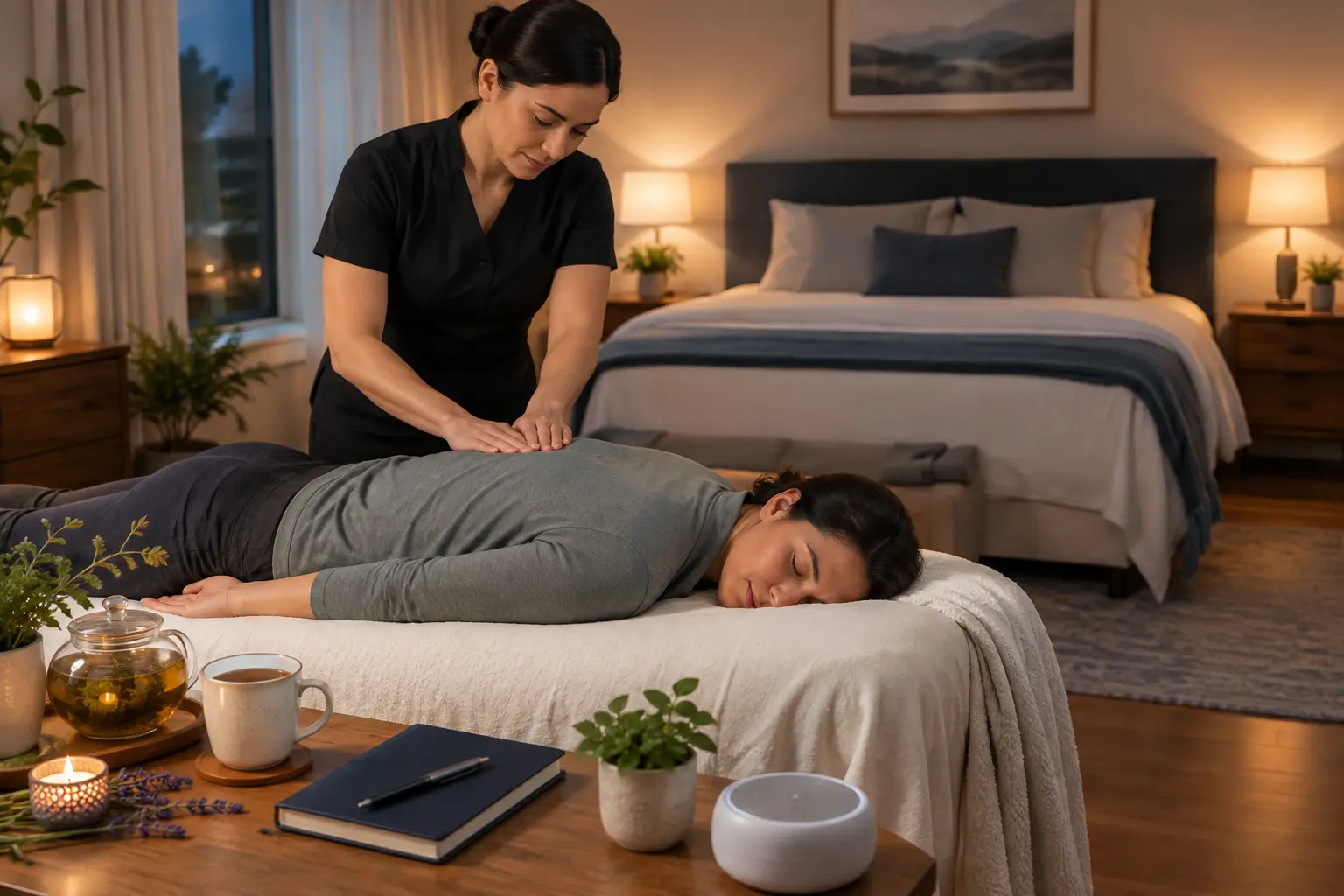
A tired body can still feel wide awake. You may be physically spent after a long day, yet your shoulders remain lifted, your jaw clenched and your thoughts keep replaying tomorrow’s to-do list. Relaxation massage for insomnia offers a practical way to shift out of that heightened state, particularly when it is delivered in the comfort and quiet of your own home.
Massage is not a cure for insomnia, and it should not replace medical assessment for persistent sleep problems. It can, however, be a valuable part of a personalised wind-down routine. Gentle, unhurried treatment may help release physical tension, create a sense of safety and give your nervous system the conditions it needs to settle before bed.
Why stress can keep you awake
Sleep relies on more than feeling tired. Your body needs to move from alertness into a calmer, restorative state. When work pressure, travel, family demands, pain or anxiety keep the stress response switched on, that transition can be difficult.
This can show up as a racing mind, shallow breathing, restless legs or the feeling that you cannot get comfortable no matter how often you change position. Even if you do fall asleep, tension and frequent waking can leave you feeling as though the night never delivered real recovery.
A relaxation massage is designed to meet that moment differently from a high-intensity treatment. Rather than working deeply into every tight area, the practitioner uses flowing, lighter-to-moderate pressure and a slower pace to encourage the whole body to soften. The goal is not to push through discomfort. It is to help you downshift.
How relaxation massage for insomnia may support sleep
The immediate appeal of massage is easy to understand: it feels good to have tense muscles attended to. Its potential benefit for sleep is broader than that. Calm, considered touch can support slower breathing and reduce the physical signs of stress that often follow you into bed.
For people who carry tension through the neck, upper back, hips or calves, a tailored session may also make lying down more comfortable. Small irritations can become very noticeable in the stillness of a dark room. Easing them before bedtime can remove one more barrier between you and rest.
There is also value in the ritual itself. Setting aside time for treatment sends a clear message that the day is ending. For busy professionals and frequent travellers, that boundary can be hard to create without intention. A massage appointment at home avoids the stimulation of driving back through traffic, finding parking or rushing from a clinic to the next obligation.
The result is not guaranteed to be eight uninterrupted hours of sleep. Some clients notice they become sleepy during treatment; others simply feel quieter and less wound up afterwards. Both can be useful outcomes. Better sleep often comes from repeated supportive habits rather than one perfect evening.
The right pressure matters
When sleep is the priority, more pressure is not necessarily better. Deep tissue work can be excellent for specific muscular concerns, but it may feel too stimulating or leave an already-sensitive body feeling worked over. A relaxation-focused session generally suits a bedtime intention because it is soothing, responsive and not performance-driven.
That said, treatment should always reflect your needs. If lower-back tightness is keeping you awake, your practitioner may spend extra time in that area while maintaining an overall calming pace. If you are sensitive to touch, recovering from a demanding week or simply prefer a lighter style, say so. Good massage is not one-size-fits-all.
Creating a sleep-friendly massage experience at home
The hour after your massage matters almost as much as the treatment. Give yourself permission to keep the evening simple. A warm shower, comfortable sleepwear, low lighting and a glass of water can help you hold on to the relaxed feeling rather than immediately replacing it with screens, emails or chores.
Try to book your massage late enough that you do not need to return to a demanding task, but not so late that you are watching the clock throughout the session. For many people, finishing one to two hours before their usual bedtime is a comfortable window. If you are new to evening massage, experiment with timing and notice what leaves you feeling most settled.
Keep the room comfortably warm and as quiet as possible. Let the practitioner know that sleep support is your goal, along with any areas of soreness, current injuries, health conditions or preferences around pressure. This information allows the session to be shaped around you, rather than following a standard sequence.
Mobile massage is particularly useful when insomnia is linked to an overstretched schedule. A qualified practitioner arrives equipped, so there is no need to factor a return trip into the evening. Rejuvenators brings that polished, personalised experience to homes and hotel rooms across selected Australian metropolitan areas, helping clients make restoration easier to fit in.
When massage is most useful for sleep difficulties
Relaxation massage can be a thoughtful addition to your routine when stress, muscle tension or travel are clearly affecting your sleep. It may suit the person who lies awake after a high-pressure workday, the parent who feels permanently braced for the next interruption, or the hotel guest whose body clock is out of step after a flight.
It can also complement other sleep-supportive practices, such as keeping a consistent wake time, limiting late caffeine, getting daylight early in the day and making your bedroom dark and cool. Massage does not need to carry the whole load. Its role is to make relaxation feel more accessible in a body that has forgotten how to switch off.
Regular sessions may be more beneficial than treating massage as an emergency measure after several sleepless nights. A fortnightly or monthly appointment can become a reliable reset point, while shorter-term weekly sessions may make sense during a stressful period. The best frequency depends on your lifestyle, budget, sleep pattern and how your body responds.
When to seek further support
Insomnia can have many causes, including anxiety, depression, chronic pain, sleep apnoea, medication effects, hormonal changes and restless legs syndrome. If sleep problems last for weeks, affect your daytime functioning, involve loud snoring or gasping, or leave you relying on alcohol or medication to get through the night, speak with your GP.
Tell your massage practitioner if you are pregnant, have a circulatory condition, recent surgery, acute injury, fever, unexplained pain, cancer treatment or any concern that may affect the suitability of massage. They can adjust the treatment, postpone it where appropriate or recommend that you seek medical guidance first.
Massage works best as respectful, supportive care, not as a promise. The aim is to help your body feel more comfortable and your evening feel less rushed, while recognising that lasting insomnia deserves a fuller look.
A calmer end to the day
Sleep rarely responds well to pressure. You cannot force yourself to drift off, but you can create better conditions for it: a quieter room, a slower breath, less muscular guarding and an evening that does not demand one more thing from you. A well-timed relaxation massage can be a gentle place to begin, giving your body a familiar signal that it is safe to rest.