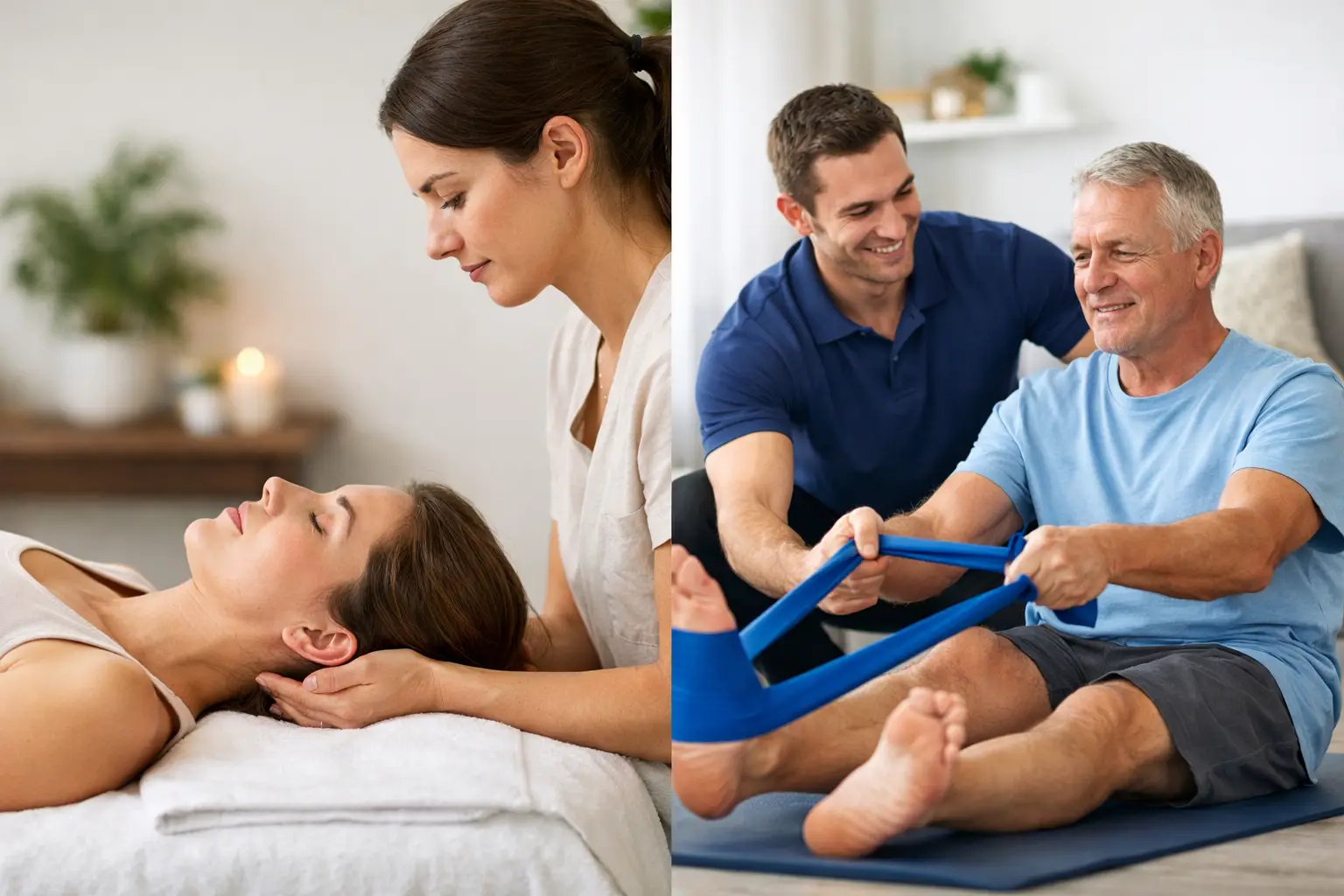
A stiff neck before a full day of meetings, a lingering sporting injury, or a back that objects to one more trip in the car can make getting to a clinic feel like the hardest part of recovery. When comparing osteopathy vs physiotherapy at home, the most useful question is not which treatment is universally better. It is which practitioner, approach and plan best suit your body, your goals and what you can realistically maintain.
Both osteopaths and physiotherapists work with pain, movement and function. Both can assess you in your own space, provide hands-on care where appropriate, and help you move forward with practical advice. Their training, clinical emphasis and treatment style can differ, however, which is why the right choice depends on what is happening for you.
Osteopathy vs physiotherapy at home: the practical difference
Osteopathy commonly takes a whole-body view of how joints, muscles, connective tissue and movement patterns may be contributing to discomfort. An osteopath may use hands-on techniques such as soft tissue work, joint mobilisation and stretching, alongside advice about posture, movement and everyday habits. The aim is often to improve comfort and movement while considering how one area of the body may be affecting another.
For example, someone with recurring lower back tightness may benefit from an osteopathic assessment that considers their hips, thoracic spine, desk setup, sleeping position and walking pattern, rather than focusing only on the sore spot. Treatment is tailored to the individual, so a session may feel gentle and calming or more targeted, depending on your presentation and preferences.
Physiotherapy often has a stronger emphasis on restoring function through education, progressive exercise and rehabilitation. A physiotherapist may also use manual therapy, but exercise prescription is frequently central to the plan. This can be particularly valuable after surgery, an acute injury, a significant change in strength or mobility, or when you are working towards a clear physical goal such as returning to running, lifting or a sport.
Neither approach is confined to one type of problem. Osteopaths may prescribe exercises, and physiotherapists may provide hands-on treatment. The difference is usually one of emphasis rather than a hard line. A thoughtful practitioner will explain what they are assessing, why they recommend a technique, and what you can do between appointments.
What changes when treatment comes to your home?
At-home care is more than a clinic appointment in a different room. It gives the practitioner useful real-world context: the chair you work from, the mattress you sleep on, the stairs you avoid because your knee is sore, or the training gear you use each morning. That context can make advice more practical and easier to apply.
It also removes a common barrier to consistency. If pain, fatigue, limited mobility, childcare or a demanding work schedule makes travel difficult, treatment at home can preserve the energy you would have spent commuting and waiting. You can settle into a familiar environment straight after your appointment, rather than heading back through traffic when your body needs rest.
There are trade-offs. A home practitioner may not have access to every piece of gym-based rehabilitation equipment found in a clinic. For some complex injuries, post-operative programmes or conditions requiring specialised testing, an in-clinic assessment or additional medical care may be the better fit. Quality at-home care is not about pretending those limits do not exist. It is about bringing suitable, professional support to you while referring on when needed.
When an osteopath at home may suit you
An in-home osteopathy appointment may feel like a natural choice when discomfort is affecting your day-to-day ease and you would value a hands-on, whole-body assessment. This can include ongoing neck or back tension, restricted movement after long hours at a desk, muscular tightness after travel, or a general sense that your body is not moving as freely as it should.
It may also appeal when you want care that feels restorative as well as practical. A skilled osteopath can assess your movement, work within your comfort level and provide recommendations that fit your actual home and routine. For busy professionals and hotel guests, that combination of clinical attention and convenience can make it easier to address a problem before it becomes more disruptive.
At Rejuvenators, mobile osteopathy is designed around that personalised experience, with qualified practitioners arriving equipped to provide treatment in the comfort of your home, hotel or workplace.
When physiotherapy at home may suit you
In-home physiotherapy may be especially useful when your main focus is rehabilitation and rebuilding capacity. You may be recovering from a sprain, managing a sporting injury, returning to activity after a procedure, or trying to improve balance, strength and confidence with everyday movement.
A physiotherapist can observe how you get in and out of a chair, manage steps, lift items or move through the activities that matter most to you. From there, they may prescribe a structured progression of exercises and monitor how your symptoms respond. This approach often suits people who want clear milestones and a plan that develops over several appointments.
The best physiotherapy plan is not necessarily the most complicated one. A few well-chosen exercises that fit around work, family and energy levels are more likely to be completed than an ambitious programme that stays on a piece of paper. At home, the practitioner can adapt exercises to the equipment and space you genuinely have available.
Can osteopathy and physiotherapy work together?
Yes. For some people, these approaches can complement each other. You may see an osteopath for hands-on treatment and a broader movement assessment while using physiotherapy to guide a progressive return to sport or build strength after injury. The value comes from clear communication and a shared focus on your goals, not from collecting treatments.
A good plan should become simpler over time, not more dependent on appointments forever. You may start with more frequent support while pain is limiting your movement, then move towards self-management strategies, exercises or maintenance care when appropriate. Your practitioner should be able to explain what progress could look like and review the plan if it is not helping.
Making a safe, informed choice
Whether you choose osteopathy or physiotherapy, look for a properly qualified, registered practitioner who takes a thorough history before commencing treatment. They should ask about your symptoms, medical history, medications, recent injuries and relevant diagnoses. They should also be willing to modify techniques, answer questions and obtain your consent throughout the session.
Some symptoms need medical assessment before bodywork or exercise-based treatment. Seek urgent medical attention for chest pain, sudden weakness or numbness, loss of bladder or bowel control, difficulty speaking, severe headache, fever with significant neck stiffness, or pain following a serious accident. New, unexplained symptoms or worsening pain also deserve prompt clinical advice.
For less urgent concerns, be open about what you want from the appointment. Are you hoping to sleep more comfortably, return to training, reduce pain during work, or move with more confidence? A clear goal helps the practitioner select the most relevant approach and gives you a useful way to judge whether treatment is on track.
Get more from your at-home appointment
You do not need a perfect home setup. A clear area large enough for a portable treatment table or exercise assessment is usually enough. Wear comfortable clothing, have any scans or relevant health information available, and mention if you are pregnant, recently had surgery or have a condition that affects your mobility.
It is also worth noticing what tends to aggravate or ease your symptoms before the practitioner arrives. Does your shoulder tighten after a laptop-heavy day? Does your knee object to stairs but feel fine on level ground? Does your back settle after walking? These small details can be more useful than trying to describe pain in broad terms.
The most effective choice between osteopathy and physiotherapy is the one that gives you appropriate care, a plan you can follow and the confidence to keep moving. When that care comes to your door, recovery can feel less like another task to organise and more like a considered part of looking after yourself.