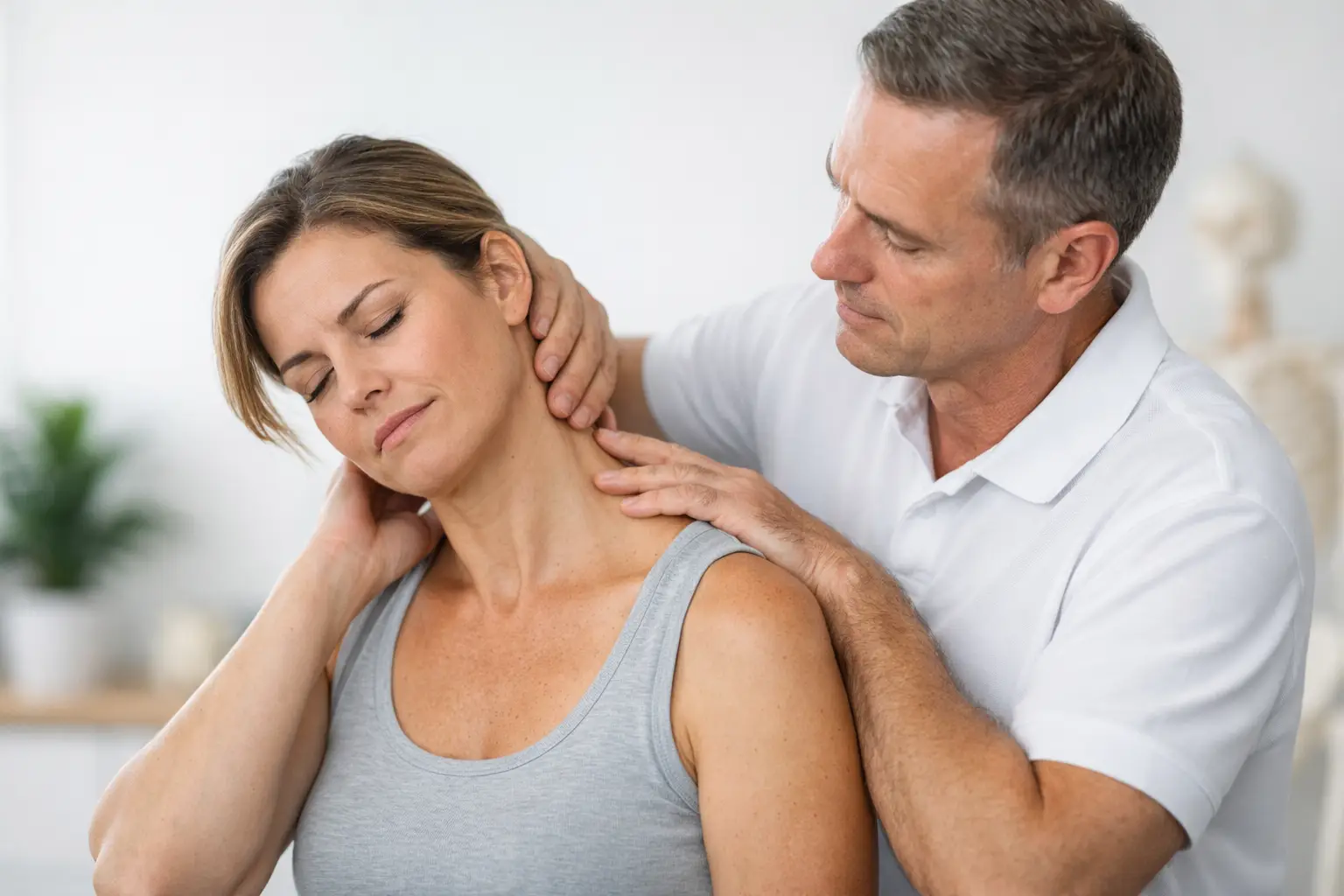
A stiff neck has a way of shrinking your day. Checking your blind spot, settling into a laptop, sleeping comfortably or turning to speak to someone can suddenly feel effortful. Osteopathy for neck stiffness is a hands-on, personalised approach that may help reduce muscular tension, improve comfortable movement and identify the everyday habits that keep the area irritated.
For busy professionals, frequent travellers and active people, the appeal is not simply feeling looser for an hour. It is receiving considered care that addresses how the neck, shoulders, upper back and nervous system are working together – without adding another trip across town to an already full schedule.
Why neck stiffness is rarely just a neck problem
The neck is built to move. It supports the head while constantly making small adjustments in response to vision, balance, breathing and the position of the rest of the body. When movement becomes restricted, the source is often more complex than one tight spot.
Long periods at a desk, a rushed commute, an unfamiliar hotel pillow, intense training, poor sleep and stress can all contribute. Some people wake with stiffness after sleeping awkwardly. Others notice it gradually after weeks of working with their shoulders lifted or their head held forward. A recent strain, such as turning quickly or carrying a heavy bag, can also trigger protective muscle guarding.
The upper back, rib cage, shoulders and jaw may contribute as well. For example, limited upper-back movement can make the neck work harder when you reach, rotate or look up. Clenching the jaw during stressful periods may add tension around the head and neck. This is why a quality assessment looks beyond the painful area rather than treating the neck in isolation.
How osteopathy for neck stiffness works
An osteopath is a registered health practitioner in Australia who assesses how the body moves and functions. For neck stiffness, the first appointment should begin with a conversation about your symptoms, health history, work setup, sleep, exercise and the activities you want to return to comfortably.
Your practitioner may assess your neck movement, posture, shoulders, upper back and ribs, and may use gentle hands-on examination to understand where tension or restriction is most apparent. The treatment plan depends on your presentation. It may include soft-tissue techniques, guided joint movement, stretching, massage-style work and practical advice for movement, recovery or workstation adjustments.
Treatment should never be a one-size-fits-all sequence. Some clients prefer a lighter approach, particularly when the area feels sensitive or they are feeling run-down. Others may benefit from firmer soft-tissue work around the upper back and shoulders. Your comfort, health history and goals should shape the session.
Osteopathy is not about forcing a neck to crack or pushing through sharp pain. While some manual techniques may be appropriate for particular clients, they are not required for effective care. A clear explanation, informed consent and the option to decline any technique are essential parts of a professional experience.
What you may notice after a session
Many people notice that turning their head feels easier, the shoulders sit more comfortably or the dull pulling sensation has eased. Some feel deeply relaxed afterwards, particularly when stress and poor sleep have played a part in the tension.
Responses vary. It is also possible to feel mild, temporary tenderness after hands-on treatment, much like after exercise or a remedial massage. This generally settles quickly. If symptoms worsen significantly or you are concerned about your response, contact your practitioner or seek medical advice.
Lasting improvement often comes from pairing treatment with manageable changes between appointments. That might mean standing up more regularly, changing the height of a screen, varying your sleep position or returning to training gradually. Small adjustments done consistently can be more useful than a perfect routine that does not fit real life.
What a tailored appointment can include
A good osteopathy appointment makes room for both relief and a plan. Rather than treating every stiff neck the same way, the practitioner considers whether the main driver seems related to muscle overload, sustained posture, training demands, stress, a recent strain or a combination of factors.
For someone who spends long days at a laptop, this may mean focusing on the neck, upper back, chest and shoulder muscles, then discussing easy ways to vary their position during the day. For a swimmer, cyclist or gym-goer, it may involve looking at training volume, shoulder movement and recovery. For a hotel guest who woke after an awkward night of sleep, the priority may be gentle treatment and simple positioning advice to make the next night more comfortable.
Where suitable, an osteopath may also recommend specific movements. These are usually simple and purposeful, not a lengthy rehabilitation programme. The aim is to restore confidence in movement and help you avoid the cycle of guarding, stiffness and more guarding.
The advantage of mobile osteopathy
When your neck feels restricted, driving, finding parking and sitting in a waiting room can be the least appealing part of getting care. Mobile treatment brings the appointment to your home, hotel or workplace, allowing you to settle into a familiar environment before and after the session.
A qualified practitioner should arrive equipped to provide a professional treatment, take a thorough history and tailor care to the space available. It can be particularly useful after a demanding workweek, during travel, or when time is limited and you want care that fits around your life.
At Rejuvenators, mobile wellness care is designed around that balance of convenience and professional attention. Your session can be shaped around whether your priority is easing postural tension, supporting recovery after activity or simply creating space to reset.
When neck stiffness needs medical assessment first
Most neck stiffness linked to muscular tension, sleep position or sustained posture is not serious. Still, neck pain is not something to self-manage blindly. Osteopathy is not a substitute for urgent medical care, and an experienced practitioner will refer you when assessment is needed.
Seek urgent medical attention if neck stiffness follows a significant accident or fall, or if it occurs with severe headache, fever, rash, confusion, dizziness, fainting, difficulty speaking, facial weakness, changes to vision, chest pain or shortness of breath. Prompt assessment is also important for new weakness, numbness or tingling that is persistent or spreading into an arm or hand, loss of coordination, unexplained weight loss, or pain that is severe and worsening.
If symptoms are not improving, are disrupting sleep consistently, or keep returning without an obvious reason, speak with your GP. The most appropriate pathway may include osteopathy, medical assessment, physiotherapy, exercise support or a combination of care.
Making relief last between sessions
There is no single perfect posture that must be held all day. Bodies generally respond best to regular movement and position changes. If you work at a screen, bring it closer to eye level where practical, let your shoulders soften and take brief movement breaks before stiffness builds.
Gentle walking, comfortable neck rotations and upper-back movement can help some people, provided they do not cause sharp pain or worsening symptoms. Heat may feel soothing for muscular tightness, while a supportive pillow and a relaxed wind-down routine can make a noticeable difference when sleep has been poor.
The goal is not to chase flawless posture or eliminate every sensation. It is to help your neck move more freely, recover more reliably and feel less demanding in the moments that matter. If stiffness is getting in the way of work, training or rest, a tailored assessment can provide a calm, practical starting point.