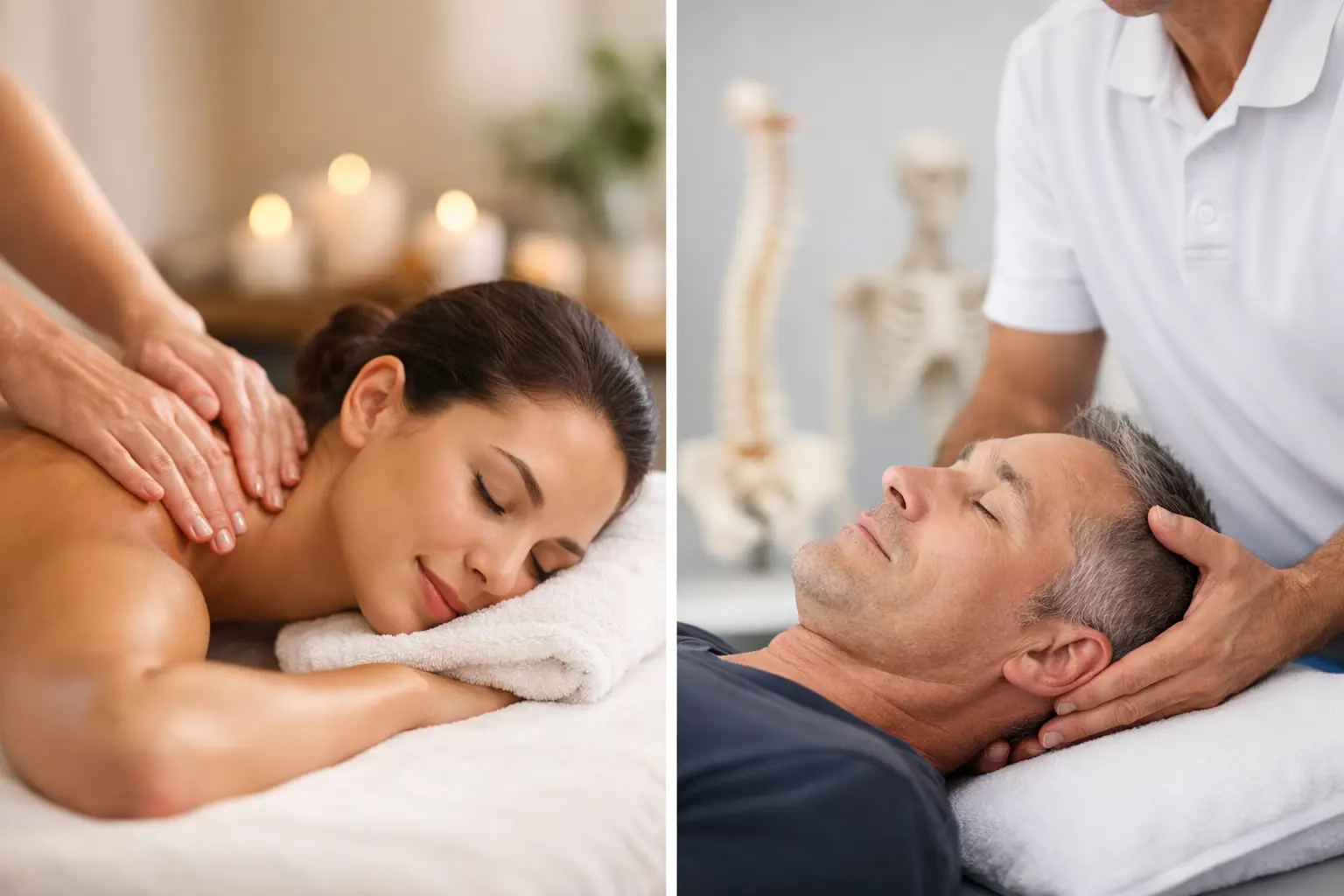
A tight neck after back-to-back meetings, a lower back that flares after travel, legs that feel heavy after training – many people know they need help, but not which treatment to book. If you have been weighing up massage vs osteopathy differences, the simplest place to start is this: both aim to help you feel and move better, but they do it in different ways.
Massage is generally centred on muscles, soft tissue tension and relaxation or recovery. Osteopathy looks more broadly at how the body is functioning as a whole, including joints, muscles, movement patterns and physical strain that may be contributing to pain or restriction. Neither is automatically better. The right choice depends on what is going on in your body, what outcome you want, and how quickly you need relief.
Massage vs osteopathy differences at a glance
The biggest difference is focus. Massage treatment works primarily through the soft tissues. An experienced practitioner uses pressure, movement and hands-on techniques to ease tightness, improve circulation, reduce soreness and help the nervous system settle. For many people, that means less muscular pain, less stress and a stronger sense of physical reset.
Osteopathy is a manual therapy with a broader assessment and treatment lens. An osteopath will usually look at posture, joint mobility, how one area may be compensating for another, and whether your symptoms reflect a larger mechanical issue. Treatment can include soft tissue work, joint articulation, stretching and other hands-on techniques designed to support movement and function.
That difference in scope matters. If your calves are tight after a long flight, massage may be the most direct and satisfying option. If your shoulder pain keeps returning because of how your upper back and ribs are moving, osteopathy may be more appropriate. In many cases, both can play a role at different stages.
What massage is best suited for
Massage is often the clearer choice when your body is asking for release, recovery or downtime. Think general muscular tightness, stress-related tension, post-exercise soreness, desk-bound stiffness, heavy legs, or the need to properly switch off. It can also be useful when you know exactly where the discomfort sits and it feels muscular rather than structural.
Different styles of massage suit different goals. A relaxation massage is ideal when stress, poor sleep or nervous system overload is part of the picture. Remedial or deep tissue work is more targeted and may help with persistent tightness, reduced flexibility or recurring muscular discomfort. Sports massage can support active people before or after training, while recovery-focused sessions are often chosen after events, travel or physically demanding periods.
One of massage’s strengths is immediacy. Many clients notice reduced tension and better ease of movement straight after a session. That does not always mean the root cause has been fully addressed, but it can create meaningful relief quickly. For busy professionals, hotel guests or anyone juggling a packed schedule, that matters.
What osteopathy is best suited for
Osteopathy is often a better fit when symptoms feel more complex, recurrent or movement-related. You might notice pain that returns for no obvious reason, restriction in a joint, discomfort that changes with posture, or an issue that seems to shift from one area to another. These patterns can suggest the body needs more than local muscle release.
An osteopath will usually assess how you move, where you are compensating, and whether the painful area is actually the source of the problem. For example, recurring neck tension may involve upper back stiffness. Hip discomfort may be linked to lower back mechanics. Headaches may be influenced by neck and shoulder tension, jaw strain or postural load.
This whole-body approach can be especially valuable for people who have tried repeated massage and felt better for a day or two, only to tighten up again. Osteopathy may help explain why that cycle keeps happening. That said, results depend on the condition, the treatment plan and what else is needed outside the session, such as movement advice, changes to work setup or recovery habits.
Techniques and treatment experience
Massage and osteopathy can feel quite different on the table.
Massage sessions are usually more flowing and tissue-focused. Even when the pressure is firm, the treatment tends to concentrate on releasing muscles, fascia and areas of built-up tension. Depending on the style, the experience may feel deeply calming, physically relieving, or both.
Osteopathy often includes more assessment and more variation in technique. Your practitioner may watch how you bend or turn, compare movement from side to side, test range of motion and then use a combination of soft tissue work, mobilisation, stretching or gentle joint techniques. Some sessions feel quite subtle. Others are more direct. The aim is not just to reduce tenderness, but to improve how the area functions within the body as a whole.
For clients deciding based on comfort, massage is often the more familiar and immediately soothing experience. Osteopathy may feel more clinical, though still hands-on and personalised. If you want deep relaxation with therapeutic benefit, massage usually leads. If you want a more investigative treatment approach, osteopathy may be the better fit.
Which is better for pain, stress and mobility?
This is where it depends.
For stress, overwhelm and general body tension, massage is usually the stronger choice. It supports relaxation, can help down-regulate an overworked nervous system, and often leaves people feeling lighter, calmer and more settled.
For straightforward muscular pain, either may help. If the discomfort is clearly linked to tight muscles, overuse, gym soreness or posture-related tension, massage can be highly effective. If the pain keeps returning, affects how you move, or seems connected to joints or broader mechanics, osteopathy may offer more insight.
For mobility, the answer depends on what is limiting it. If stiff muscles are restricting movement, massage may restore ease quickly. If the limitation involves joint motion, compensation patterns or multiple areas working poorly together, osteopathy may be more useful.
For recovery after sport, travel or long work days, massage often makes practical sense because it helps relieve fatigue and tissue tightness without overcomplicating the issue. For ongoing biomechanical concerns that are impacting performance or daily comfort, osteopathy may be a smarter next step.
When massage and osteopathy work well together
The choice is not always one or the other. In practice, many people benefit from both.
A person with recurring back tension might use osteopathy to assess and treat movement dysfunction, then book massage to manage muscle load and support regular recovery. An athlete may see an osteopath during a training block when mechanics are off, then use sports massage around heavy sessions or competition. A corporate client dealing with neck and shoulder tension might start with massage for immediate relief, then move to osteopathy if the issue keeps coming back.
This combined approach can be especially helpful when you want both short-term comfort and longer-term support. Massage can help the body release. Osteopathy can help identify what is driving the strain. Used thoughtfully, they complement each other well.
How to choose the right treatment for you
If you are mainly seeking relaxation, muscular relief, recovery support or a reset after a demanding week, massage is likely the right place to begin. It is also a strong option when convenience matters and you want effective care delivered in a setting where you can properly unwind, whether that is at home, in a hotel or at work.
If your issue feels more persistent, your mobility is restricted, pain keeps returning, or you suspect the source is not just muscular, osteopathy may be the better choice. It gives you a broader treatment lens and may help uncover why the body is under strain.
If you are unsure, think about your main outcome. Do you want to relax, loosen up and recover? Book massage. Do you want assessment, functional treatment and a closer look at recurring pain patterns? Consider osteopathy.
For many Australians, the real value is not just in the modality itself but in receiving the right care at the right time, without adding more friction to an already full schedule. That is why tailored mobile treatment has become such a practical choice. Rejuvenators has spent 30 years helping clients access premium bodywork and wellness support where they are most comfortable, with care designed around real bodies and real routines.
Your body does not always need the most intensive option. It needs the most suitable one. Start with the result you want, listen to the pattern of your symptoms, and choose the treatment that helps you recover, reset and move through life with more ease.