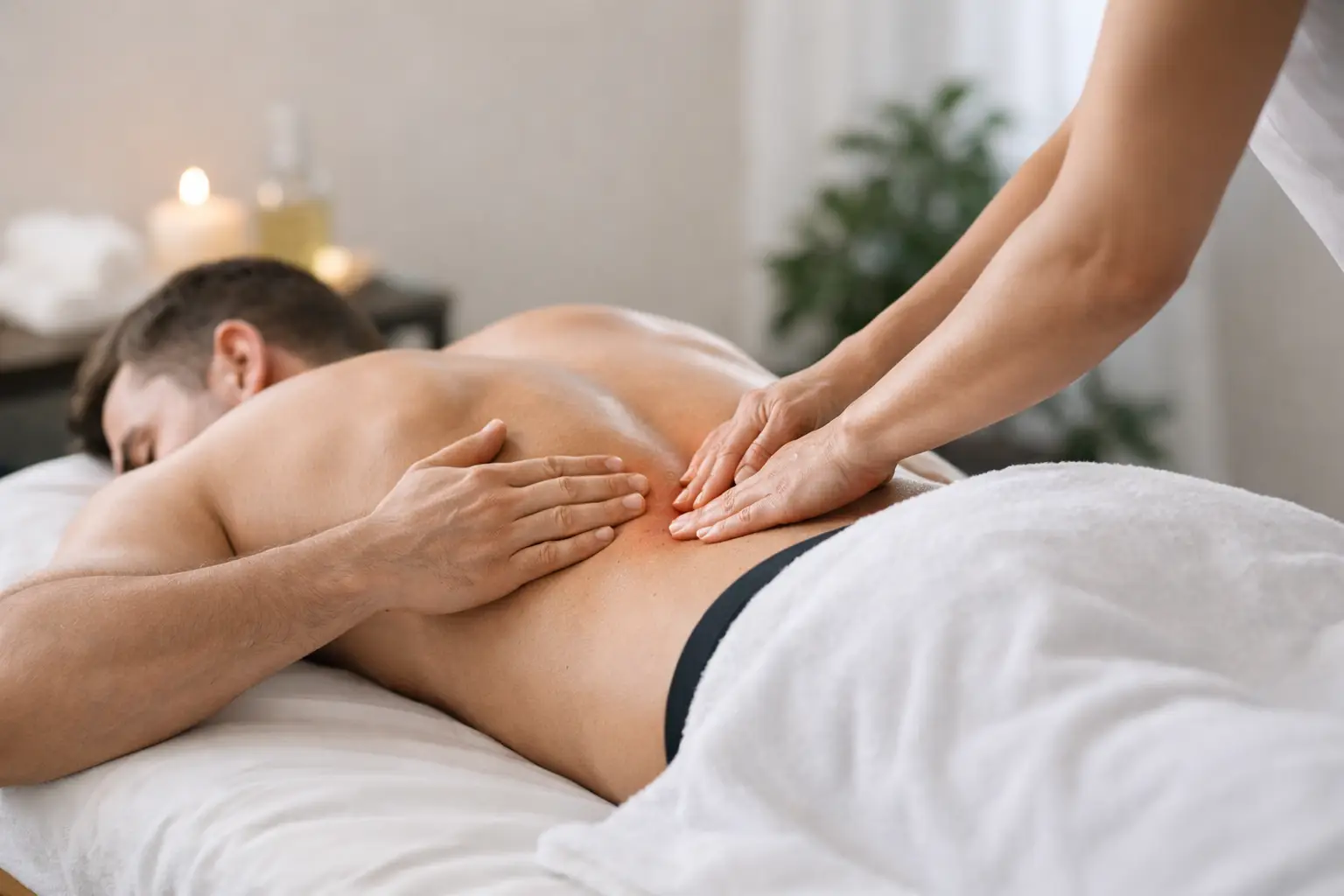
Lower back pain rarely arrives at a convenient time. It shows up after a long flight, a week at the desk, a heavy gym session, or one awkward lift that your body did not appreciate. When the area feels tight, sore or constantly aggravated, massage for lower back pain can be a practical way to reduce muscular tension, improve comfort and help you move more freely again.
That said, not all lower back pain responds in the same way. Sometimes massage feels immediately relieving. Sometimes it helps more gradually over a few sessions. And sometimes the right approach is a gentler treatment, better timing, or referral to another modality altogether. Knowing the difference matters if you want results, not just temporary relief.
How massage for lower back pain can help
For many people, lower back pain is not caused by one single issue. It is often a mix of muscular tension, reduced mobility, postural strain, training load, stress and poor recovery. The lower back also does not work in isolation. Tight glutes, overworked hips, a stiff mid-back and hamstrings under strain can all contribute to how the area feels.
Massage can help by easing overactive muscles, reducing protective guarding and improving the way surrounding tissues move. In practical terms, that may mean it feels easier to stand upright, turn in bed, walk comfortably or sit for longer without that familiar ache building.
There is also a nervous system effect. When pain has been hanging around for a while, the body often stays on high alert. A skilled treatment can encourage down-regulation, which is a more clinical way of saying your body stops bracing quite so hard. That shift can make a meaningful difference, especially when stress and fatigue are part of the picture.
The key is matching the treatment to the presentation. A highly intense session is not always the best option for a back that is already irritated.
What kind of lower back pain responds best?
Massage tends to be most helpful when the pain is muscular, mechanical or linked to everyday load. If your back feels tight after commuting, sitting, travelling, training or sleeping awkwardly, manual therapy can often settle things effectively. It may also help when you are compensating for tension elsewhere, such as through the hips, glutes or upper legs.
People with recurring stiffness often do well with regular treatment because the aim is not only to calm a flare-up, but to interrupt the pattern that keeps returning. That might involve treating the lower back directly, but also spending time through the glutes, hip flexors and thoracolumbar area so the back is not doing all the work.
Where it becomes more nuanced is with sharp nerve pain, pain shooting down the leg, numbness, tingling, unexplained weakness or pain after a fall or injury. Massage may still have a role in a broader care plan, but those signs deserve a more careful assessment first. Good treatment starts with knowing when to proceed and when to pause.
Choosing the right style of massage
A common assumption is that deeper always means better. For lower back pain, that is not necessarily true. The best massage is the one that suits your pain level, tissue sensitivity and goals on the day.
Remedial massage
Remedial massage is often a strong fit for lower back discomfort because it is tailored to a specific issue rather than delivered as a generic full-body session. The therapist can assess what feels restricted, identify related muscular patterns and adjust pressure and technique accordingly. If the pain is linked to work posture, training strain or recurring tightness, this is often the most targeted starting point.
Deep tissue massage
Deep tissue can be useful when the surrounding muscles are heavily loaded and chronically tight, particularly through the glutes, hips and lower back. But there is a difference between effective pressure and excessive force. If tissues are already inflamed or reactive, too much intensity can leave you feeling more guarded, not less.
Relaxation-focused treatment
If stress is amplifying your symptoms, a calmer style of massage may be surprisingly effective. Many lower backs tighten not only from movement, but from constant low-grade bracing. When the nervous system settles, the back often follows.
What to expect from a good session
A quality treatment should feel considered from the start. That means asking how the pain began, what aggravates it, whether it refers anywhere, and how it is affecting movement, sleep or work. It also means adapting the session if you are in an acute flare-up rather than applying the same routine every time.
In many cases, the lower back is only part of the treatment. Your therapist may work through the glutes, hips, hamstrings and even the upper back, because these areas can change how much strain lands on the lumbar region. That broader approach often leads to more lasting relief than focusing only on the sore spot.
Afterwards, you should ideally feel looser, more balanced and more comfortable in movement. Some tenderness can be normal, especially after deeper work, but you should not feel as though you have been in a fight. For lower back pain, a good outcome is usually improved ease, not heroic soreness.
When timing matters
If your back has just seized up and even small movements feel sharp, the first priority is calming the area, not forcing release. In that stage, lighter hands and shorter sessions can be more appropriate than aggressive work. Once the acute sensitivity settles, treatment can become more specific.
For ongoing or recurrent pain, waiting until things are unbearable is not ideal. Regular maintenance can help manage load before the body tips into another flare-up. This is particularly relevant for busy professionals, frequent travellers and active people whose routines do not leave much room for recovery.
Convenience matters here more than many people admit. If getting to a clinic means battling traffic, rearranging your day and sitting in a waiting room while your back tightens again, it becomes harder to stay consistent. Mobile treatment can remove that friction and make follow-up care easier to maintain.
Massage works best as part of the bigger picture
Massage can be highly effective, but it is not magic and it is not always a standalone fix. If your lower back pain is being fed by long hours at the laptop, poor lifting mechanics, sudden training spikes or inadequate recovery, those drivers still need attention.
That does not mean you need a complicated plan. Often, it is the basics that matter most: changing position more often, building strength gradually, managing training load, improving sleep and not ignoring early warning signs. Massage supports that process by helping your body reset, move more comfortably and recover more efficiently.
For some clients, combining bodywork with osteopathy or other hands-on care creates a more complete approach. It depends on what is actually driving the pain. The most reassuring care is rarely one-size-fits-all.
When not to book massage for lower back pain
There are times when massage should wait. If you have severe or worsening symptoms, significant leg weakness, loss of bladder or bowel control, fever, unexplained weight loss, pain after major trauma, or pain that is constant and unrelenting, seek medical advice urgently. Those situations sit outside routine muscular back pain.
Even in less urgent cases, honesty helps. If a therapist knows you have had scans, previous injuries, disc issues or referred symptoms, they can adjust treatment properly. Premium care is personalised care, and that starts with an accurate picture.
Getting better results from your session
A few simple choices can make treatment more effective. Try not to wait until your body is fully locked up. Wear or prepare comfortable clothing if needed, and share what the pain actually feels like rather than trying to push through. If pressure feels too much, say so. Better communication usually means better outcomes.
It also helps to notice what changes after treatment. Can you bend more easily? Sleep better? Stand longer without discomfort? Those small shifts tell you whether the approach is working and whether the plan should stay the same or be adjusted.
For clients balancing demanding schedules, home, hotel or workplace appointments can make consistency far more realistic. Rejuvenators has built its service around that reality for Australians who want expert care without adding more friction to the day.
The most useful way to think about lower back treatment is this: the goal is not simply to get through the next few hours with less pain. It is to help your body settle, recover and move with more ease, so the back stops demanding all of your attention.