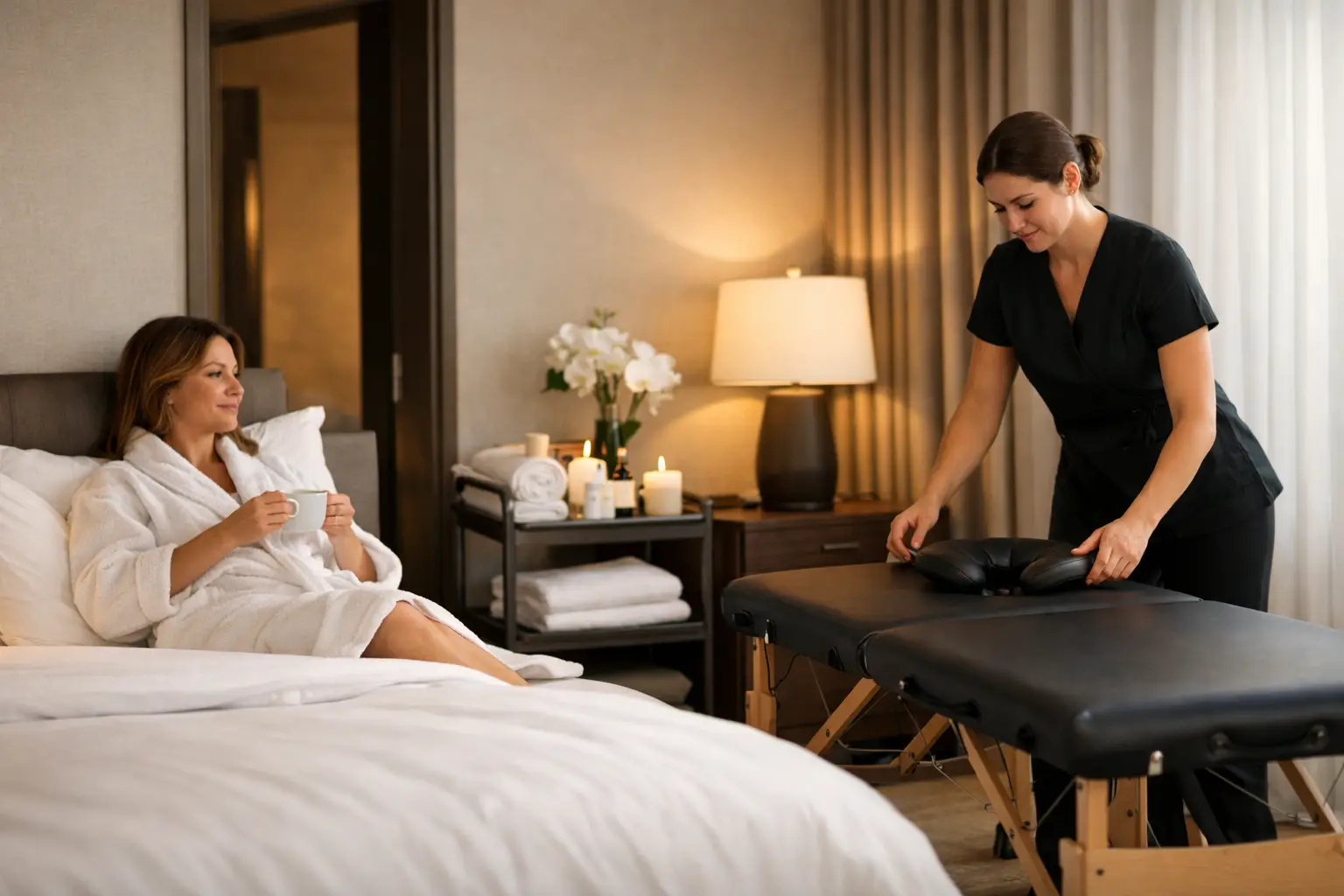
A late flight, a full day of meetings, a long drive or hours spent exploring can leave your body feeling far less rested than the hotel room suggests. Massage for hotel guests brings qualified, personalised care directly to your room, so you can reset without another trip across town, a waiting room or the effort of getting dressed again afterwards.
For business travellers, it can be the difference between arriving depleted and feeling prepared for tomorrow. For holidaymakers, it creates space to slow down and enjoy the stay you planned. The best treatment is not simply convenient: it is tailored to how your body feels on that particular day.
Why in-room massage makes sense when you are travelling
Travel asks more of the body than it appears to. Sitting in a plane, car or conference chair can tighten the hips, lower back, neck and shoulders. Different pillows, unfamiliar beds, changed routines and a packed itinerary may also affect sleep and leave the nervous system switched on long after the day has finished.
A massage in your hotel room removes several barriers to proper recovery. There is no need to navigate traffic, search for a clinic in an unfamiliar suburb or rush back through a lobby feeling sleepy after treatment. Your practitioner arrives with the table, fresh linen and professional equipment needed for the session, while you remain in the privacy and comfort of your accommodation.
That extra ease matters. Once the treatment ends, you can have a shower, drink water, order dinner or simply rest. For many guests, this quieter transition is part of what makes the experience feel genuinely restorative.
Massage for hotel guests should be tailored, not generic
Not every guest needs the same kind of massage. A visitor who has spent two days at a trade show may want focused work through the upper back, forearms and neck. Someone who has completed a fun run or travelled for a sporting event may benefit from recovery-focused treatment for tired legs and hips. A couple on a weekend away may be looking for calm, connection and uninterrupted relaxation.
A qualified practitioner should begin by understanding what is going on for you: where you feel tight or sore, how much pressure feels comfortable, whether you have trained recently and whether there are injuries, health conditions or sensitivities to consider. This conversation helps shape a treatment that feels considered rather than routine.
Relaxation massage for a full-body reset
Relaxation massage is well suited to guests who feel mentally overloaded, fatigued or unable to switch off. Flowing techniques and comfortable pressure encourage the body to settle, making it an appealing choice after a demanding workday, a long-haul journey or a busy holiday schedule.
It is also a thoughtful option when the aim is simply to feel looked after. You do not need to be in pain to benefit from making time for rest.
Remedial and deep tissue work for persistent tension
If you are dealing with a stubborn knot between the shoulder blades, tight calves after walking all day or a lower back that has not enjoyed the flight, a more targeted approach may be appropriate. Remedial, deep tissue and sports-style massage can focus on specific muscle groups and movement patterns, with pressure adjusted to your comfort and goals.
Deeper does not automatically mean better. Effective bodywork is responsive, not a test of endurance. Let your practitioner know if pressure is too strong, if an area feels unusually tender or if you would prefer a more soothing session. The right approach depends on your body, your schedule and how you want to feel after the appointment.
Recovery treatments for active stays
Hotel guests often travel for races, tournaments, cycling weekends, hiking trips or fitness events. In these situations, massage can support recovery by easing muscular fatigue and helping you feel more comfortable after activity. It may also be useful before an event when the focus is light, mobility-oriented work rather than intensive treatment.
Timing matters. A very firm session immediately before a major event is not always the best choice, particularly if you are unaccustomed to deep work. Share your plans with the practitioner so the treatment can support performance and recovery without leaving you feeling heavy or tender.
What to expect from an in-room appointment
A polished mobile massage service should feel uncomplicated from booking to finish. Choose a suitable session length, provide your hotel details and mention any preferences or areas you would like addressed. If you have a medical condition, are pregnant, have recently had surgery or are experiencing acute pain, disclose this before treatment so the practitioner can advise on suitability.
On arrival, the practitioner will set up a portable table in a clear area of the room. Most hotel rooms have enough space when a small table or chair is moved aside, though suites and larger rooms naturally allow more flexibility. You can ask hotel staff about room access requirements, particularly if your booking is taking place later in the evening.
Professional draping is used throughout the session, with only the area being treated uncovered. You can usually choose your preferred music, lighting and room temperature, although the simplest setting is often the most restful. Switch your mobile to silent, lower the lights and give yourself permission not to answer emails for an hour.
Afterwards, take a few moments before jumping back into the day. Gentle movement, water and a relaxed evening can help you hold on to that renewed feeling. If your appointment is focused on a specific concern, your practitioner may also suggest simple stretches or practical ways to reduce aggravation while you travel.
Choosing the right time during your stay
The ideal timing depends on why you are travelling. Business guests often book after their final meeting or on the first evening, when travel stiffness and work tension are most noticeable. If you have an early presentation the next day, a calming massage can be a better fit than highly intensive work that may leave an already sensitive area feeling tender.
For leisure stays, an afternoon appointment can create an unhurried transition into dinner or a quiet night in. Booking for the day before departure can also be a practical way to finish a holiday feeling restored rather than rushed.
Where possible, allow a buffer after the treatment. A massage scheduled five minutes before a reservation, airport transfer or video call can turn relaxation into another item on the itinerary. An hour with nowhere else to be is often more valuable than a longer appointment squeezed into a crowded day.
A premium experience needs professional standards
Convenience should never mean compromising on practitioner quality. Look for a provider with experienced, qualified therapists, clear booking information and an established record of working with hotels. This is especially relevant for guests who have a specific pain concern, need recovery support or simply want reassurance that their privacy and comfort will be respected.
Rejuvenators has delivered mobile wellness and bodywork services for 30 years and is a preferred supplier to more than 800 premium hotels across Australia. That experience matters when arrangements need to be reliable, from coordinated arrival and professional presentation to a treatment that responds to the individual guest rather than a one-size-fits-all menu.
Hotel teams also benefit when guests can access trusted in-room care. It is a refined amenity for corporate travellers, couples, event attendees and guests who value time as much as comfort. Most importantly, it allows the hotel stay to feel more personal: not just somewhere to sleep, but somewhere to recover.
A well-timed massage does not need to fill every minute of your trip. It simply gives your body a chance to catch up with where you are, so the next meeting, meal, flight or slow morning begins from a calmer place.