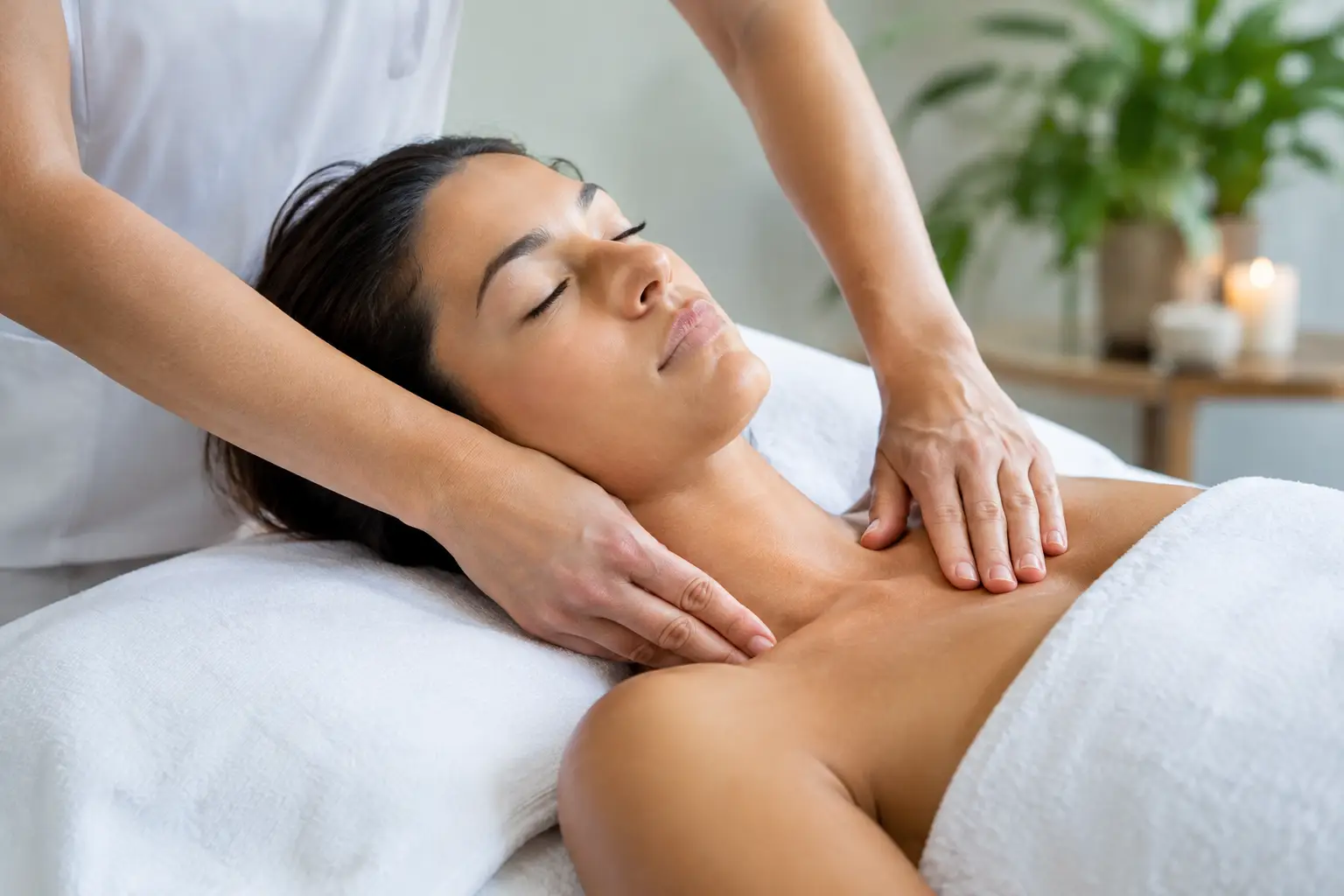
A hard training block, a long-haul flight, a demanding week at work or simply too much time at a desk can leave the body feeling heavy, tight and less like itself. Lymphatic style massage recovery is a gentle, personalised approach for people who want to feel more comfortable in their body and better supported as they rest, move and recover.
It is not about forcing change or pushing through sore tissues. Done well, this style of treatment uses light, considered touch and a slower pace to create a calming recovery experience. For busy professionals, active people and travellers, it can be a valuable way to pause, reset and give the body the care it has been missing.
What is lymphatic style massage recovery?
Lymphatic style massage recovery refers to massage techniques inspired by the light, directional touch often used to support relaxation and comfort around the body’s lymphatic system. The lymphatic system is part of the body’s natural fluid-balance and immune processes. It helps move lymph fluid through a network of vessels and nodes, alongside the circulatory system.
In a wellness massage setting, the focus is generally on gentle strokes, unhurried rhythm and treatment tailored to how you are feeling that day. A practitioner may work around areas that feel puffy, fatigued or restricted, while also considering the wider picture: your activity level, travel, sleep, stress and existing muscular tension.
It is worth making a clear distinction. Lymphatic-style massage is not the same as medical manual lymphatic drainage, which may be prescribed or delivered within a clinical care plan for particular health conditions. A reputable practitioner will not promise to treat disease, remove toxins or replace medical advice. Instead, the goal is a relaxing, recovery-focused session that may help you feel lighter, calmer and more at ease.
When a gentle recovery treatment can feel most useful
The best time for this kind of massage depends on your body and your goals. Some clients enjoy it after a big event, a period of travel or several demanding workouts, when they would prefer nurturing care over deep pressure. Others book when stress has started to show up physically through shallow breathing, a restless mind or that familiar sense of carrying tension everywhere.
After exercise, a lighter session can be especially appealing when muscles are tender and a deep tissue treatment feels like too much. It can encourage you to slow down, hydrate, rest and pay attention to how your body is responding rather than treating recovery as another task to power through.
Travellers often appreciate the comfort of a gentler treatment after time spent sitting in planes, cars or conference rooms. Massage cannot eliminate the health risks associated with travel or inactivity, and it is not a substitute for medical care. However, the simple combination of quiet time, comfortable positioning and tailored touch can be a welcome part of settling back into your routine.
For people whose days are built around screens, meetings and tight schedules, the benefit may be less about sport and more about nervous system downshifting. The body does not always separate physical strain from mental load. A calming session can offer a rare period without notifications, commuting or another item on the to-do list.
What to expect from lymphatic style massage recovery
A quality treatment begins with a conversation. Your practitioner should ask what has brought you in, how you have been feeling, whether you have any current injuries or health considerations, and what you would like from the session. This makes it possible to adjust pressure, positioning and focus areas rather than applying the same routine to every client.
The massage itself is usually lighter than remedial, sports or deep tissue work. Strokes may be soft, rhythmic and directed across broad areas of the body. You should not expect the intense pressure sometimes associated with a remedial massage, and you should not need to brace against discomfort. Gentle does not mean generic. The practitioner’s attention to pace, sensitivity and your feedback is what makes the treatment feel purposeful.
Many people notice an immediate sense of calm or physical ease. Others simply enjoy the opportunity to lie still and switch off. Responses vary, particularly if you are run-down, have trained heavily or have been travelling, so it is sensible to keep the rest of your day flexible where possible.
The role of pressure
More pressure is not automatically better pressure. Deep work may be appropriate for specific muscular tension, but it can be counterproductive when you are already fatigued, sensitive or seeking quiet restoration. Lymphatic-style work is designed for a different outcome: comfort, calm and a gentler sense of recovery.
If you are unsure which massage style suits you, describe what you are experiencing rather than trying to diagnose the solution. Saying that your legs feel heavy after travel, your body feels run-down after training, or you want something soothing rather than intense gives your practitioner a useful starting point.
Supporting your recovery after the session
There is no complicated recovery protocol required. Drink water according to your thirst, enjoy a nourishing meal, and allow yourself a quieter evening if your schedule permits. A gentle walk, some comfortable movement or an early night may feel more beneficial than immediately returning to a punishing workout.
Try to notice the difference between temporary post-exercise soreness and pain that is sharp, persistent, worsening or affecting your normal function. Massage can be a helpful part of a broader wellbeing routine, but it should not be used to ignore symptoms that deserve assessment.
For ongoing recovery, consistency often matters more than intensity. One session may provide a welcome reset, while regular bodywork can create a dependable space to check in with tension, mobility and stress before they build further. The ideal frequency is personal. It may be occasional support around travel or events, or a regular appointment during a demanding season.
When to seek medical advice first
Massage is not suitable for every situation. Before booking, speak with a qualified health professional if you have unexplained swelling, a current infection or fever, a history of blood clots, significant heart or kidney concerns, cancer treatment underway, or recent surgery. The same applies if you are pregnant and have complications or are unsure which treatment is appropriate.
Be open with your practitioner about medications, injuries and changes in your health. This is not a formality. It helps them provide a safer, more considered treatment or advise when massage should be postponed. A professional practitioner will welcome the conversation and respect clear boundaries around what is suitable.
Bringing recovery to where you are
Recovery works best when it fits into real life. If the thought of driving across town, finding parking and rushing home afterwards undermines the point of a calming treatment, mobile massage offers a practical alternative. Having a qualified practitioner arrive with the equipment needed for a comfortable session allows you to stay in the environment where you can continue resting once the treatment ends.
For hotel guests, it can turn a tiring business trip into a more restorative stay. For people at home, it removes a layer of logistics on the days when energy is low. Rejuvenators tailors mobile treatments around your comfort, condition and recovery goals, so the experience can feel both polished and genuinely personal.
A gentle recovery massage will not solve every source of discomfort, and it does not need to. Sometimes its value is simpler: a quiet hour to breathe more deeply, soften the pace and give your body the attentive care it has been asking for.