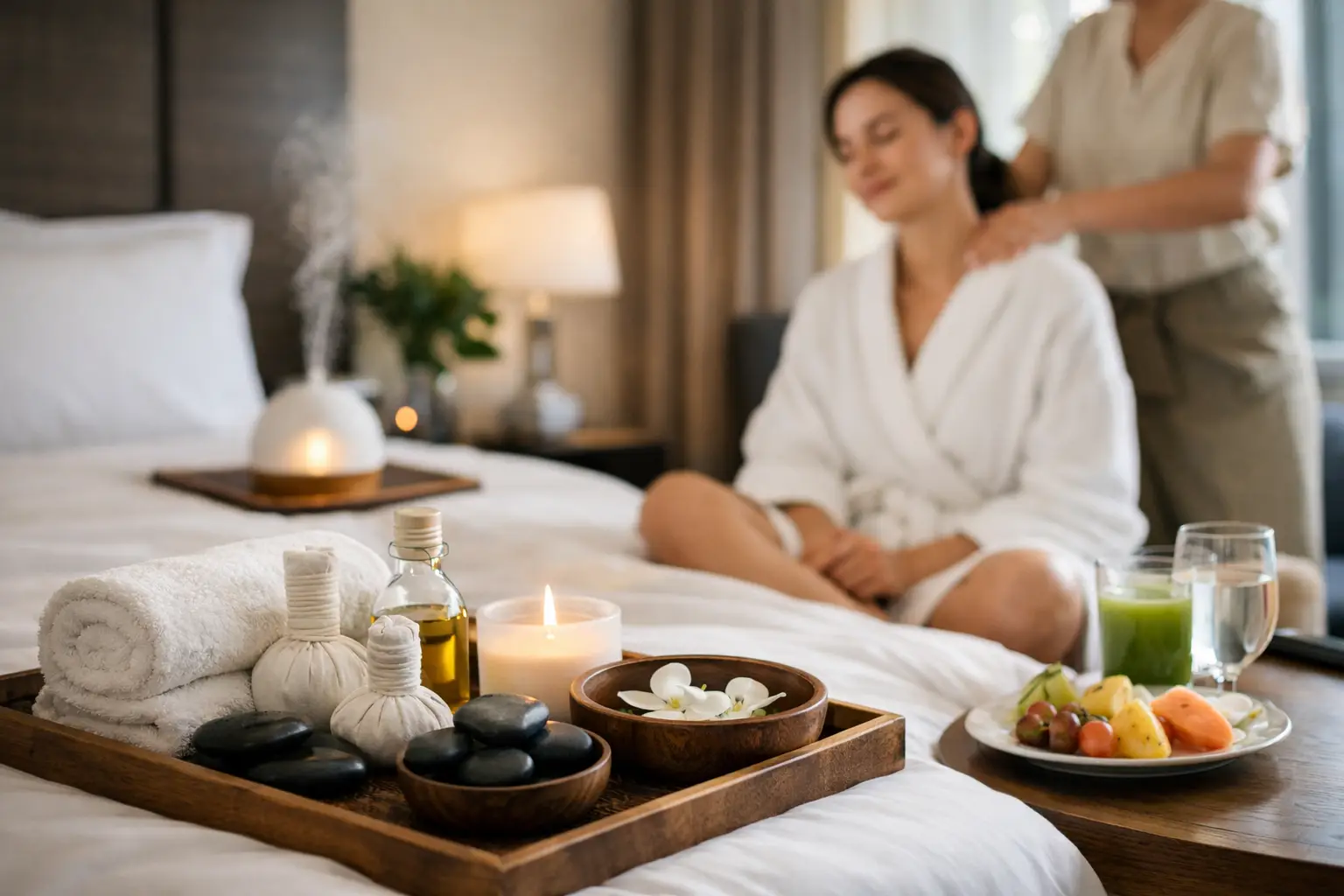
A demanding flight, back-to-back meetings or a full day on your feet can change the way a hotel room feels. Instead of being a place to switch off, it can become the place where tight shoulders, heavy legs and a racing mind finally catch up with you. In room wellness treatments offer a more considered answer: qualified care, delivered where you are already staying, on a schedule that works around your plans.
For travellers, busy professionals and anyone seeking a restorative break at home or away, the value is not simply avoiding a trip to a spa. It is having a treatment tailored to how your body feels that day, then being able to rest straight afterwards. There is no traffic, no reception queue and no need to rush through the benefits of your session to get to the next appointment.
Why in room wellness treatments feel different
Wellness is often treated as another task to fit into an already packed calendar. A mobile treatment changes that equation. Your practitioner arrives with the essential equipment, creates a comfortable treatment space and focuses on the outcome that matters to you – whether that is easing muscular tension, supporting post-training recovery or simply giving your nervous system a chance to settle.
The setting matters. After a massage in a hotel room, you can have a shower, order room service, read or sleep without stepping back into a busy lobby. At home, you can move gently into the rest of your evening rather than driving across town. That unhurried transition can make a relaxation-focused treatment feel more complete.
It also allows for more personal care. A thoughtful practitioner will ask about your comfort, areas of concern, health history and preferred pressure before beginning. The treatment can then be adjusted for a sore lower back after travel, a stiff neck from desk work, fatigued legs after an event or the general tension that comes with a full diary.
Choosing the right treatment for your needs
The best in room wellness treatments are not one-size-fits-all. A deeply relaxing session may be exactly right after a stressful week, while a more focused approach may better suit someone preparing for a race or recovering from a demanding workout. Your goals, current symptoms and personal preference should guide the choice.
Relaxation massage for switching off
Relaxation massage uses flowing techniques and comfortable pressure to help the body soften and the mind slow down. It is an excellent choice when you feel wired, overtired or simply overdue for proper downtime. For hotel guests, it can be a welcome reset after a long journey or before a quieter evening in.
The aim is not to work through every knot with intensity. It is to create calm and comfort. If you have a packed itinerary the following morning, this lighter, restorative approach may leave you feeling refreshed without the tenderness that can sometimes follow firmer work.
Remedial, deep tissue and sports massage for targeted support
When discomfort is more specific, a remedial, deep tissue or sports-focused massage may be more appropriate. These treatments can concentrate on areas affected by posture, repetitive work, exercise or travel, such as the neck, shoulders, hips, calves and lower back.
Firm pressure is not automatically better. Effective bodywork is responsive, not a test of endurance. A qualified practitioner will work within your comfort level, explain what they are addressing and adapt if a technique feels too intense. If you have an injury, persistent pain, recent surgery, pregnancy or a medical condition, share this when booking and with your practitioner before treatment. In some circumstances, another form of care or medical advice may be the better next step.
Recovery-focused therapies when your body has worked hard
Active travellers and athletes often need more than a general massage. Recovery-focused sessions may help address the heaviness and tightness that follows training, competition, long days standing or extended periods of sitting. Depending on your needs and practitioner availability, this may include massage techniques, assisted recovery approaches or complementary modalities such as PEMF or vibroacoustic therapy.
These services are most useful when they fit a broader recovery plan that includes hydration, nourishing food, sleep and sensible movement. They are not a substitute for assessment of a significant injury, but they can be a valuable part of looking after a body that is under regular physical demand.
Couples treatments for a shared pause
A couples massage brings the same convenience to two people at once. It works particularly well for a weekend away, an anniversary, a staycation or simply a rare opportunity to slow down together. Each person can have their treatment tailored separately, so one might prefer calming relaxation work while the other chooses firmer, recovery-oriented massage.
The experience is shared, but the care should remain individual. Comfort, pressure and focus areas are always personal.
Making your room treatment feel effortless
A polished mobile wellness experience begins before the practitioner arrives. When booking, be clear about where you are staying, the treatment you are considering, your preferred time and any access details the venue may require. If you are in a hotel, it is also worth confirming the room has enough clear floor space for a treatment table and that the hotel permits external practitioners where relevant.
You do not need to turn your room into a day spa. A little preparation makes a meaningful difference. Set your mobile to silent, lower the lights if that feels right, choose comfortable clothing and give yourself a buffer after the appointment. If possible, avoid scheduling a demanding call, dinner reservation or check-out immediately afterwards.
For treatments at home, a quiet room with enough space for the table is usually all that is needed. Your practitioner should bring professional equipment and use clean linen, while you provide the privacy and comfort of your own surroundings. For workplace and event bookings, planning is more operational: organisers should allow adequate space, sensible session timing and a calm area away from unnecessary noise or foot traffic.
What quality care should look like
Convenience should never mean compromising on professionalism. The quality of an in-room service rests on the practitioner’s qualifications, communication, presentation and ability to make you feel at ease from the first conversation.
Look for a provider that is transparent about its services and pricing, uses qualified practitioners and has experience operating in the environment you are booking for. Hotel treatments require discretion and reliability. Corporate and event bookings need practitioners who can work efficiently while maintaining a polished guest experience. Home appointments call for the same standards, with additional respect for your space and routine.
A good practitioner will not make unrealistic promises. They will listen, explain the treatment in straightforward terms, check in about pressure and encourage appropriate follow-up if your symptoms need clinical attention. That balance of nurturing care and professional judgement is what turns a convenient booking into a treatment you can trust.
Rejuvenators has spent 30 years bringing tailored bodywork and complementary therapies to homes, hotels, workplaces and events across Australia. With more than one million clients served and preferred supplier relationships with over 800 premium hotels, the focus remains simple: make high-quality care easier to access, without making the experience feel rushed or impersonal.
When an in-room treatment is the better choice
There are times when travelling to a clinic or spa is part of the experience. You may want access to facilities, a longer ritual or a particular practitioner at a fixed location. Yet an in-room appointment is often the smarter choice when time, privacy and post-treatment rest matter most.
It is particularly suited to a business trip with limited free time, a recovery day after an event, a quiet night before an early flight, or a weekend when leaving the house is the last thing you want to do. For employers and hotel teams, it can also add a considered layer of care without asking guests or staff to coordinate another journey.
The real luxury is not excess. It is being able to respond to what your body needs, in the place you already feel comfortable. Make room for that pause, and let the rest of your day begin from a calmer, more supported place.