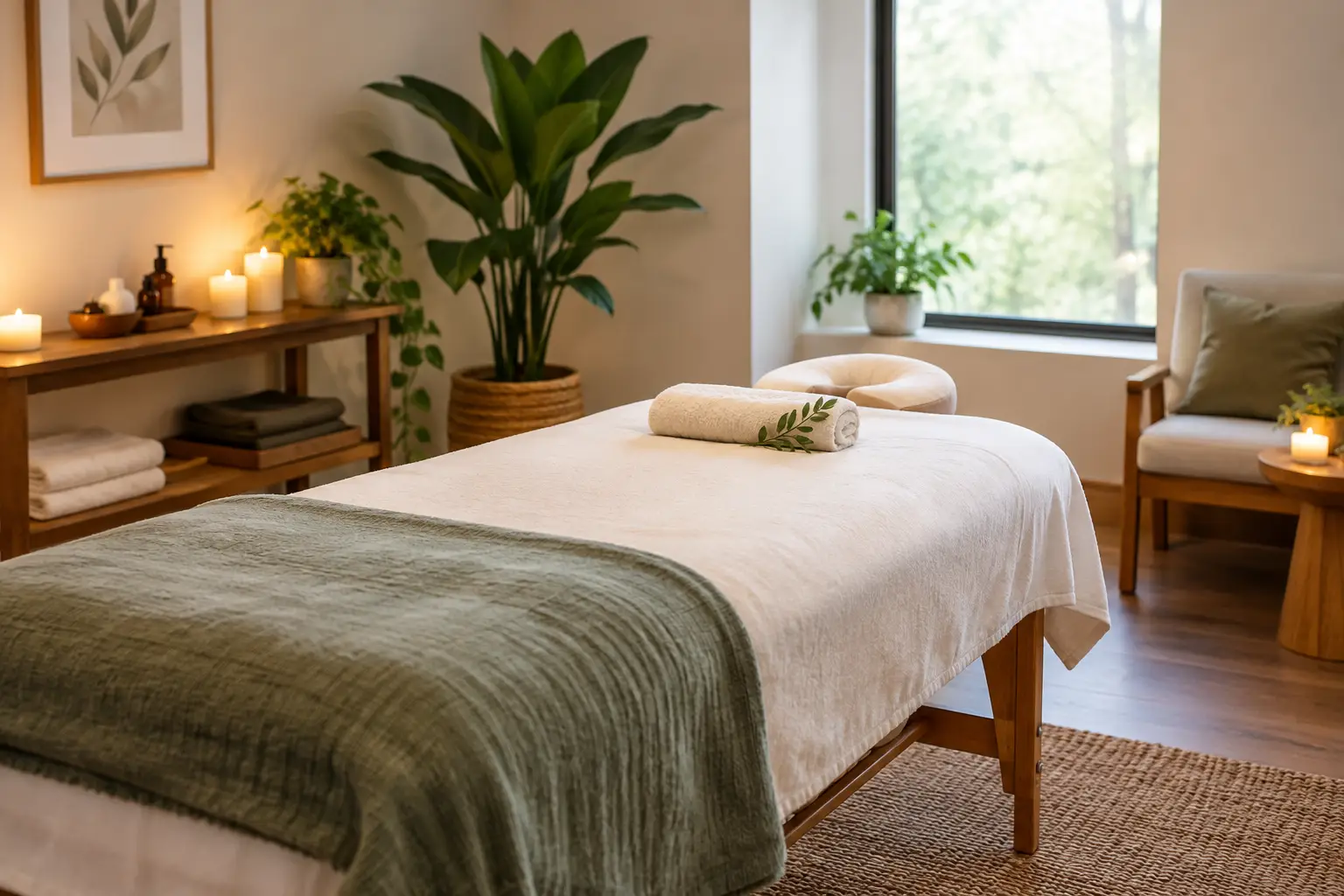
A massage can feel entirely different depending on the room around it. The same skilled hands and tailored treatment may feel deeply restorative in a quiet, warm space, or harder to settle into when the room is cold, cluttered or full of interruptions. Knowing how to set up a massage room is less about creating a day spa at home and more about removing the small distractions that keep your body from switching off.
Whether you are preparing for an in-home appointment, arranging a wellness room at work, or creating a private space for regular bodywork, the aim is simple: make the room feel safe, comfortable and easy for both you and your practitioner to use.
Start with privacy and enough usable space
Choose the most private room available. A bedroom, spare room or quiet study can work beautifully, provided family members, flatmates, pets and household noise can be managed for the duration of the session. Privacy helps you relax physically and mentally, particularly if you are receiving remedial, deep tissue or recovery-focused massage where communication and comfort matter throughout.
The room does not need to be large, but it needs clear floor space. A mobile therapist generally needs room to set up a treatment table and move around both sides safely. As a guide, clear a space roughly two metres wide by three metres long where possible. Move occasional chairs, laundry baskets, cords and low furniture out of the way before they arrive.
If space is tight, tell the practitioner when booking. Experienced mobile therapists can often work around compact apartments and hotel rooms, but knowing the layout in advance makes the visit more efficient. A clear path from the front door to the treatment room is just as useful, especially in apartment buildings where access, lifts and parking need a little planning.
Get the temperature right before the treatment begins
People often feel cooler once they are lying still, even when the day feels warm. A room that is slightly warmer than your normal preference is usually more comfortable for massage. Close windows if there is a draught, use heating or air conditioning before the appointment, and keep a light blanket nearby if needed.
Temperature is not only about comfort. When you are cold, muscles naturally tense and it can be harder to settle into slower relaxation work. A comfortably warm room supports the feeling of ease that helps your body respond to treatment.
Avoid placing the table directly under an air-conditioning vent or beside an open window. If the weather is particularly hot, cool the room beforehand rather than running a noisy unit at full strength during the massage. The best setting is one you barely notice.
Use soft lighting, not darkness
Lighting shapes the mood quickly. Harsh overhead lights can make a treatment feel clinical, while a completely dark room can make it difficult for a practitioner to assess movement, work safely and communicate with you. Aim for soft, low lighting that still allows clear visibility.
A lamp in the corner, bedside lights or dimmable downlights are often enough. If daylight is strong, close blinds or curtains to soften glare and create privacy. Candles can look inviting, but they are optional and not always practical. Open flames, strong scents and wax near linens can create more fuss than calm.
For a workplace wellness room or event treatment area, lighting may be less flexible. In that case, use portable lamps or position the table away from direct fluorescent light where possible. Even small adjustments can make a shared space feel more considered and restful.
Keep sound simple and predictable
Silence is perfectly acceptable. Many people relax best without music, especially if they are managing a headache, sensory overload or a busy week. Others find gentle instrumental music, nature sounds or a familiar relaxation playlist helps them arrive in the moment.
The key is control. Put your mobile on silent, mute computer notifications and let others in the household know you are unavailable. If traffic, construction or neighbouring noise is unavoidable, low-volume music can help soften it without competing with the treatment.
Skip playlists with advertisements, sudden volume changes or lyrics that pull your attention into the words. The goal is not to fill every quiet moment. It is to create a steady background that allows your nervous system to settle.
Prepare the room, then let your practitioner lead
For an in-home massage, you do not need to supply a treatment table, towels, oils or professional equipment when booking a fully equipped mobile service. Your main job is to make the room accessible and comfortable. A quality practitioner will bring the essentials and set up the treatment area with hygiene, safety and your goals in mind.
Before the session, remove fragile items from nearby surfaces and make sure there is a practical place for the therapist to put their equipment. If you have pets, settle them in another room. Even the friendliest dog can be distracting when you are trying to relax, and treatment oils or equipment are best kept out of reach.
Have a glass of water ready for afterwards, but there is no need to overthink food or hydration rituals. Drink normally during the day, avoid arriving overly hungry, and give yourself a few minutes after the massage before rushing back to emails, school pick-up or errands.
Create comfort without overloading the senses
The most effective massage rooms tend to be simple. Fresh sheets, a tidy floor, gentle lighting and a comfortable temperature will do more for the experience than an abundance of décor. Too many scents, bright colours, decorative clutter or competing sounds can work against the calm you are trying to create.
If you enjoy fragrance, use it lightly. Essential oils and scented diffusers may be unpleasant for people with migraines, asthma, allergies or scent sensitivities. Some treatments also use massage oils or balms, so it is wise not to layer extra fragrance into the room unless you know it suits you.
A clean, neutral-smelling space is always a safe choice. Open the room earlier in the day for fresh air, then close it before the appointment if outside noise or temperature becomes an issue.
Plan for the type of massage you are receiving
A relaxation massage room may prioritise warmth, quiet and an unhurried mood. For remedial massage, sports massage or deep tissue work, you may also want room to move, sit up or perform simple assessment exercises. Let the practitioner know about recent training, injuries, pregnancy, surgery, sensitivities or areas you would prefer to avoid before treatment begins.
If recovery is the focus, keep your post-treatment plans realistic. You may feel lighter and more mobile after a session, but intense bodywork can also leave some areas temporarily tender. Give yourself time to rest, take a gentle walk, or simply enjoy not having to travel home from a clinic.
For couples massage, the practical requirements change. Two tables need a larger, uncluttered room and clear access on all sides. Hotel suites and spacious living rooms can work well, but confirm the available space before booking so the setup feels polished rather than cramped.
How to set up a massage room in a hotel or workplace
Hotel guests can create a restorative setting with only a few adjustments. Clear space beside or at the foot of the bed, lower the blinds, set the air conditioning to a comfortable temperature and place the Do Not Disturb sign on the door. Let the practitioner know if access requires reception check-in, a room number confirmation or lift instructions.
In workplaces, select a room away from meeting areas, kitchens and high-traffic corridors. Staff need to feel that their privacy is respected, so a lockable room or clear booking schedule is valuable. A simple sign advising that a treatment is in progress can prevent interruptions and make the experience feel more professional.
Rejuvenators has delivered mobile wellness services for homes, hotels and workplaces for decades, and the same principle applies in every setting: a thoughtfully prepared room gives the treatment space to do its best work.
The final five-minute check
Just before the appointment, walk into the room as though you are arriving for the first time. Is there a clear path? Is the temperature comfortable? Are notifications muted and pets settled? Is there anything on the floor that could make moving around unsafe?
Once those basics are handled, stop arranging and allow yourself to receive the treatment. A well-prepared massage room should not feel staged. It should feel like a small pocket of calm in your own space, ready to help you reset, recover and return to the rest of your day with a little more ease.