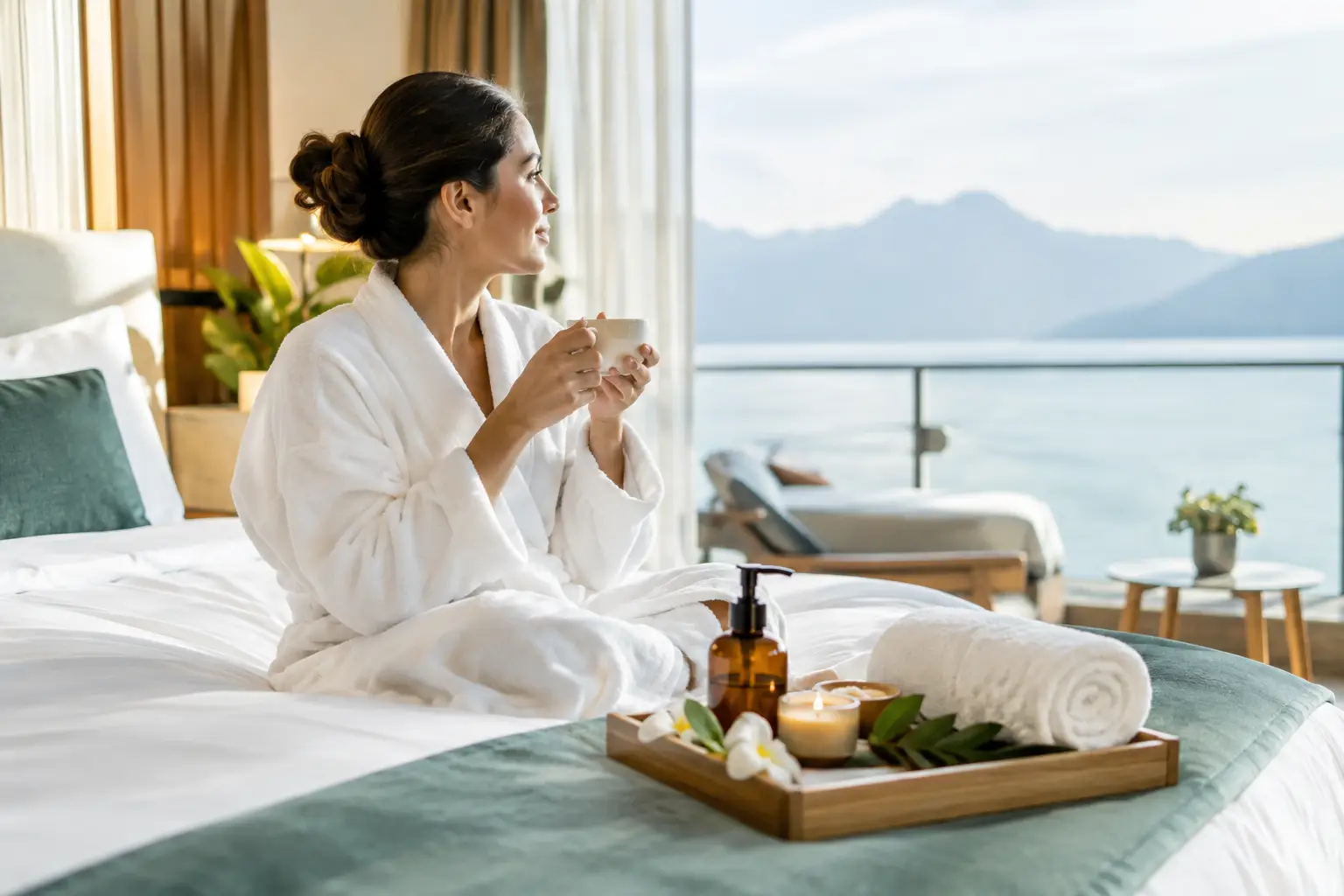
A hotel stay can be restorative, but only if it gives your body a chance to slow down. Long flights, early meetings, unfamiliar beds, conference schedules and evenings spent catching up on emails can leave you more depleted at check-out than when you arrived. This guide to hotel wellness is designed to help you turn a hotel room into a practical place for recovery, comfort and genuine rest.
The best approach is not to fill every spare hour with treatments. It is to choose the support that suits the reason you are travelling, how your body feels and how much time you have. A 60-minute massage after a demanding workday may be more valuable than an over-planned day at a spa. For others, a quiet room routine, better sleep habits and a recovery-focused treatment may be the right combination.
Start with the purpose of your stay
Hotel wellness looks different for a business traveller, a couple on a city break, an athlete travelling for an event and someone taking a short reset from daily life. Before booking a treatment or setting a routine, ask a simple question: what would make tomorrow feel better?
If you have been sitting for hours in transit or at meetings, stiffness through the neck, shoulders, lower back and hips may be your main concern. A remedial, deep tissue or tailored relaxation massage can help ease muscular tension and improve your sense of mobility. If you are preparing for a race, a long walk or an active holiday, sports massage or a recovery-focused session may be a better fit.
For guests feeling mentally overloaded, relaxation is not a lesser outcome. Quality downtime can support a calmer nervous system, better sleep and a clearer head for the following day. Your practitioner should adjust pressure, focus areas and the pace of treatment to your comfort, rather than delivering a one-size-fits-all experience.
Build your hotel wellness plan around timing
Timing has a major effect on how a treatment feels and what it delivers. A strong deep tissue session immediately before a formal dinner or a full day of walking may not suit everyone. You may feel wonderfully loose, but also need time to hydrate, rest and let your body settle.
For most business travellers, late afternoon or early evening works well. It creates a clear line between work and rest, especially when a massage is delivered in your room after meetings have finished. You avoid another trip across the city and can move directly into a shower, light meal and early night.
Morning sessions can suit guests who wake tight after travel, or those with a flexible day ahead. Keep the treatment appropriate to your plans. Gentle relaxation massage, mobility-focused work or reflexology may feel energising without leaving you too sleepy. If you have an important presentation, tell your practitioner so the session can be paced accordingly.
For couples, scheduling treatment before dinner can set a relaxed tone for the evening. Couples massage does not need to be reserved for a special occasion. It can be a simple way to arrive, decompress and share a more considered hotel experience without coordinating separate appointments.
Allow space after treatment
Avoid treating massage like another item to rush through. Leave at least 30 minutes afterwards where possible. Drink water, have a light meal if needed and resist returning straight to emails. If you have received focused work for sore muscles, gentle movement is usually preferable to staying completely still for the rest of the night.
Choose the treatment your body actually needs
A premium wellness experience is personalised, not prescribed from a menu alone. The treatment that sounds most appealing is not always the one that will best support you on the day.
Relaxation massage is ideal when stress, poor sleep or the pace of travel is taking its toll. It uses flowing techniques to encourage a feeling of calm and physical ease. Remedial massage is more targeted, often suited to areas of muscular discomfort, restricted movement or recurring tension. Deep tissue massage can be valuable for people who prefer firmer pressure and have persistent tightness, though firmer is not automatically better. Effective work should feel purposeful, not like something you need to endure.
Sports massage is useful before or after activity, with the approach adjusted according to whether you are preparing, performing or recovering. Reflexology may appeal to guests who want a deeply calming treatment focused on the feet, particularly after long days on foot. Recovery-oriented options, including lymphatic-style techniques, PEMF or vibroacoustic therapy where available, can complement a broader plan for rest and physical recovery.
Tell your practitioner about recent travel, exercise, injuries, pregnancy, health conditions and any areas you would prefer not to have treated. This information helps them tailor the session safely and comfortably. If you are managing acute pain, unexplained symptoms or a medical condition, seek appropriate medical advice before booking a bodywork treatment.
Make the room work harder for your recovery
A hotel room has limits, but a few deliberate choices can change how well you rest. Start by adjusting the temperature and lighting as soon as you arrive. Cool, dark and quiet generally supports better sleep than a room kept bright and warm until bedtime.
Unpack enough to create a sense of order. Leaving a suitcase open beside the bed can make a short stay feel temporary and unsettled. Put your work materials away when the day ends, even if they only move to a drawer or the desk. The physical cue matters.
After a massage, keep the room calm rather than adding more stimulation. Choose a warm shower, comfortable clothing and a simple meal over another round of scrolling or room-service indulgence that will disrupt sleep. Alcohol can feel like a quick way to switch off, but it often fragments sleep and can leave you more dehydrated after travel or treatment.
If hotel noise is an issue, use earplugs or a familiar audio track at a low volume. If you struggle with the pillow provided, ask reception for alternatives early in your stay. Small practical requests are often the difference between a restless night and a properly restorative one.
Protect sleep when your schedule is demanding
Wellness is not only what happens during a treatment. It is also what you stop asking your body to do late at night. When you are travelling for work, the temptation is to use every available minute. That approach may be necessary occasionally, but it is not sustainable across several days.
Set a realistic cut-off for work and place your mobile on charge away from the bedside table. If you are crossing time zones, get daylight early in the day and keep naps short where possible. A brief walk outside can help your body adjust more effectively than spending the afternoon under artificial light.
Be cautious with late caffeine, particularly if you are already tired from flying. A coffee at 4 pm may feel essential before a client dinner, yet the cost can appear at 2 am when you are awake in an unfamiliar room. Hydration, a balanced meal and ten minutes of gentle stretching can provide more useful support than another caffeine hit.
A simple reset for a one-night stay
Even a single overnight stay can include meaningful recovery. Arrive and drink water before heading to your next commitment. Take five minutes to stretch your calves, hips and upper back after sitting. Eat something nourishing, book an in-room treatment if time allows, then create a proper wind-down before bed.
This is where mobile wellness has a particular advantage. Rather than factoring in transport, changing facilities and a return trip, the treatment comes to you. Rejuvenators brings qualified practitioners and professional equipment directly to hotel rooms, allowing guests to receive tailored care while keeping their limited downtime intact.
Know when less is more
It is easy to assume that a wellness-focused stay needs an ambitious itinerary: gym session, sauna, massage, facial, elaborate dinner and an early start. For a guest who is genuinely exhausted, that can become another form of pressure.
Choose one or two experiences that answer your immediate need. A traveller with sore legs may benefit most from a targeted massage and an early night. A couple may prefer a shared treatment followed by an unhurried dinner. Someone attending a multi-day conference might get better results from shorter, regular recovery sessions than one intense treatment at the end.
Listen to how you feel the morning after. If you wake refreshed, keep the day simple and protect that feeling. If you are still tight, tired or unsettled, adjust the plan rather than pushing through. Hotel wellness is most effective when it supports the life you are returning to, not when it becomes another schedule to complete.
The most memorable hotel stays often leave you with more than a comfortable bed or a beautiful view. They give you enough space to reset your body, settle your mind and step back into your next day feeling like yourself again.