That tight band across your shoulders after a long week, or the stubborn knot in your calf that keeps returning after training, does not always need more pressure. In many cases, cupping therapy for muscle tension offers a different kind of release – one that lifts and decompresses tissue rather than pressing further into it.
For people balancing work, travel, training and recovery, that difference matters. Muscle tension is not always just about “tight muscles”. It can reflect overuse, poor posture, stress, limited movement, delayed recovery or a nervous system that has been running too high for too long. Cupping can be useful in those situations, but like any bodywork approach, it works best when it is applied thoughtfully and for the right reason.
What is cupping therapy for muscle tension?
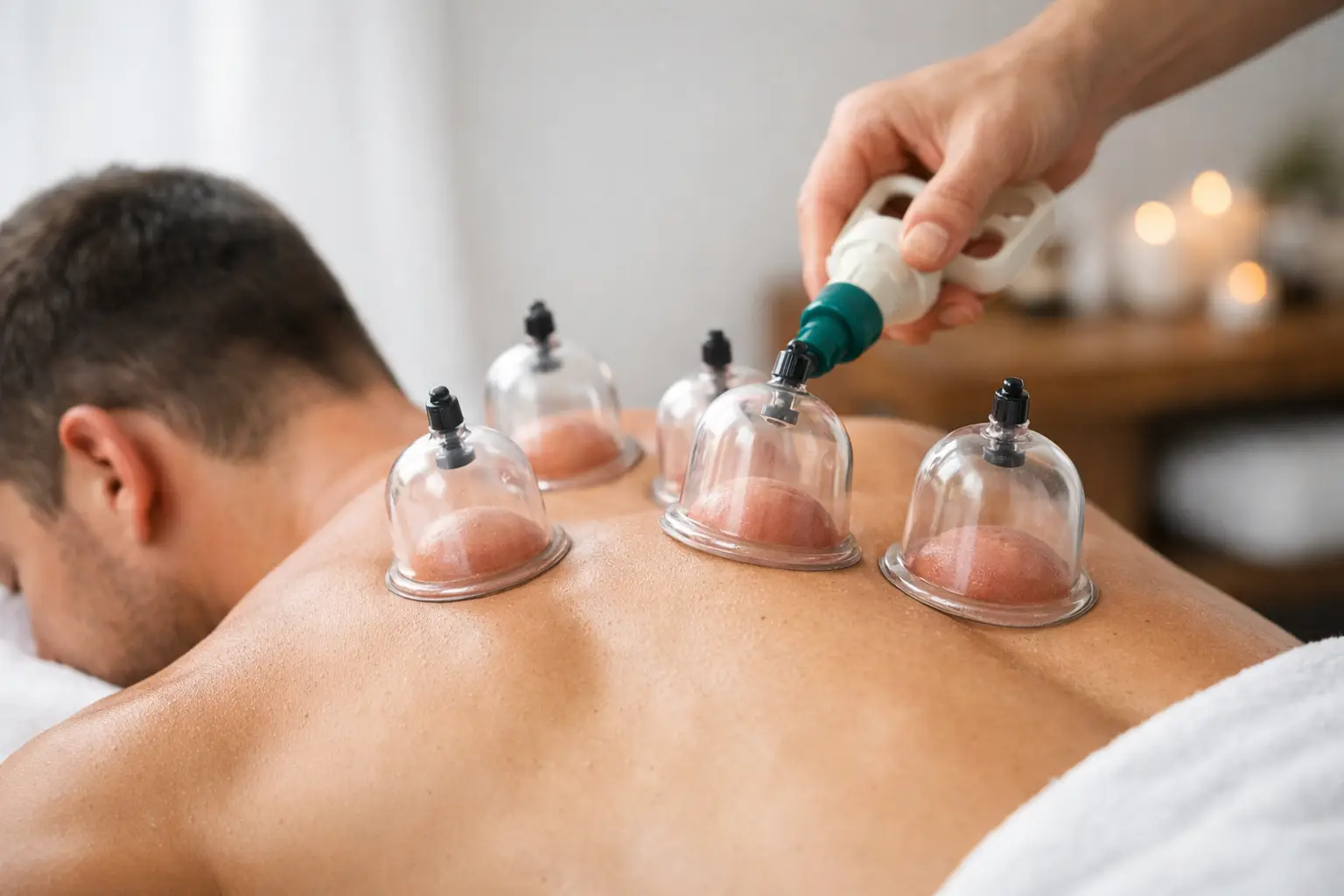
Cupping is a manual therapy technique that uses suction cups placed on the skin to create negative pressure. Instead of pushing down into sore tissue, the cups gently lift the superficial layers of skin and fascia. Depending on the treatment goal, cups may stay in place for a short period or move slowly across the body with oil.
When used well, this can help reduce the feeling of congestion and restriction in areas that commonly hold tension, such as the upper back, neck, shoulders, glutes and legs. Many clients describe the sensation as unusual at first, then deeply relieving – particularly when a muscle feels compressed, overworked or resistant to deeper hands-on work.
It is not a magic fix, and it is not suitable for every body or every kind of pain. But for the right person, at the right time, it can be an effective addition to remedial, sports or recovery-focused treatment.
How cupping therapy may help tight, overworked muscles
Muscle tension often builds in layers. There is the mechanical part – repetitive load, desk posture, gym fatigue, sleeping awkwardly. Then there is the protective part, where the body holds on because a movement pattern is strained, a joint is not moving well, or the nervous system is still on alert. Cupping does not solve all of that on its own, but it may help shift the local tissue environment.
The lifting effect can create space through restricted superficial tissues and may encourage better glide between layers of fascia. In practical terms, that can mean a shoulder that feels less bound up, a low back that moves more freely, or legs that feel less heavy after hard training.
There is also the sensory effect. Cupping gives the body a different input from massage. For some clients, that change in sensation helps the area relax more readily than repeated direct pressure. This is one reason cupping can pair well with massage for people who are tender, guarded or fatigued.
Where clients tend to feel the most benefit
Cupping therapy for muscle tension is commonly used on broad muscular areas rather than small, highly irritated spots. The upper trapezius, between the shoulder blades, thoracic spine, lower back, hamstrings and calves are frequent treatment zones. Athletes and active clients may also find it useful around the glutes and quads when recovery feels sluggish.
That said, location matters less than assessment. A tight neck may be driven by desk posture, jaw tension or a stiff upper back. A sore calf may be related to training load, footwear or ankle mobility. Cupping can support relief, but the treatment should still be tailored to the bigger picture.
What a cupping session usually feels like
Most first-time clients expect pain. In reality, cupping usually feels more like a strong pull or stretch on the skin and underlying tissue. Static cups create a steady suction sensation. Moving cups can feel like a broad, gliding drag that is intense but often easier to tolerate than deep, pointed pressure.
The response varies from person to person. Some people feel immediate lightness and improved range of motion. Others simply notice that an area feels softer, warmer or less dense over the next day or two. It is also common to feel mildly tender afterwards, especially if the tissues were already reactive.
The circular marks associated with cupping can happen, and they can look dramatic, but they are not bruises in the usual sense. They tend to fade over several days, sometimes longer, depending on the person and the intensity used. For clients with visible events, business meetings or beach plans coming up, that is worth factoring in.
When cupping makes sense, and when it may not
Cupping is often a good fit when muscle tension feels broad, persistent and tied to overuse or stress. It can suit people who feel better with indirect release, those recovering from training load, or those who want a treatment that supports mobility alongside hands-on muscle work.
It may be less suitable when the area is acutely inflamed, the skin is irritated, or the client bruises very easily. It also requires caution for people with certain medical conditions, recent injuries, blood clotting issues or heightened skin sensitivity. If pain is sharp, radiating, unexplained or worsening, cupping should not be treated as a stand-alone answer.
This is where experience matters. A qualified practitioner does not simply place cups on every sore area. They consider what the tissue is doing, what the client needs that day, and whether another approach would be more appropriate.
Cupping therapy vs massage for muscle tension
People often ask whether cupping is better than massage. Usually, the more accurate answer is that they do different jobs.
Massage compresses, kneads and mobilises tissue through pressure. That can be ideal for trigger points, general tightness and circulation support. Cupping creates decompression. That can be especially helpful when tissue feels stuck, guarded or irritated by direct pressure. Neither is automatically superior. The best approach depends on the area involved, the client’s tolerance and the treatment goal.
In many cases, the most effective session includes both. A practitioner might use massage to assess and warm the tissues, apply cups to reduce restriction through a broader area, then return to targeted hands-on work and movement-based aftercare. That layered approach often delivers better results than relying on one method alone.
Why technique and setting affect the outcome
A well-delivered treatment is about more than the tool itself. Cup size, suction strength, placement, duration and whether the cups are static or moving all influence the result. Too much intensity can leave the tissue sore and irritated. Too little may not do much at all.
The client’s environment matters too. When treatment happens in a calm, familiar setting, people often settle more quickly and guard less. That can make bodywork more effective, particularly for stress-related tension patterns. For busy professionals, hotel guests and active clients who do not want to lose time commuting across the city, mobile care also removes a practical barrier to getting support when they actually need it.
This is part of why premium mobile wellness services have become so valued in Australian metro life. Relief is important, but so is ease. When a qualified practitioner arrives fully equipped and the treatment is tailored to what your body is presenting with that day, care feels both more accessible and more personal.
Getting the most from cupping therapy for muscle tension
The best results usually come when cupping is part of a broader recovery plan. That might mean combining treatment with remedial massage, improving workstation setup, changing training load, building strength, sleeping better or simply recognising how much stress your body has been carrying.
Hydration and gentle movement after treatment can help, but there is no need to overcomplicate aftercare. A short walk, light mobility work and avoiding another aggressive session on the same area straight away is often enough. If marks appear, let them fade naturally.
It also helps to be clear about your goal. Are you trying to reduce neck tension before a demanding work week? Recover from training? Improve movement in an area that always feels bound up? The more specific the aim, the more targeted the treatment can be.
At Rejuvenators, that tailored approach sits at the centre of effective bodywork. Whether cupping is included within a recovery session or used alongside massage, the real value is not the trend factor. It is selecting the right treatment for the body in front of us, then delivering it with the comfort, professionalism and convenience that make ongoing care easier to prioritise.
If your muscles feel less like they need punishing and more like they need space to let go, cupping may be worth considering – not as a cure-all, but as a smart, supportive option in the right hands.