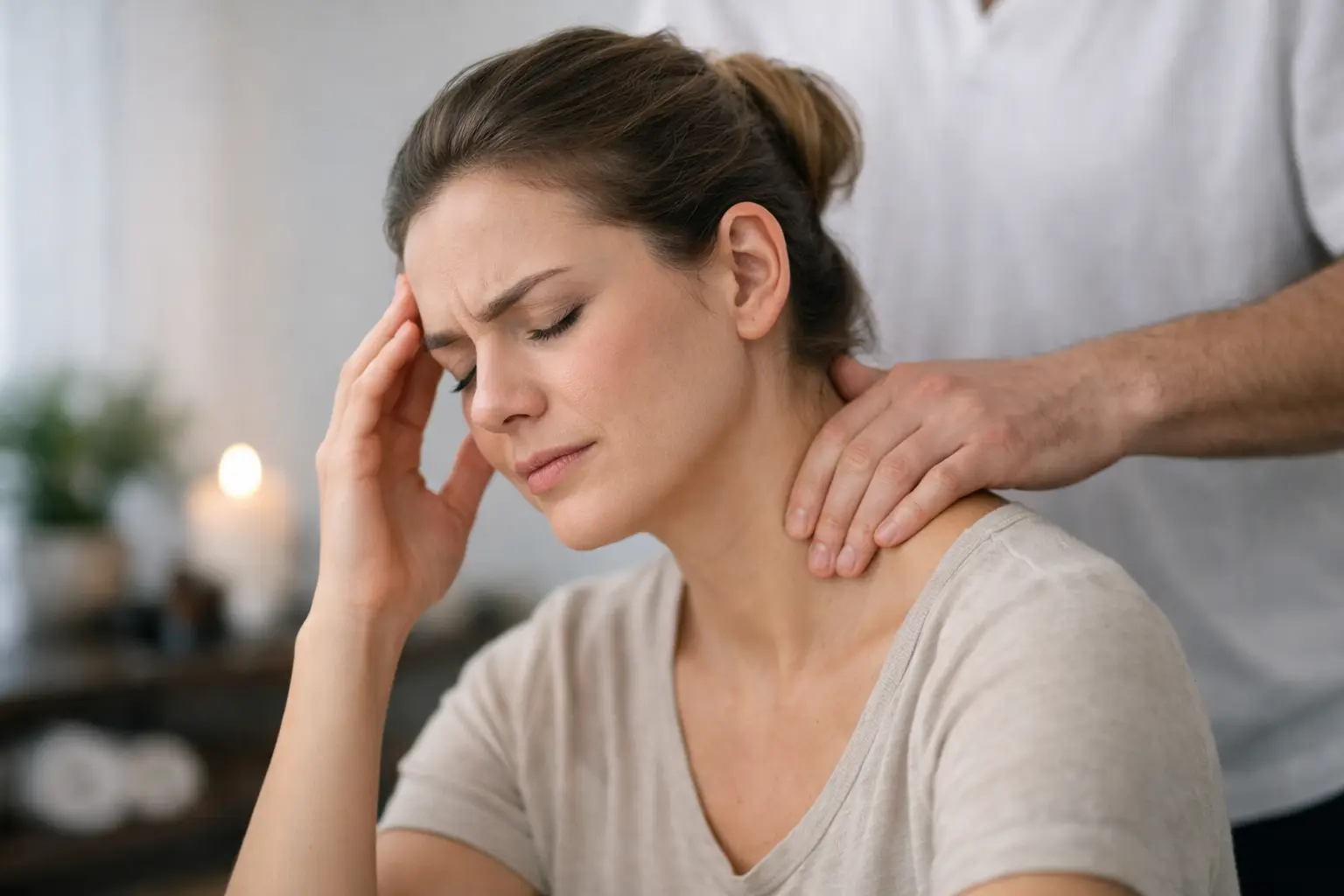
A headache that arrives after a long day at the desk can feel like it starts in the temples, but the tension often has a wider story: raised shoulders, a clenched jaw, shallow breathing and a neck that has barely moved between meetings. So, can massage help headaches? For some people, particularly those whose headaches are linked to muscle tension, stress or neck discomfort, a carefully tailored massage can be a valuable part of relief and prevention.
It is not a cure-all, and it should never replace medical assessment for severe, unusual or persistent head pain. The most useful approach is to understand the likely pattern behind your headaches, then choose treatment that supports your body without overlooking a condition that needs clinical care.
Can massage help headaches caused by tension?
Tension-type headaches are among the headache patterns most likely to respond well to massage. They are often described as a tight band, pressure or dull ache across the forehead, temples or back of the head. While the exact cause is not always clear, stress, fatigue, prolonged screen work, poor sleep and muscle tension around the neck, shoulders and scalp can all contribute.
Massage may help by easing tight, overworked soft tissue and encouraging the nervous system to shift out of a high-alert state. Gentle work through the upper back, shoulders, neck and jaw can reduce the feeling of pulling or pressure that some clients associate with a headache. Slower breathing and time away from a demanding environment can also be part of the benefit.
The result is not always immediate or identical from one session to the next. A massage may soften a current headache, reduce how often tension builds, or simply help you notice the early signs before pain gathers momentum. For busy professionals, that awareness can be as useful as the treatment itself.
Neck-related headaches need a considered approach
Some headaches appear to be connected with the neck. These can begin at the base of the skull or upper neck and refer pain towards the head, sometimes more noticeably on one side. Restricted movement, sustained posture and irritated neck structures may be involved.
In these cases, force is not the goal. An experienced practitioner will assess how you are feeling on the day, work within your comfort level and avoid aggressive pressure around sensitive areas. Remedial or relaxation massage may be adapted to address the surrounding muscles, improve comfort and support easier movement. If neck pain is significant, follows an injury, or comes with neurological symptoms, a medical professional should assess it before massage.
Where massage has limits
Migraine is a neurological condition, not simply a severe tension headache. It may involve throbbing pain, nausea, sensitivity to light or sound, visual changes, fatigue, and symptoms that make touch feel unpleasant. Massage can be supportive for some people between attacks, especially where stress and muscle tension are recognised triggers. During an active migraine, however, even a quiet room and gentle contact may be too much.
There is no single answer because triggers, symptoms and treatment plans vary widely. If you live with migraine, discuss massage as part of your broader management plan with your GP or treating health professional. A practitioner should know your history, current symptoms and preferences before beginning treatment.
Massage is also not an appropriate first response to every headache. Dehydration, skipped meals, eye strain, illness, medication overuse, hormonal changes and blood pressure concerns can all play a role. A high-quality treatment should feel personalised, not like a standard routine applied to head pain of unknown cause.
What a headache-focused massage may involve
A well-planned session begins with a conversation, not pressure. Your practitioner may ask where the pain sits, how long it has been happening, whether you experience nausea or visual symptoms, what tends to trigger it, and whether you have had any recent injuries or medical changes.
From there, treatment may focus on areas that commonly hold tension: the upper back, shoulders, neck, scalp, temples and jaw. Many people are surprised by how much jaw clenching contributes to a sore head, particularly during periods of stress or concentrated computer work. Gentle scalp massage and slow, comfortable work around the base of the skull can feel deeply restorative when appropriate.
Pressure should always be adjusted to your response. Deep tissue work is not automatically better for headaches, and it can be counterproductive when you are already sensitive or fatigued. Relaxation massage may be the better choice when stress is a major driver. A more remedial approach may suit ongoing muscular tightness, provided it is clinically appropriate and comfortable.
For an in-home appointment, the setting has a practical advantage: there is no drive home through traffic immediately after treatment. You can drink water, have a light meal if needed and give your body a quiet window to settle. Rejuvenators practitioners bring the equipment required, allowing the session to be shaped around your comfort in your own space, hotel room or workplace.
Small habits that help treatment last longer
Massage tends to work best as one part of a realistic headache-care routine. You do not need a perfect ergonomic set-up or an hour of stretching every day. Small, repeatable changes are more likely to make a difference.
Try noticing what happens in the hour before your headaches usually start. Are your shoulders creeping up while you work? Have you gone too long without water or lunch? Is your jaw tight while you answer emails? A brief reset – standing up, looking away from the screen, taking slower breaths and moving your neck gently within a comfortable range – can interrupt the build-up.
Regular sleep, meals and hydration also matter, particularly for people prone to migraine. If exercise is part of your routine, build intensity gradually and pay attention to whether particular sessions trigger head pain. Keep a simple record of timing, symptoms and possible triggers if headaches are frequent. It can make conversations with your GP and massage practitioner more productive.
When to seek medical advice rather than book a massage
Most headaches are not emergencies, but certain symptoms need urgent assessment. Seek immediate medical care for a sudden, severe headache that reaches peak intensity quickly, especially if it is unlike anything you have experienced before. The same applies if a headache follows a head injury or occurs with fainting, confusion, fever and a stiff neck, weakness, numbness, trouble speaking, vision loss, seizures, chest pain or shortness of breath.
Arrange a prompt appointment with your GP if headaches are becoming more frequent, changing in character, waking you from sleep, starting after age 50, or regularly requiring pain medicine. If you are pregnant, have cancer, a compromised immune system, a bleeding disorder or take blood-thinning medication, ask your healthcare provider whether massage is suitable for your circumstances.
A reputable practitioner will welcome this caution. It is part of professional care to postpone or modify a treatment when symptoms suggest massage is not the right next step.
Choosing the right time for massage
For recurring tension patterns, booking before pain becomes intense may be more comfortable than waiting for a full headache. Some people prefer regular sessions during demanding work periods, travel-heavy months or intense training blocks. Others use massage after a flare-up has settled, with the aim of reducing the muscular tension that may be feeding the cycle.
Tell your practitioner what relief looks like for you. It may be fewer headache days, less neck tightness, a calmer jaw, better sleep, or simply an hour to reset without another task on the agenda. Those details guide a treatment that is both more comfortable and more useful.
Headaches deserve attention, even when they feel familiar. When muscle tension and stress are part of the picture, tailored massage can offer a calm, practical way to support relief – alongside good daily habits and the right medical advice when symptoms call for it.