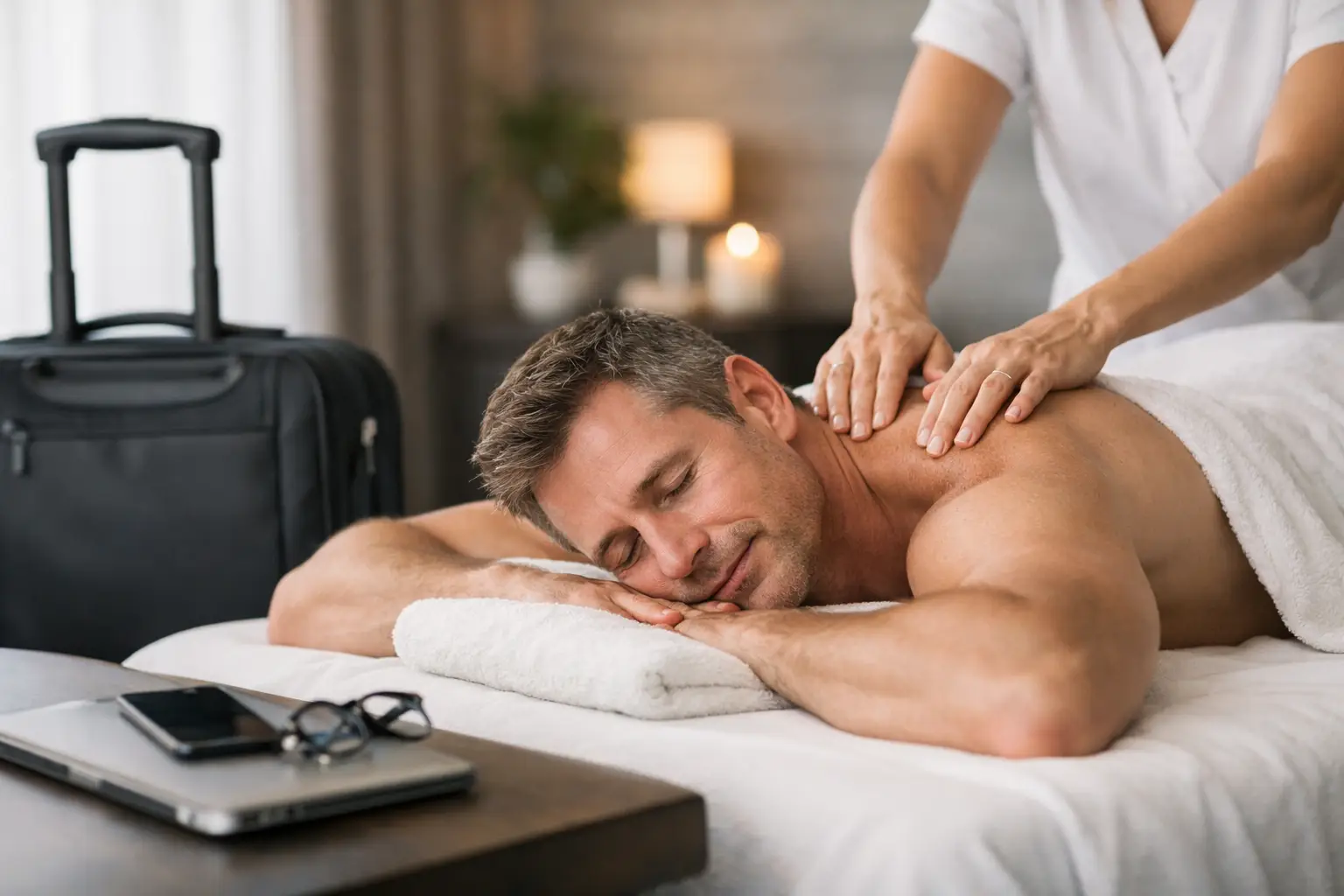
A red-eye flight, a morning presentation and dinner with clients can leave little room to notice how much tension you are carrying. Yet the signs tend to arrive quickly: a tight neck while replying to emails, a lower back that aches after a long taxi ride, or a restless night in an unfamiliar hotel bed. Massage for business travellers is a practical way to reset without giving up more of the day to traffic, waiting rooms or finding a clinic in a city you may barely know.
For frequent travellers, a massage is not simply a holiday extra. The right treatment can support comfort, mobility and calmer sleep at the point when your schedule is demanding the most of you. Delivered in the privacy of your hotel room, it gives you time back while providing care tailored to how your body feels that day.
Why business travel can feel harder on the body
Travel asks the body to sit still for extended periods, then perform on cue. Flights, airport lounges, rideshares and conference sessions often mean hours with the hips flexed, shoulders rounded and circulation reduced. Add a laptop balanced on a small hotel desk, different pillows and meals at unusual times, and it is easy to see why even a short work trip can feel physically draining.
Stress has a physical pattern too. When deadlines, unfamiliar places and back-to-back conversations keep the nervous system switched on, many people hold tension through the jaw, upper back and shoulders without realising it. A tailored massage can help ease muscular tightness and create a quieter transition between work mode and rest.
It will not replace sleep, hydration, movement or medical care where that is needed. But it can be a valuable part of looking after yourself on the road, particularly when the usual routines that keep you well are out of reach.
When massage for business travellers is most useful
The best timing depends on the purpose of your trip. If you have stepped off a long-haul flight feeling stiff and heavy, a gentle relaxation or remedial-style treatment on the first evening may help you settle into the new time zone and feel more comfortable in bed. If your biggest challenge is a packed agenda, booking after your final meeting can mark a clear finish to the workday.
For some travellers, a session before a major event works well, especially if the treatment is calming rather than overly intense. Others prefer it after a trade show, a long day on their feet or a demanding presentation. The aim is not to leave you feeling as though you have completed another task. It is to help you feel composed, comfortable and ready for what comes next.
Deep tissue work may suit persistent muscular tightness, but more pressure is not always better. If you are due to fly, attend a formal dinner or lead a workshop shortly afterwards, a very firm treatment can occasionally leave sensitive areas feeling tender. Let your practitioner know what you have planned, how you usually respond to massage and whether you want to relax, improve mobility or focus on a particular area.
Choose the treatment around your travel day
A relaxation massage is often ideal when your priority is switching off and sleeping well. Remedial massage can be a better fit for recurring neck, shoulder or lower-back discomfort, with techniques selected for your presentation and goals. Sports or recovery-focused massage may appeal after an early hotel-gym session, a run along the river or a physically active work event.
If you are travelling with a partner or colleague and have downtime at the same time, a couples massage can turn an otherwise disconnected evening into a restorative pause. Complementary options such as reflexology or recovery-focused therapies may also suit travellers seeking a gentler session. The right choice comes from an individual assessment, not a one-size-fits-all travel package.
The advantage of a hotel-room massage
The practical benefit is simple: there is no second journey. After a day spent navigating terminals, meetings and city traffic, the last thing most travellers want is another commute to an appointment across town. A mobile practitioner brings the professional equipment, including a massage table, linen and the essentials for a considered treatment, directly to your room.
That convenience changes the experience. You can finish a call, shower, change into comfortable clothes and move straight into your appointment. Afterwards, there is no need to brace for the lift, hail a car or work out where to go next. You can drink some water, take a warm shower if it feels good, dim the lights and allow your body time to settle.
It also makes massage more accessible when a schedule is unpredictable. A delayed flight or extended client dinner can derail a carefully planned wellness routine. Booking a mobile treatment at your hotel gives you a more realistic way to care for yourself around the demands of the trip.
Rejuvenators has spent 30 years delivering qualified mobile wellness services and is a preferred supplier to more than 800 premium hotels across Australia. That hotel experience matters: business travellers need a service that is polished, discreet and easy to arrange, with practitioners who can adapt treatment to the individual rather than follow a fixed script.
What to tell your practitioner before treatment
A good session begins with a short conversation. Be clear about when you travelled, where you feel discomfort, whether you have had massage before and how you would like to feel at the end of the appointment. Mention your preferred pressure, any recent training or activity, and whether you need to be alert for a meeting afterwards or are hoping to sleep.
You should also share relevant health information. Recent surgery, injury, fever, skin irritation, pregnancy, blood-clotting concerns, circulation issues or new, unexplained pain may affect the type of massage that is appropriate. In some circumstances, massage should be postponed or cleared with a health professional first. A qualified practitioner will welcome this information and adjust the session with your comfort and safety in mind.
There is no need to tolerate pressure that feels sharp, unsettling or too much. Therapeutic does not need to mean painful. Speaking up during treatment helps your practitioner make useful adjustments, whether that means spending longer on the hips after a flight, using gentler work around the shoulders or focusing on relaxation rather than deeper techniques.
Small habits that help the benefits last
Massage works best alongside a few uncomplicated travel habits. Drink water regularly, particularly after flying, and avoid treating coffee as your only source of hydration. Take short walking breaks between calls where possible. Even five minutes around the hotel block or a gentle stretch in your room can interrupt the stiffness that builds through a long day.
Set up your temporary workspace with some care as well. Raise your laptop where practical, support your back, and avoid working from bed for hours at a time. Hotel rooms are designed for short stays, not always for ideal ergonomics, so small adjustments can make a genuine difference.
After an evening massage, keep the rest of the night simple if you can. A lighter meal, reduced screen time and a little quiet space may support the calmer state you have created. If you have an early start, consider a treatment time that gives you enough room to wind down rather than rushing straight into sleep.
Build recovery into the itinerary
Business travel does not have to mean accepting sore shoulders, poor sleep and running on adrenaline until you get home. The most effective approach is to plan recovery with the same intention as you plan the airport transfer or client meeting. That may be a 60-minute session after arrival, a focused treatment following a conference day, or a quiet appointment on the final night before travelling home.
A tailored massage gives you a dedicated moment to release the physical load of travel and reconnect with how you feel. When your itinerary is full, that pause can be the difference between simply getting through the trip and arriving at your next commitment clear-headed, comfortable and ready.