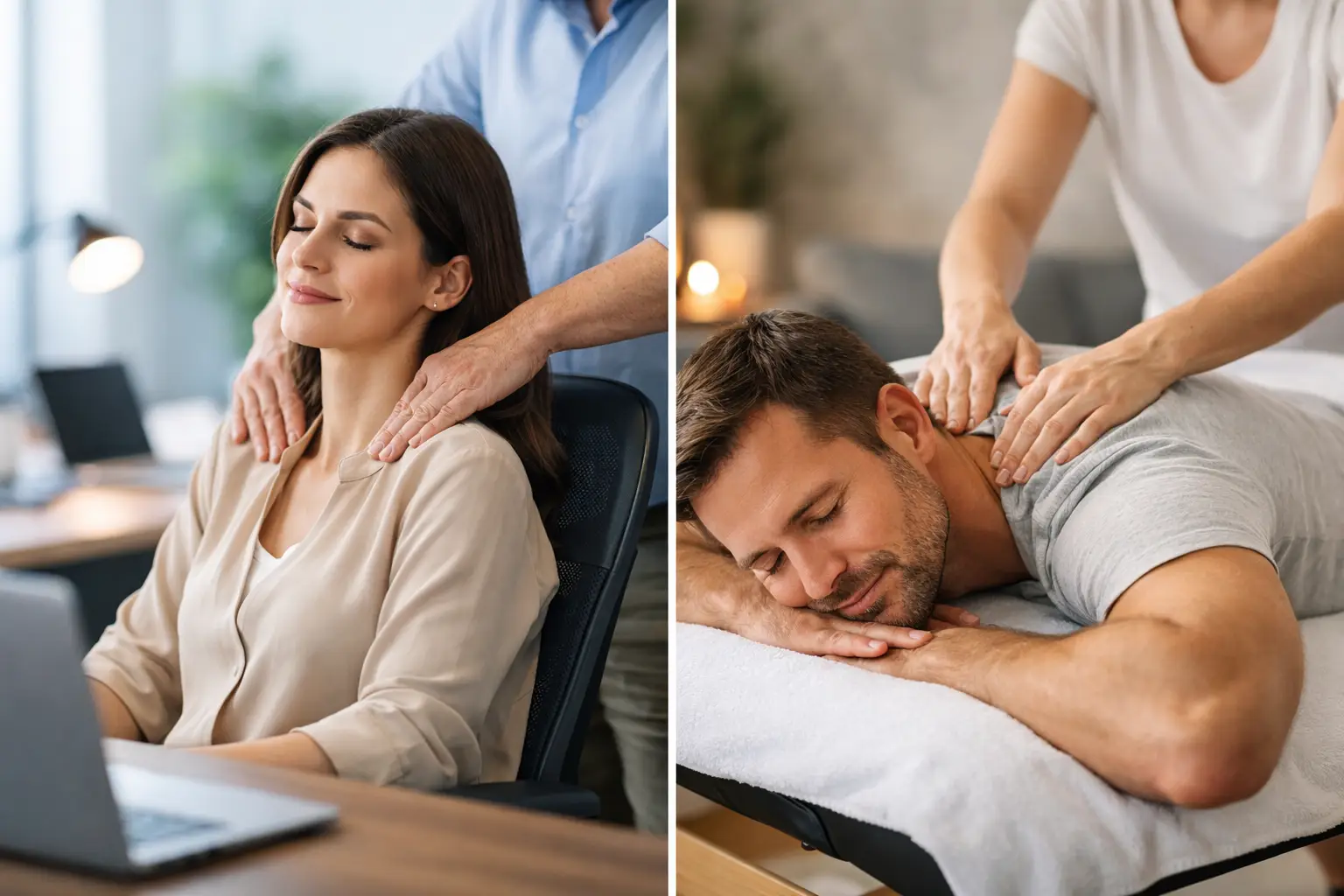
A stiff neck that arrives before lunch, shoulders creeping towards your ears during video calls, a low back that feels locked after the commute home – desk work has a physical cost. The best massage for desk workers is not simply the firmest treatment available. It is one tailored to where your body is holding tension, how long the issue has been present, and whether your priority is pain relief, mobility, stress reduction or all three.
For many professionals, the practical challenge is finding time for care when the workday is already full. A mobile massage can make that reset more achievable by bringing a qualified practitioner to your home, workplace or hotel, without adding another trip across town.
Why desk work creates persistent tension
Sitting is not inherently harmful, but staying in one position for hours asks a great deal of the same muscle groups. The head often moves forward towards a screen, the upper back rounds, hip flexors remain shortened and hands repeat small movements across a keyboard or mobile. Add deadlines, poor sleep or a long commute, and the nervous system may stay in a heightened state long after work finishes.
This can show up as tightness through the neck and shoulders, headaches linked to muscular tension, sore forearms and wrists, restricted upper-back movement, or an achy lower back and hips. Massage cannot replace movement, an ergonomic set-up or medical assessment where it is needed. It can, however, be a valuable part of a realistic recovery routine – especially when treatment is targeted rather than generic.
The best massage for desk workers depends on the goal
There is no single massage style that suits every desk-bound body. The right choice depends on whether you are carrying acute tightness, managing a recurring issue, feeling stressed and depleted, or preparing for a more active week ahead.
Remedial massage for recurring aches and restricted movement
Remedial massage is often a strong option for desk workers with persistent muscular discomfort or a clear pattern of restriction. A qualified therapist assesses the areas involved and tailors techniques to your presentation, rather than applying the same sequence to everyone.
Treatment may focus on the neck, shoulders, chest, upper back, forearms, lower back and hips – but the therapist will consider how these areas influence one another. For example, shoulders that feel constantly tight may be affected by chest tension and limited upper-back movement, not just the muscles at the top of the shoulders.
Pressure can be adjusted throughout the session. Effective remedial work does not need to feel punishing. The aim is measured, appropriate treatment that supports comfort and movement, not a session you have to recover from.
Deep tissue massage for dense, long-held tension
Deep tissue massage can suit people who prefer firmer pressure and feel they have built up stubborn tightness through the back, shoulders or hips. It uses slower, more focused techniques to work into deeper layers of soft tissue.
The trade-off is that deep tissue work is not always the best starting point when you are highly stressed, sensitive, sleep-deprived or new to massage. Too much intensity can leave some people feeling tender and fatigued. A skilled practitioner will work with your feedback and combine firmer techniques with gentler approaches where appropriate.
Relaxation massage when stress is driving the tension
If your body feels wired as well as sore, relaxation massage deserves serious consideration. Stress can increase muscle guarding, disrupt sleep and make everyday discomfort feel harder to shift. A calmer, flowing treatment may help you settle, breathe more freely and leave with a sense of genuine restoration.
This approach can still include attention to common desk-work areas such as the neck, shoulders and lower back. The difference is the overall pace and intention. Rather than chasing every knot with heavy pressure, the session supports the nervous system as well as the muscles.
For busy professionals, this is often the most sustainable choice. A regular treatment that leaves you feeling lighter and well rested can be more useful than an occasional intense session that feels like another item on the to-do list.
Sports massage for active professionals
Sports massage is not only for competitive athletes. It can work well for desk workers who balance long hours at a computer with gym training, running, cycling or weekend sport. Sitting all week then asking the body to perform hard on Saturday can create a familiar mix of tight hips, sore glutes, restricted calves and overloaded upper body muscles.
A sports-focused session can be tailored around training demands, recovery and mobility goals. Tell your therapist about upcoming events, recent exercise and any areas that flare up after activity, so the treatment can match your week rather than work against it.
What a tailored desk-worker massage should address
A quality session starts with a conversation. Your practitioner should ask about your work routine, physical concerns, preferred pressure, activity levels and relevant health history. That information helps them choose the right treatment style and avoid a one-size-fits-all approach.
For many desk workers, treatment commonly includes the following areas:
- The neck, jaw and shoulders, where screen time and stress often accumulate.
- The chest and upper back, to support a more open, comfortable posture.
- The forearms and hands, particularly for regular keyboard, mouse or mobile use.
- The lower back, glutes and hips, which can feel compressed after prolonged sitting.
Not every area needs firm pressure, and not every session needs to cover the whole body. If your main issue is a tight upper back before a presentation, a focused treatment may be ideal. If you are exhausted after a demanding month, a full-body relaxation session may offer better value.
Make massage work beyond the treatment table
Massage is most effective when it fits into a broader rhythm of care. You do not need a perfect wellness routine to benefit. Small, repeatable adjustments can help maintain the comfort and mobility you gain in a session.
Stand up between meetings when you can, even if it is only to refill your water. Change positions rather than trying to hold a perfect posture all day. Set your screen at a comfortable height, keep frequently used items within easy reach and take brief walks during calls that do not require you to be on camera.
After a more focused remedial or deep tissue session, gentle movement, hydration and a quieter evening can feel supportive. If you experience unusual, severe or worsening symptoms, seek advice from an appropriate health professional rather than relying on massage alone.
How often should desk workers book a massage?
Frequency depends on your symptoms, workload, budget and goals. Someone managing a longstanding pattern of tightness may initially benefit from more regular sessions, while another person may book monthly as a preventative reset. A therapist can help you decide on a sensible cadence after assessing how your body responds.
The most useful schedule is one you can maintain. Consistency allows your practitioner to understand your patterns and adjust treatment as work demands, stress levels or exercise habits change. It also makes care feel less reactive: you are not waiting until your neck is so tight that turning your head becomes uncomfortable.
For workplace teams, even short, professionally delivered sessions can offer a meaningful pause in a high-pressure day. For people working from home, booking massage at home removes the friction of traffic, parking and rushing back out after treatment.
Choose expertise, comfort and convenience
The best treatment should feel considered from the first conversation to the moment your practitioner leaves. Look for qualified professionals who listen carefully, explain their approach and adapt pressure to your comfort. A premium mobile service should also arrive properly equipped, create a calm treatment environment and respect your time.
Rejuvenators brings tailored massage and bodywork directly to homes, workplaces and hotels across major Australian cities, making it easier to prioritise recovery without rearranging your entire day. Whether you need remedial attention for recurring desk tension or a restorative relaxation massage after a demanding week, the treatment can be shaped around how you feel now.
Your desk may still be waiting tomorrow. Giving your body an hour of informed, unhurried care can help you meet it feeling more comfortable, more mobile and better able to switch off when the day is done.