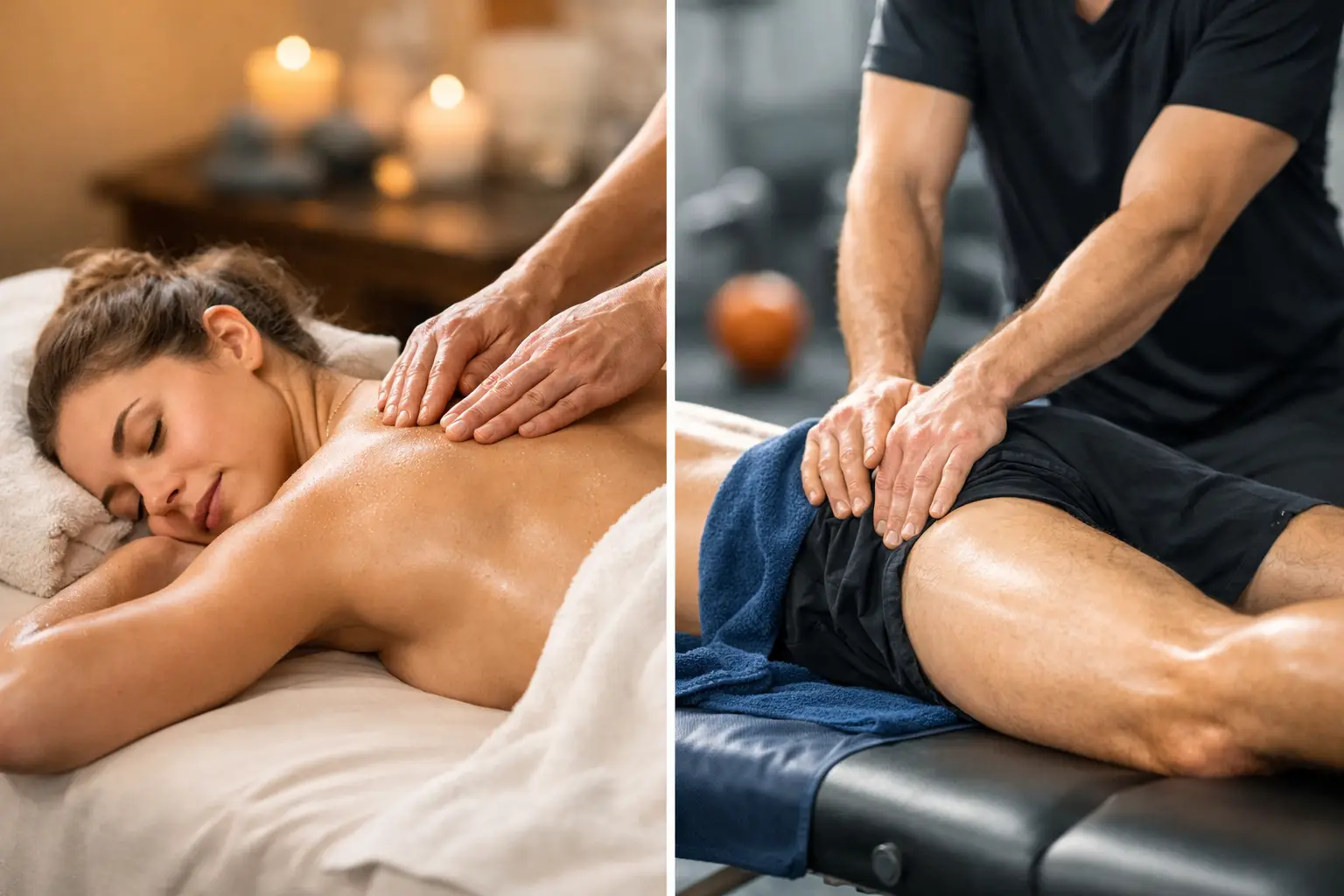
You can feel the difference between the right massage and the wrong one within minutes. If your shoulders are locked from long hours at a desk, a sports-focused session may miss the mark. If you are training hard for a race or backing up after the gym, deep tissue vs sports massage becomes a practical choice, not just a preference.
Both treatments can help with pain, tension and movement, but they are not interchangeable. The best option depends on what your body is dealing with right now, how active you are, and what result you want from the session.
Deep tissue vs sports massage: the core difference
Deep tissue massage is usually chosen to address persistent muscular tightness, restricted movement and areas that feel dense, sore or chronically overworked. The pressure is often slower and more sustained, with the therapist working into deeper layers of muscle and connective tissue to release tension patterns that have built up over time.
Sports massage is more performance and recovery focused. It is designed for active bodies, whether you are an elite athlete, a regular runner, a weekend golfer or someone doing reformer Pilates three times a week. The techniques can still be firm, but the treatment is usually more targeted to the muscles and movement patterns involved in your sport or training load.
That is why the better question is often not which one is stronger. It is which one is more relevant.
What deep tissue massage is best for
Deep tissue massage tends to suit people dealing with ongoing tension rather than a specific training goal. Think of the person who carries stress through the neck and jaw, sits through back-to-back meetings, wakes with a stiff lower back, or notices their posture has become tighter and more compressed over time.
In these cases, the therapist often spends more time on areas where the tissue feels shortened or guarded. The pace is deliberate. Pressure may be firm, but good deep tissue work is not about forcing your body to submit. It is about helping tissue let go while keeping your nervous system settled enough to accept the work.
This style of treatment can be especially useful for stubborn knots, reduced range of motion and muscular discomfort that has become part of daily life. It may also support people who have had long-standing tightness from repetitive work, commuting, travel or poor sleep positions.
There is a trade-off, though. Deep tissue can leave you feeling tender afterwards, especially if the tension has been there for months. If you have a big training session, event or physically demanding workday immediately after, timing matters.
When sports massage makes more sense
Sports massage is usually the better fit when your body is under a clear physical load. That might mean preparing for an event, recovering from one, managing training fatigue or staying ahead of recurring niggles that show up when you move in certain ways.
A sports massage therapist will often look at more than where it hurts. They will consider what you are training for, which muscle groups are overworking, where you feel restricted during movement and whether the issue is tied to performance, recovery or both.
The treatment itself can vary. Before an event, sports massage may be more brisk and stimulating. After hard training, it may focus on reducing muscle soreness, improving circulation and helping your body recover more comfortably. Between sessions, it can be used to manage overuse patterns before they become bigger problems.
This is why sports massage is not just for professional athletes. It suits anyone whose body has a relationship with regular movement, physical goals or repetitive activity.
Pressure is not the point
One of the biggest misconceptions in deep tissue vs sports massage is that one is “hard pressure massage” and the other is not. In reality, both can involve firm pressure. Both can also be adjusted.
What matters more is intention. Deep tissue uses depth to address entrenched tightness and tissue restriction. Sports massage uses technique to support movement, performance and recovery. A skilled therapist will adapt pressure based on your tolerance, your condition and the outcome you want.
More pressure is not always better. If the body braces against the treatment, the session can become less effective. The best results usually come from precise, informed work rather than brute force.
How to choose based on your goal
If your main issue is daily tension, postural tightness, muscular stiffness or stress held in the body, deep tissue massage is often the more appropriate option. It works well when the problem has built gradually and is affecting comfort, mobility or how you feel from one day to the next.
If your body is reacting to exercise, sport or repeated physical effort, sports massage is often the smarter choice. It is particularly useful when you want to recover faster, maintain performance or deal with muscle tightness linked to a specific activity.
There are also grey areas. Someone training regularly while also carrying chronic upper back tension may benefit from either approach, depending on what is flaring up most. That is where tailored care matters. At Rejuvenators, treatments are adapted to the client in front of the therapist, not forced into a rigid category.
What the session may feel like
A deep tissue session often feels slower, more focused and more immersive. The therapist may spend longer on fewer areas, especially where there is obvious restriction. You might notice a gradual softening rather than a quick overall looseness.
A sports massage session can feel more dynamic. The therapist may work across related muscle groups, use stretching or mobilisation techniques, and focus on how the body is functioning rather than just where it feels tight. If you are preparing for activity, the session may leave you feeling more switched on. If you are recovering, it may feel relieving without being overly heavy.
Neither experience should feel random. A premium treatment should have a clear purpose from the first few minutes.
Deep tissue vs sports massage for pain and recovery
If you are choosing between deep tissue vs sports massage because of pain, the source of that pain matters. General muscular pain from desk work, travel, tension or poor posture often responds well to deep tissue. Pain linked to training load, repetitive motion, muscle fatigue or sports-specific patterns often responds better to sports massage.
Recovery is slightly different. Sports massage usually has the edge when the goal is to help the body bounce back after physical effort. It is more naturally suited to active recovery and maintaining movement quality over time.
That said, deep tissue can still play an important role in recovery if the issue is accumulated restriction. For example, a cyclist with chronically tight hips or a swimmer with heavy upper back tension may benefit from deeper remedial work before seeing better movement in training.
A few situations where the choice can change
If you are very sore after intense exercise, deep tissue may be too much on that day. A sports-oriented recovery treatment is often the better call.
If you are carrying an old knot in your shoulder that never quite resolves, sports massage may help if it is linked to training mechanics, but deep tissue may be more effective if it is simply longstanding muscular tension.
If you are returning to exercise after a break, sports massage can help your body adapt, but if your baseline tension is already high, starting with deep tissue may make movement feel easier.
And if you are heavily stressed, sleep deprived or run down, very aggressive work of any kind may not be ideal. A good therapist will read that and adjust.
The best massage is the one matched to your body
There is no universal winner in deep tissue vs sports massage. There is only the treatment that best fits your body, your schedule and your goals.
For some people, that choice stays consistent. For others, it changes across the month. You might need deep tissue after a stretch of travel and desk time, then sports massage once training picks up again. What matters is being treated by a qualified practitioner who can tailor the session properly, explain the reasoning and meet you where your body is on the day.
When massage is delivered with that level of care, it becomes more than a moment of relief. It helps you move better, recover more comfortably and feel more at home in your own body. That is usually the clearest sign you chose well.