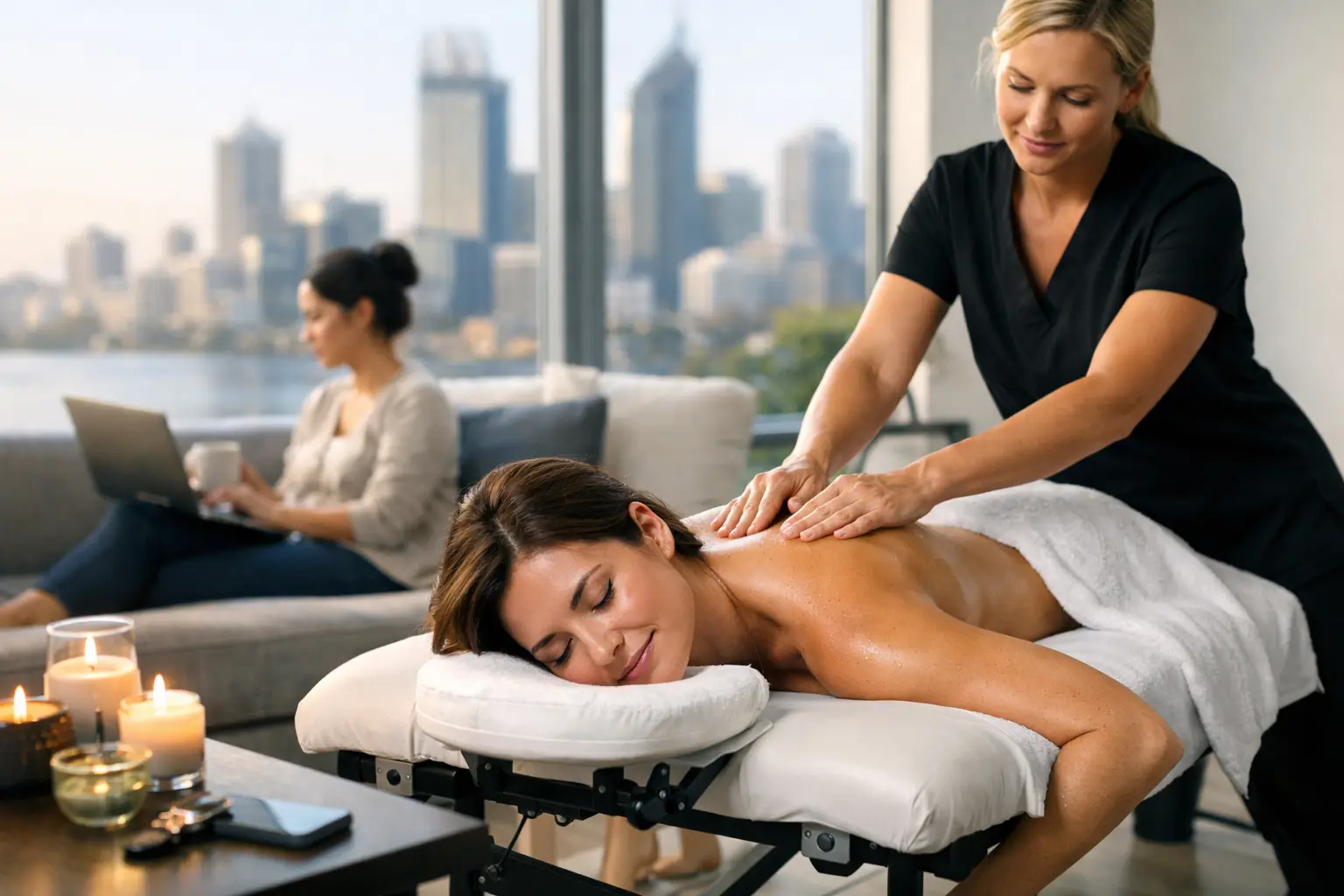
A tight neck after three flights, sore hips from sitting at a desk all week, or that familiar Sunday feeling where your body is asking for a reset – this is usually when people start wondering, is mobile massage worth it? For many Australians, the answer comes down to one thing: whether convenience changes the quality of care. If the treatment is skilled, personalised and professionally delivered, having it come to you can be more than a luxury. It can be the reason you actually make time for recovery.
Is mobile massage worth it when time is the problem?
For busy professionals, parents, travellers and active people, the biggest barrier to looking after the body is not always cost. It is friction. Driving across town, finding parking, waiting for an appointment and then heading home straight back into traffic can take a 60-minute treatment and turn it into a half-day exercise.
Mobile massage removes that friction. The therapist brings the table, linen and treatment setup to your home, hotel or workplace, so the session fits into your life rather than the other way around. That matters more than it might seem. When care is easier to access, people tend to book sooner, use it more consistently and avoid letting minor tension build into something harder to manage.
The value is especially clear for people whose schedules are already crowded. If you have back-to-back meetings, children to juggle, post-training soreness or limited time while travelling, the ability to receive treatment where you are can make regular bodywork realistic instead of aspirational.
What you are really paying for
Some people hesitate because mobile services are often priced at a premium compared with clinic-based appointments. That is fair. You are not just paying for hands-on treatment time. You are also paying for travel, setup, portability, scheduling efficiency and the comfort of receiving care in your own environment.
That premium can be worthwhile if the service delivers genuine professional standards. Qualified practitioners, clear booking systems, tailored treatments and reliable arrival windows all matter. Without those, convenience alone does not justify the price.
The better question is not whether mobile massage is cheaper. Usually, it is not. The question is whether it delivers better overall value for your situation. For someone with a packed calendar, post-event fatigue, mobility limitations or a preference for privacy, it often does.
Where mobile massage tends to outperform clinics
The strongest argument for mobile massage is what happens after the treatment. In a clinic, you finish your session, get dressed and head straight back into the outside world. That may mean bright lights, traffic, public transport or rushing to the next appointment.
At home or in a hotel room, the transition is gentler. You can stay warm, hydrate properly, rest, stretch lightly or continue the calm state your body has shifted into. For relaxation-focused treatments, this can make the experience feel deeper and longer-lasting. For recovery or remedial work, it gives your body a better chance to settle rather than immediately brace again.
It also creates a more personal setting. Some clients feel more comfortable discussing pain patterns, stress levels or movement restrictions in a familiar space. Others simply relax faster when they are not in a waiting room or unfamiliar clinic environment.
That does not mean mobile always wins. Clinics can be better equipped for highly specific assessment or where multiple pieces of equipment are needed. But for many massage goals – relief, recovery, relaxation and nervous system down-regulation – the home or hotel setting can be an advantage, not a compromise.
Is mobile massage worth it for pain relief and recovery?
It can be, provided you book the right style of treatment and work with an experienced practitioner. Mobile massage is not only about candles and soft music. It can also support practical outcomes such as loosening tight shoulders, reducing muscular fatigue, easing lower back tension, assisting post-exercise recovery and helping the body move more freely.
If your goal is remedial support, sports recovery or deep tissue work, the therapist still needs to assess what is going on and tailor pressure, techniques and focus areas accordingly. The setting does not remove the need for skill. In fact, it makes practitioner quality even more important.
This is where a premium mobile provider earns its place. When the service is backed by experienced professionals, broad treatment options and a model built for consistency, clients can receive targeted care without sacrificing comfort. That balance is why mobile wellness has become a preferred option for many hotel guests, athletes, corporate teams and people managing ongoing tension.
When it may not be worth it
There are situations where mobile massage may not be the best fit. If you are seeking a highly clinical environment, need specialised rehab equipment or want a treatment bundled with an in-clinic multidisciplinary assessment, a fixed practice may suit you better.
It may also be less appealing if your home environment is noisy, cramped or difficult to prepare. A massage in the lounge room while the television is blaring and deliveries are arriving every ten minutes will not feel particularly restorative.
Price sensitivity is another factor. If budget is the main priority and you have easy access to a trusted local clinic, the convenience premium may not make sense. There is no value in paying extra for a service feature you do not really need.
The same applies if you only book massage occasionally and do not mind the travel. Mobile is most compelling when convenience has a real effect on your wellbeing, consistency or recovery.
What makes mobile massage worth it or not
The difference between a worthwhile mobile treatment and a disappointing one usually comes down to execution. Convenience gets attention, but professionalism is what creates trust.
Look for clear service information, transparent pricing, qualified therapists and a booking process that feels polished from the start. The practitioner should arrive prepared, work to your needs and create a treatment plan that reflects why you booked in the first place. Whether you want to unwind, recover after training, support circulation or relieve persistent tightness, the session should feel considered rather than generic.
Scale and track record matter too. A provider that has delivered care consistently across homes, hotels, workplaces and events is more likely to have refined the logistics and standards that mobile treatment depends on. That is one reason many Australians choose established services such as Rejuvenators, where convenience is paired with practitioner quality and a premium service model rather than treated as a novelty.
Who gets the most value from mobile massage?
Busy city professionals are an obvious fit because time is their scarcest resource. Instead of losing an evening to traffic and appointment gaps, they can finish work and step straight into treatment. Hotel guests and business travellers also benefit because recovery can happen without navigating an unfamiliar city.
Athletes and active individuals often see strong value as well. If you are already fatigued after a game, long run or heavy training block, not having to travel for treatment can help preserve energy and support better recovery. For couples, in-home sessions can also feel more relaxing and practical than trying to coordinate separate bookings elsewhere.
There is also a quieter group who benefit significantly: people who simply recover better in private. If you are overstimulated, managing stress, feeling physically flat or dealing with ongoing muscular tension, having the treatment come to your space can make it easier to truly switch off.
So, is mobile massage worth it?
For many Australians, yes – especially when time, comfort and consistency matter as much as the treatment itself. The best mobile massage services do not ask you to choose between convenience and quality. They bring expert care to your door in a way that supports real relief, real recovery and a more manageable routine.
It is not the right choice for every person or every situation. But if the reason you keep delaying massage is the effort around getting there, mobile can remove the obstacle that has been standing between you and feeling better. And when your body has been asking for a reset for weeks, that kind of ease is not indulgent. It is often the most practical decision you can make.