You might only notice how tightly you’ve been holding your shoulders when a meeting ends and you finally lower them. For a colleague who has spent the morning on the phone, it might be the moment they take off their headset. A corporate massage gives people a chance to step away from their work, tell a therapist where they’re feeling the day and spend a few quiet minutes looking after themselves.
One of the biggest advantages of workplace massage is also the simplest. The therapist comes to you. Employees can book a time that fits their day, walk to a nearby meeting room and return to work afterwards. For someone who finds it hard to fit a massage around commuting, school pick-up or shift work, having that opportunity during paid work time can make all the difference.
What happens during a corporate massage?
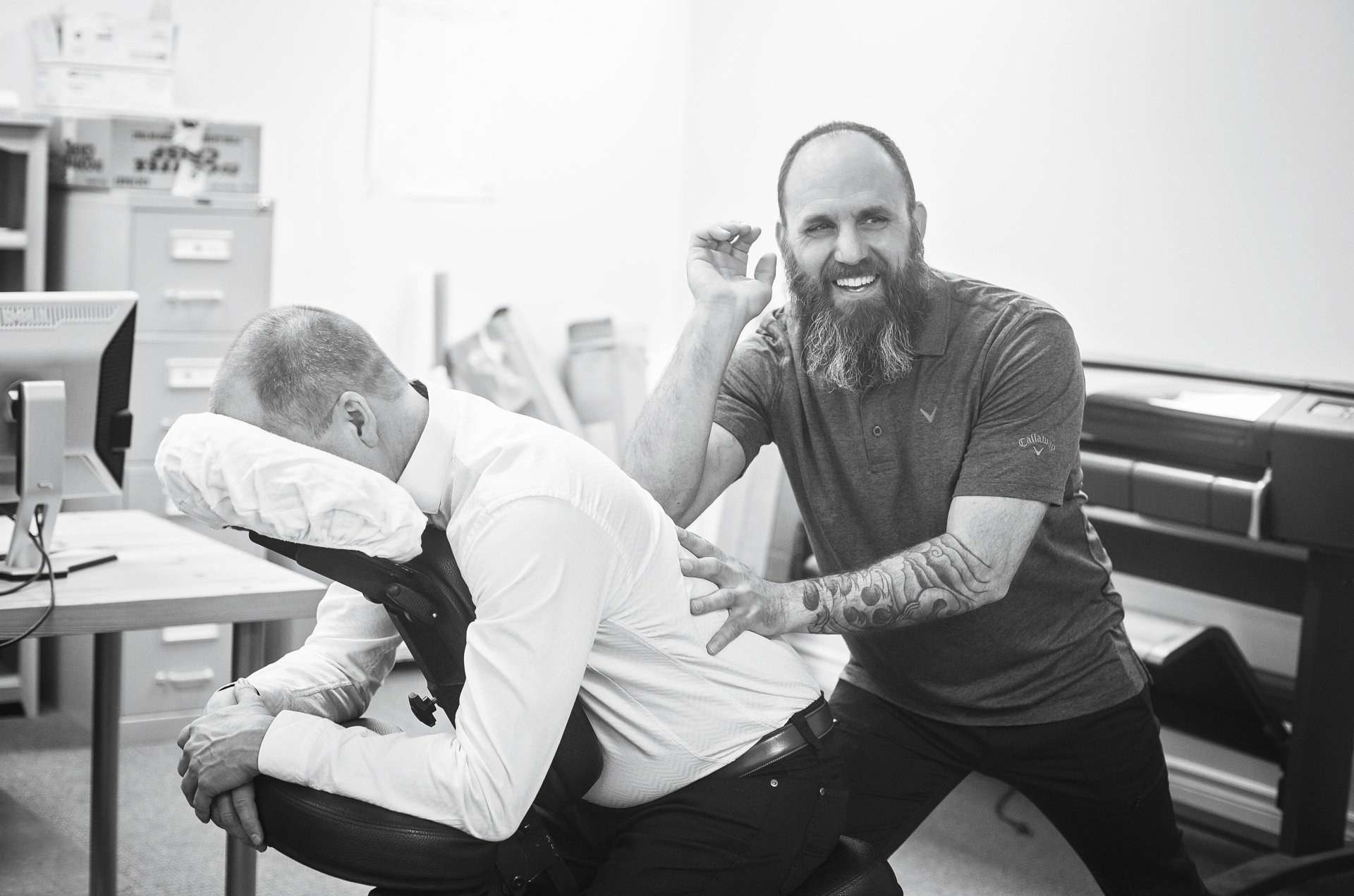
A common option is seated chair massage. The therapist sets up a portable massage chair in a quiet part of the workplace. You stay fully clothed and lean forward into the chair, with your head and arms supported. This makes it easy to fit a session between appointments without needing to change clothes or shower afterwards.
Before starting, the therapist will ask what you’d like them to focus on, how much pressure you prefer and whether there are any areas you’d like them to avoid. You might ask them to spend most of the session on your shoulders and upper back, or give your forearms and hands some attention after a morning at the keyboard.
In a short appointment, it helps to choose the one area where you’d most appreciate the time. If you enjoy gentle pressure or would prefer to sit quietly during the massage, say so. The session is yours, even when your employer has organised it.
What are the benefits of massage in the workplace?
Think about what usually happens when you get 15 minutes between meetings. It’s just enough time to answer a few emails, return a call or start the next task early. A massage appointment gives that break a place and a purpose. Once you’re in the chair, there’s nothing you need to answer or finish.
For someone who spends hours concentrating at a screen, the appeal might be the chance to relax their neck and shoulders. For a receptionist who has been speaking with clients all morning, the part they value most might be 15 minutes of quiet. Colleagues can come away from the same experience having appreciated quite different things.
From an employer’s perspective, it’s also a personal way to say thank you. After a busy end-of-financial-year period, for example, setting aside paid time for each team member shows that the gesture extends beyond booking the therapist. Someone has also thought about who will cover the phones so the person in the chair can enjoy their turn.
How long should a workplace massage be?
For a first workplace massage day, 15-minute appointments are a practical starting point. That gives each person time to settle in and ask the therapist to focus on a particular area, while keeping the session easy to fit around work. Shorter sessions can suit a conference or staff event where people are dropping in between activities. Longer appointments may suit a smaller team that wants a more unhurried experience.
When working out how much time to book, allow for more than the massage itself. For example, eight 15-minute massages add up to two hours of hands-on time. The booking also needs room for people to swap over, the therapist to prepare the chair and any scheduled breaks. Share your headcount and the time you have available when you enquire so the provider can help you plan a realistic schedule.
Choosing the right space and time
A small meeting room with a closing door often works well. Employees can speak privately with the therapist, and there’s less chance of a colleague interrupting to ask a quick question. If you’re organising massage at a conference, look for a spot that delegates can find easily but that sits away from the registration queue, loudspeakers and foot traffic.
Timing deserves just as much thought as the room. Lunch might look convenient on the calendar, but staff may already use that time to eat, take a walk or run an errand. Offering appointments on either side of lunch gives people more choice. For shift-based teams, stagger the sessions so the same group doesn’t miss out each time.
Keep the invitation simple. Let people know how long the massage lasts, that they can stay fully clothed and how to reserve a time privately. Make participation optional, and leave questions about comfort, pressure or personal health for the employee to discuss directly with the therapist.
A one-off staff event or a regular massage program?
A one-off booking works well when there’s a particular occasion in mind, such as a staff appreciation day, a conference or the end of a demanding project. If you’re considering regular workplace massages, start with one visit and ask employees two questions afterwards. Would you book again, and was there anything that made it difficult to attend?
The second question can tell you as much as the first. A fully booked morning might still have missed the afternoon shift. An empty appointment might mean the front desk was too busy for someone to leave. Those details help you decide whether to change the timing, offer longer sessions or arrange another visit.
Organise a corporate massage for your team
Rejuvenators has been providing professional mobile massage across Australia for more than 30 years. Whether you’re organising a massage morning for a small office, thanking staff after a busy period or planning a corporate event, a good place to start is with your location, preferred date, approximate number of participants and the time you have available.
Get in touch with Rejuvenators to plan a workplace massage for your team.