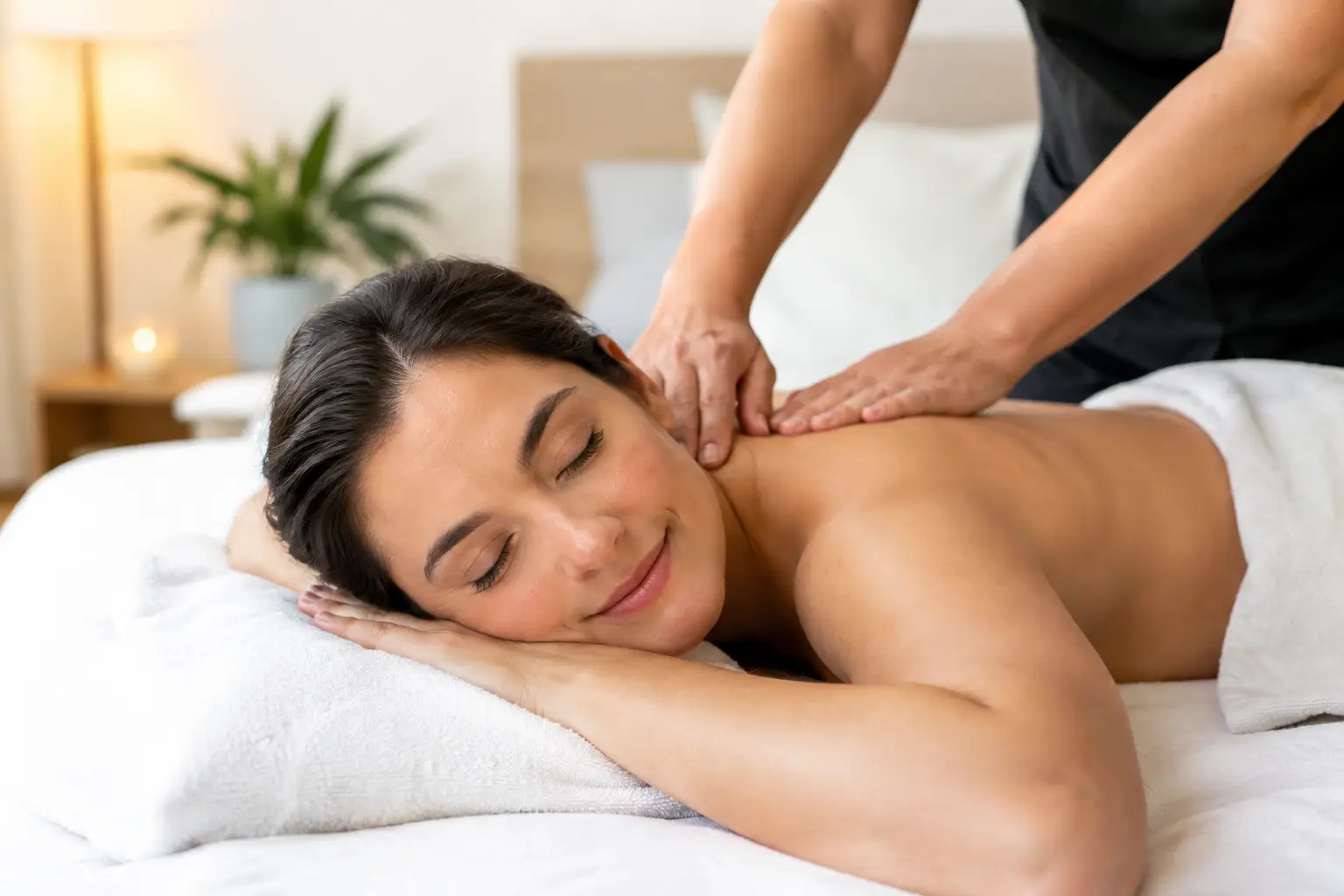
A restless night rarely begins at bedtime. It often starts with a tense neck after hours at a desk, sore legs after training, a mind still replaying work conversations, or the simple difficulty of switching from doing to resting. So, does massage improve sleep quality? For many people, it can be a valuable part of a better sleep routine because it helps the body and mind move into a calmer, more comfortable state.
Massage is not a guaranteed cure for insomnia, nor does one treatment replace medical care for persistent sleep problems. But when muscular tension, stress, discomfort or a demanding routine are getting in the way of rest, a thoughtfully tailored massage can make it easier to settle, stay comfortable and feel restored.
How massage may improve sleep quality
Quality sleep depends on more than feeling tired. Your body needs to reduce its state of alertness, your muscles need enough comfort to let you lie still, and your mind needs space to slow down. Massage can support each of these pieces at once.
A relaxation massage uses considered pressure, steady rhythm and a quiet treatment environment to encourage the nervous system to shift away from the heightened state associated with stress. Many clients notice slower breathing, a sense of heaviness through the limbs and a calmer mental pace during a session. Those changes can make the transition to sleep feel less abrupt later that evening.
There is also a physical comfort benefit. Tight shoulders, lower-back aching, post-exercise soreness and tension headaches can all make it difficult to find a comfortable sleeping position. Remedial, deep tissue or sports-focused techniques may help reduce muscle tightness and improve ease of movement when chosen appropriately. Less discomfort does not automatically mean perfect sleep, but it can remove one significant barrier to it.
Massage can also create a useful ritual. A regular appointment gives busy professionals, parents, travellers and active people a protected hour to pause. When it happens in your own home or hotel room, there is no need to drive through traffic or re-enter a noisy routine straight afterwards. You can shower, dim the lights, put your mobile away and go directly into your evening wind-down.
The connection between stress, pain and poor sleep
Stress and sleep can become a frustrating loop. Poor sleep can leave you more reactive to pressure and more sensitive to pain the following day. Stress then keeps the body tense and the mind busy at night, which can make the next sleep even lighter or more broken.
Massage does not remove the demands of a full diary, a long-haul flight or a hard training block. What it can do is offer a reset point. Gentle, personalised bodywork may help you notice where you are holding tension and give your system a chance to downshift before that tension accumulates.
For people with ongoing muscular discomfort, the choice of treatment matters. A calming relaxation massage may be best when stress is the primary issue. If persistent tightness or activity-related soreness is disturbing sleep, a practitioner may instead use a remedial approach, targeted recovery work or a combination of techniques. The goal should be improved comfort without leaving you feeling overly worked the next day.
Why more pressure is not always better
It is easy to assume that a firmer massage will deliver a better result. For sleep, that is not necessarily true. Deep tissue work can be useful for some people, particularly where specific muscle restriction is affecting comfort. Yet a very intense session can occasionally leave a person tender, stimulated or temporarily sore, especially if they are not used to it.
The right pressure is the pressure that suits your condition, preferences and timing. If your priority is a calm night, tell your practitioner. They can tailor the session towards relaxation, gentle mobility and comfortable release rather than pursuing maximum intensity.
When to book a massage for better sleep
An evening appointment can work beautifully if you would like to move straight from treatment into a quieter night. This is especially appealing with mobile massage, where the treatment comes to you and the post-massage routine can remain unhurried.
That said, evening is not the only effective time. Some people feel pleasantly energised after massage, particularly after sports or remedial work, and may prefer an afternoon session. Others sleep more deeply after a morning treatment because it reduces pain and stress carried through the day. Your response, the type of massage and what you have planned afterwards all matter.
If possible, avoid scheduling a demanding workout, a late work call or a large meal immediately after your appointment. Give yourself some breathing room. Drink water as you normally would, eat a light nourishing meal if needed and keep the rest of the evening simple.
Making the benefits last beyond the massage table
Massage is most helpful for sleep when it supports a broader routine rather than carrying the entire load. You do not need a complicated wellness plan. A few consistent signals can tell your body that the day is ending: lower the lights, keep the bedroom comfortably cool, reduce late-night scrolling and allow enough time between dinner, work and bed.
If you tend to wake because of tight hips, a sore back or stiff shoulders, ask your practitioner for practical guidance on positioning and gentle movement. Small adjustments such as pillow support, a short stretch sequence or changing how you recover after exercise can complement hands-on treatment.
For frequent travellers, a massage shortly after arrival can be particularly helpful. Hotel stays, unfamiliar beds, long periods of sitting and work pressure can all disrupt rest. A treatment tailored to travel fatigue may ease the heaviness through the back and legs while creating a calmer pause before the next day begins.
What the research and real-world experience suggest
Research on massage and sleep is promising, particularly for people whose sleep is affected by stress, pain or certain health conditions. However, results vary between study groups, massage styles and the way sleep is measured. The most realistic expectation is not that massage will instantly resolve every sleep issue, but that it may improve relaxation, comfort and perceived sleep quality for the right person.
Your own experience is useful information. Notice how you feel that night, how easily you fall asleep, whether you wake less from discomfort and how refreshed you feel the next morning. A single massage can feel deeply restorative, but regular treatments may be more beneficial when tension and stress are ongoing.
Rejuvenators practitioners tailor treatments around your goals, whether that means a gentle in-home relaxation massage after a demanding week, recovery-focused work after training or more targeted support for muscular discomfort. With 30 years of experience delivering premium mobile wellness across Australia, the focus remains simple: professional care, in a setting where you can properly unwind.
When massage is not enough on its own
Sleep difficulty can have many causes, including anxiety, depression, sleep apnoea, medication effects, hormonal changes, chronic pain and irregular work hours. Massage can be supportive, but it should not delay appropriate assessment.
Speak with your GP if poor sleep lasts for several weeks, affects your safety or daily functioning, involves loud snoring or gasping, or occurs alongside significant changes in mood. It is also wise to let your massage practitioner know about injuries, medical conditions, pregnancy, recent surgery, circulation concerns or new symptoms so your treatment can be adapted safely.
A better night often begins with making rest easier, rather than trying to force it. If your body is carrying the day in tight shoulders, aching legs or a racing mind, a tailored massage can be a calm and practical invitation to let go, settle in and give sleep a better chance.