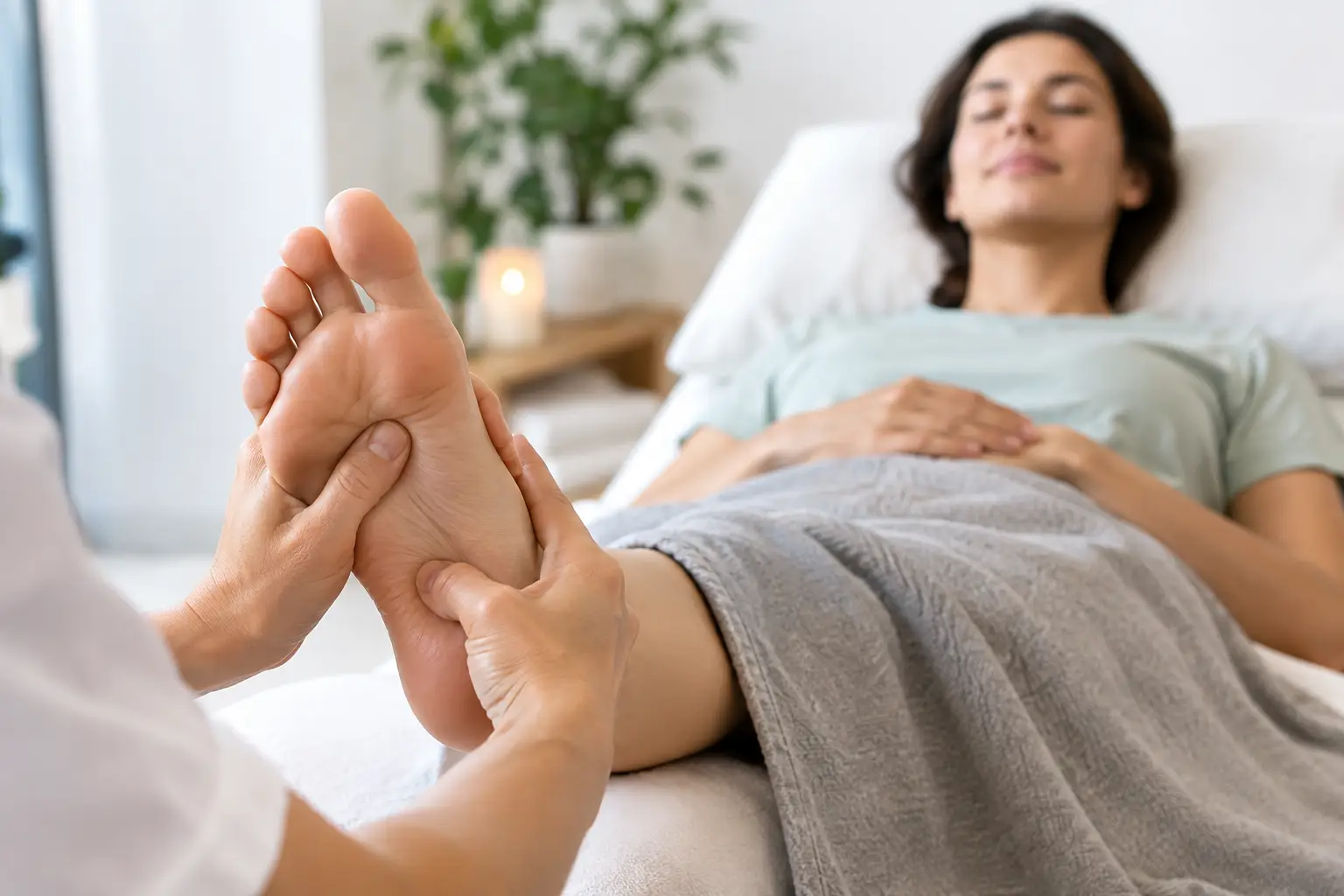
Your feet do a remarkable amount of work, particularly during weeks filled with deadlines, travel, training, family commitments and too little downtime. When your mind is racing, settling into a quiet treatment where the focus is simply on your comfort can be a meaningful circuit-breaker. Reflexology for stress relief offers a gentle, focused way to pause, settle physical tension and make space for recovery.
Reflexology is a complementary therapy centred on the feet, although some approaches also include the hands or ears. A practitioner uses considered pressure techniques across specific areas, traditionally known as reflex points. The experience is often deeply relaxing, but it is not a replacement for medical or mental health care. Think of it as one supportive part of a broader wellbeing routine – particularly when stress is showing up as poor sleep, a tight jaw, restless energy or the feeling that you never quite switch off.
Why stress can feel physical
Stress is not confined to the mind. A demanding work period, long hours at a desk, disrupted travel, intense exercise or ongoing life pressure can leave the body in a state of alert. You may notice shallow breathing, tense shoulders, headaches, digestive discomfort, fatigue or difficulty falling asleep even when you are exhausted.
A calming treatment does not remove the source of every pressure in your life. What it can do is create a protected period of rest, away from notifications, errands and decision-making. Slow, attentive touch and a comfortable environment may help you shift from doing mode into a more settled state. For many people, that reset is the immediate value of a reflexology session.
What reflexology for stress relief involves
A qualified practitioner will usually begin with a brief conversation about how you are feeling, any relevant health concerns and what you would like from the session. If stress has affected your sleep, energy, comfort or ability to relax, this helps guide the treatment.
You remain clothed, with your shoes and socks removed, and are typically positioned comfortably on a massage table, recliner or bed. The practitioner may use balm or oil, then applies varying levels of pressure, stretches and massage-style movements to the feet. The pressure should feel purposeful and comfortable, not like something you need to endure. If an area feels too sensitive, say so. A tailored treatment should adapt to you.
Some people become very quiet during reflexology; others enjoy a gentle conversation. It is also common to feel pleasantly sleepy afterwards. The setting matters as much as the technique. A mobile appointment can be particularly useful when getting across town feels like one more task on an already full list. You can stay in the comfort of home or unwind in your hotel room without needing to drive afterwards.
What the evidence says
People often choose reflexology because they find it soothing and restorative. Research into reflexology for stress and anxiety has produced mixed results, with some studies suggesting potential benefits for relaxation and perceived stress, while overall evidence is still limited and varied in quality.
That does not make the experience without value. Relaxation, supportive touch and dedicated rest can be worthwhile outcomes in their own right. It is simply sensible to be clear about what reflexology can and cannot promise. It should not be presented as a cure for anxiety, depression, chronic pain or medical conditions, and it does not diagnose illness through the feet.
If stress feels persistent, overwhelming or is affecting your daily functioning, speak with your GP or an appropriately qualified mental health professional. Reflexology may sit alongside professional care, not in place of it.
The benefits people commonly notice
The response varies from person to person, and it may depend on your stress levels, sleep, general health and expectations on the day. Still, clients commonly describe a sense of calm during the session, less physical restlessness and an easier transition into the evening.
For busy professionals, the benefit may be the rare experience of being still without needing to achieve anything. For frequent travellers, it can be a calming way to decompress after flights, unfamiliar beds and packed schedules. For active people, reflexology may complement a recovery routine when they want a lighter-touch treatment than remedial or deep tissue massage.
It is worth setting a realistic intention. Rather than expecting one treatment to solve months of pressure, use the session as an opportunity to notice how your body responds to rest. You may find that regular appointments, better sleep habits, movement, time outdoors and firmer work boundaries work more effectively together than any single wellness service alone.
When reflexology may be a good fit
Reflexology can suit people who want a calm, lower-intensity treatment and prefer focused work on the feet. It is often an appealing choice if full-body massage does not feel right for you, if you have little time to decompress, or if you simply enjoy foot treatments.
A relaxation massage may be a better fit if you want broad, flowing work across the back, neck, shoulders and legs. If your primary concern is muscular restriction, an old injury or training-related soreness, remedial massage or sports massage may be more appropriate. Your practitioner can help clarify the difference and tailor the pressure and approach to your comfort.
There are times to seek advice before booking. Let your practitioner know about pregnancy, diabetes, circulation issues, neuropathy, foot injuries, skin conditions, recent surgery, blood clots or any health condition that may affect treatment. Avoid treatment over broken skin, infection or an acute injury. A professional practitioner will welcome this information and modify the session or recommend medical clearance where needed.
Getting more from your session
The most useful preparation is simple: give yourself permission not to rush. Wear comfortable clothing, have some water beforehand and aim to leave a little space after the appointment rather than jumping straight into a demanding task.
During the session, communicate honestly. You do not need to tolerate pressure that feels sharp or uncomfortable in the hope that it will be more effective. Your treatment is designed around your needs, whether that means a quiet hour, lighter pressure, extra attention to tired feet or a slower pace that helps you settle.
Afterwards, keep the evening gentle if you can. A short walk, a warm shower, an earlier bedtime or a screen-free half hour can help extend the sense of calm. You may feel relaxed immediately, or you may simply notice later that your shoulders have dropped and your breathing feels easier.
A considered way to make time for yourself
Stress management is rarely about finding one perfect fix. It is about creating repeatable moments that tell your body it is safe to rest. For some people, reflexology becomes a regular ritual during high-pressure periods; for others, it is an occasional treatment before a busy event, after travel or when they need a quieter alternative to massage.
With an experienced practitioner, the treatment can be delivered with the same care at home, in a hotel or at a workplace wellness day. Rejuvenators brings qualified therapists and professional equipment to clients across key Australian cities, making it easier to choose restoration without adding another commute to your day.
The best time to book is often before you reach breaking point. A calm hour for your feet may be a modest commitment, but it can be a practical reminder to slow your breathing, soften your pace and give your wellbeing the attention it deserves.