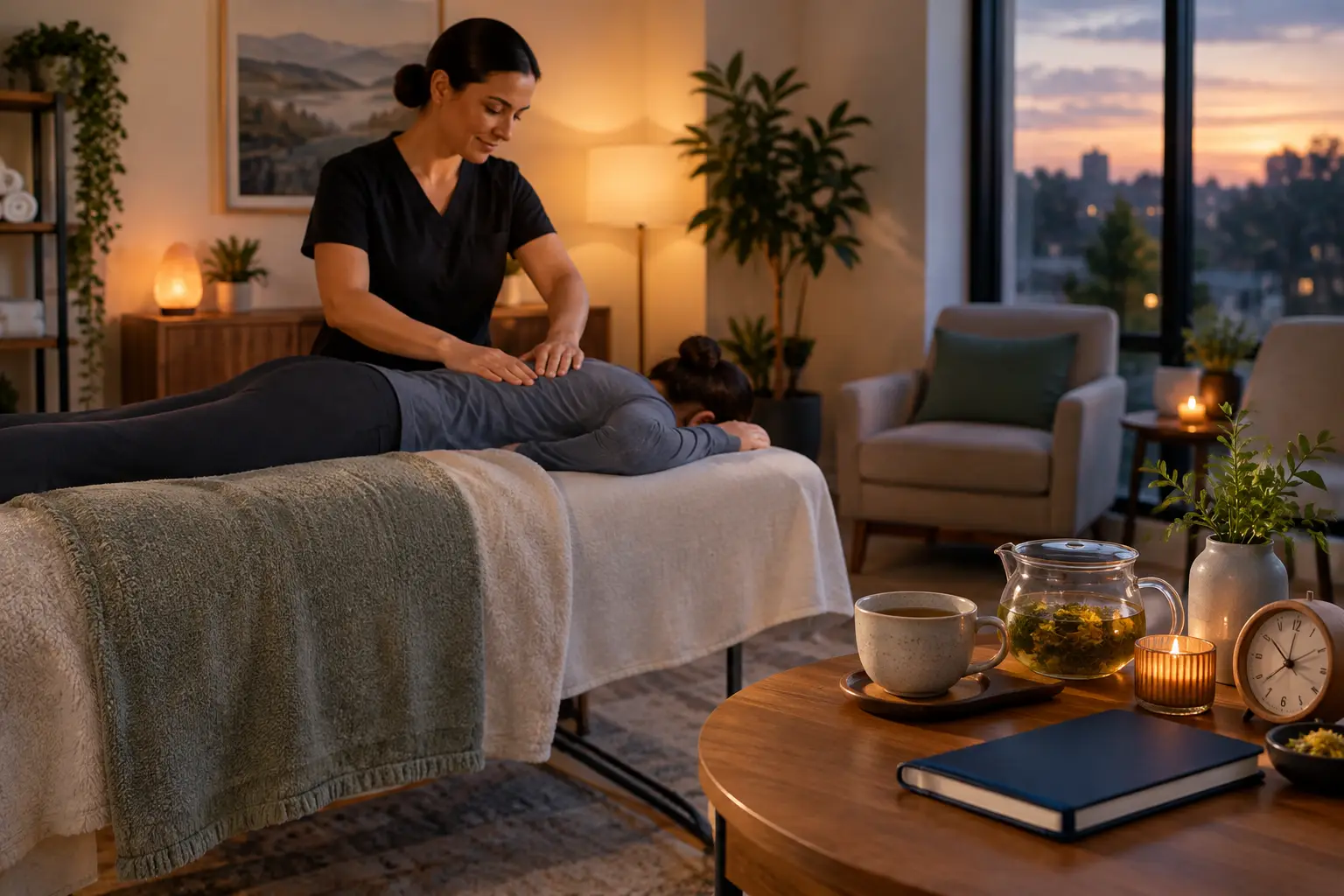
A racing mind at 2 am is rarely fixed by being told to relax. For many people, poor sleep arrives with tight shoulders, an aching lower back, post-training soreness or a nervous system that still feels switched on long after work has finished. So, can massage improve sleep? For some people, it can be a meaningful part of a better sleep routine, particularly when physical tension, stress or discomfort are making it hard to settle.
Massage is not a cure for every sleep problem, and it should not replace medical care for persistent insomnia, sleep apnoea or other diagnosed sleep conditions. But a well-timed, tailored treatment can help create the physical and mental conditions that make restful sleep more likely.
Can massage improve sleep by calming the body?
Sleep depends on more than feeling tired. Your body needs to shift from an alert, problem-solving state into a calmer recovery state. When deadlines, travel, pain or a demanding training schedule keep your system on high alert, that transition can be difficult.
Massage may support this shift through touch, warmth, a quieter environment and focused attention on areas of tension. Many clients notice slower breathing, a softer jaw and less guarding through the neck, back or hips during a session. This sense of unwinding can make it easier to begin a bedtime routine without carrying the whole day into bed.
The effect is often most useful for people whose sleep is disrupted by stress or muscle discomfort. A relaxation massage may suit someone who feels mentally overloaded and physically restless. Remedial, deep tissue or sports-focused massage may be more appropriate when tight, overworked muscles are contributing to soreness that interrupts sleep. The right approach is not necessarily the firmest one. If a treatment is overly intense or leaves you feeling tender and stimulated, booking it immediately before bed may not be the best fit.
Why tension and pain can keep you awake
It is hard to find a comfortable position when your body is asking for relief. Neck tension may make every pillow feel wrong. A heavy training week can leave legs unsettled. Hours at a desk, in a car or on a flight can create a low-level ache that becomes much more noticeable once the room is quiet.
Massage can reduce the feeling of muscular tightness and improve short-term comfort and movement for many people. That may mean fewer position changes overnight or an easier time dropping off. The benefit is not simply mechanical. When discomfort eases, people often feel less preoccupied with their body, which can reduce one more barrier to relaxation.
It depends on the source of the pain, however. New, severe or unexplained pain needs proper assessment, especially if it comes with numbness, weakness, fever, swelling, chest pain or a recent injury. Massage is best viewed as supportive care within a considered approach, not a reason to push through symptoms that need medical attention.
Massage, stress and the bedtime thought loop
Stress does not always feel dramatic. It can show up as clenched hands, shallow breathing, headaches, a tight chest or the inability to stop mentally replaying tomorrow’s to-do list. A massage session creates a protected period in which there is nothing to perform, decide or manage.
That matters for busy professionals, parents and frequent travellers who may move from work to dinner to screens with no real transition. The experience of being still, warm and cared for can become a useful cue that the working day is over. It will not remove the cause of every stressor, but it may help break the pattern of arriving at bedtime already wound tight.
Which massage is best for better sleep?
There is no single sleep massage. The best choice depends on what is keeping you awake and how your body responds to treatment.
A gentler relaxation massage is often the most natural option when stress, general tension and difficulty switching off are the main concerns. Long, flowing techniques and a calm pace are designed to encourage a settled, restorative feeling.
Remedial massage can be useful when specific muscular tension or recurring aches are affecting comfort. Your practitioner can assess the areas involved and tailor pressure and techniques around your goals. If you have been working at a laptop, carrying a baby, travelling for business or dealing with persistent postural strain, focused work through the relevant muscles may make bedtime feel more comfortable.
For active people, sports or recovery-focused massage can help after demanding training blocks and events. Timing matters. A strong deep tissue session can leave some people feeling energised or temporarily sore, so consider scheduling it earlier in the day or one to two days before an important early night. A lighter recovery treatment may be a better choice in the evening.
Some people also enjoy reflexology or calming complementary therapies as part of a broader wind-down ritual. The most valuable element is often the personalised treatment plan: a practitioner who understands whether your priority is relaxation, recovery, mobility or relief from a particular area of discomfort.
How to time massage for sleep
An evening massage can feel wonderfully restorative, particularly when it happens in your own home or hotel room. There is no commute afterwards, no traffic, and no need to re-enter a busy environment just as your body has begun to settle. You can have a shower if needed, dim the lights, drink some water and move gently towards bed.
That said, there is no universal ideal time. Some people sleep deeply after a late-afternoon or evening treatment. Others prefer a morning or lunchtime session because they feel pleasantly alert afterwards. If you are new to massage or know you are sensitive to deeper work, try a session on a night when you do not have an early start the next day.
For the best chance of a calming result, avoid treating massage as another task to squeeze into an overbooked evening. Leave some space after the appointment. Skip intense exercise, minimise work emails and avoid going straight into a noisy social event. Give the treatment room to do its job.
Make the benefit last beyond the massage table
Massage tends to work best as one part of a practical sleep plan. The goal is not perfection. It is to give your body consistent signals that it is safe to slow down.
After a treatment, keep your routine simple: eat a light evening meal if you need one, reduce bright screens, keep the bedroom comfortably cool and aim for a similar bedtime most nights. If thoughts are circling, write down tomorrow’s priorities before getting into bed rather than trying to solve them under the doona.
Pay attention to patterns over several weeks. Do you sleep better after a gentler treatment than a firmer one? Does massage help most after travel, before a stressful presentation or during heavy training? Your response is useful information. Share it with your practitioner so each session can be adjusted to better support your recovery.
When massage is not enough
If poor sleep lasts for weeks, affects your concentration or mood, or leaves you dangerously sleepy during the day, speak with your GP. Snoring with gasping or pauses in breathing, restless legs, ongoing anxiety and medication side effects can all need specific support. Massage may still feel beneficial, but it should sit alongside the right assessment and treatment.
Pregnancy, recent surgery, blood-clotting conditions, acute inflammation and certain health conditions may also change what is appropriate. A qualified practitioner should ask about your health history and adapt the session accordingly. Comfort and safety come first.
For Australians who need restoration without adding another trip across town, an experienced mobile practitioner can make the wind-down feel far more achievable. Rejuvenators brings tailored massage to homes and hotels, allowing the calm of treatment to continue where you plan to sleep. Choose the pressure, timing and treatment style that leave your body feeling settled, then protect that feeling with a quieter evening and a little room to rest.