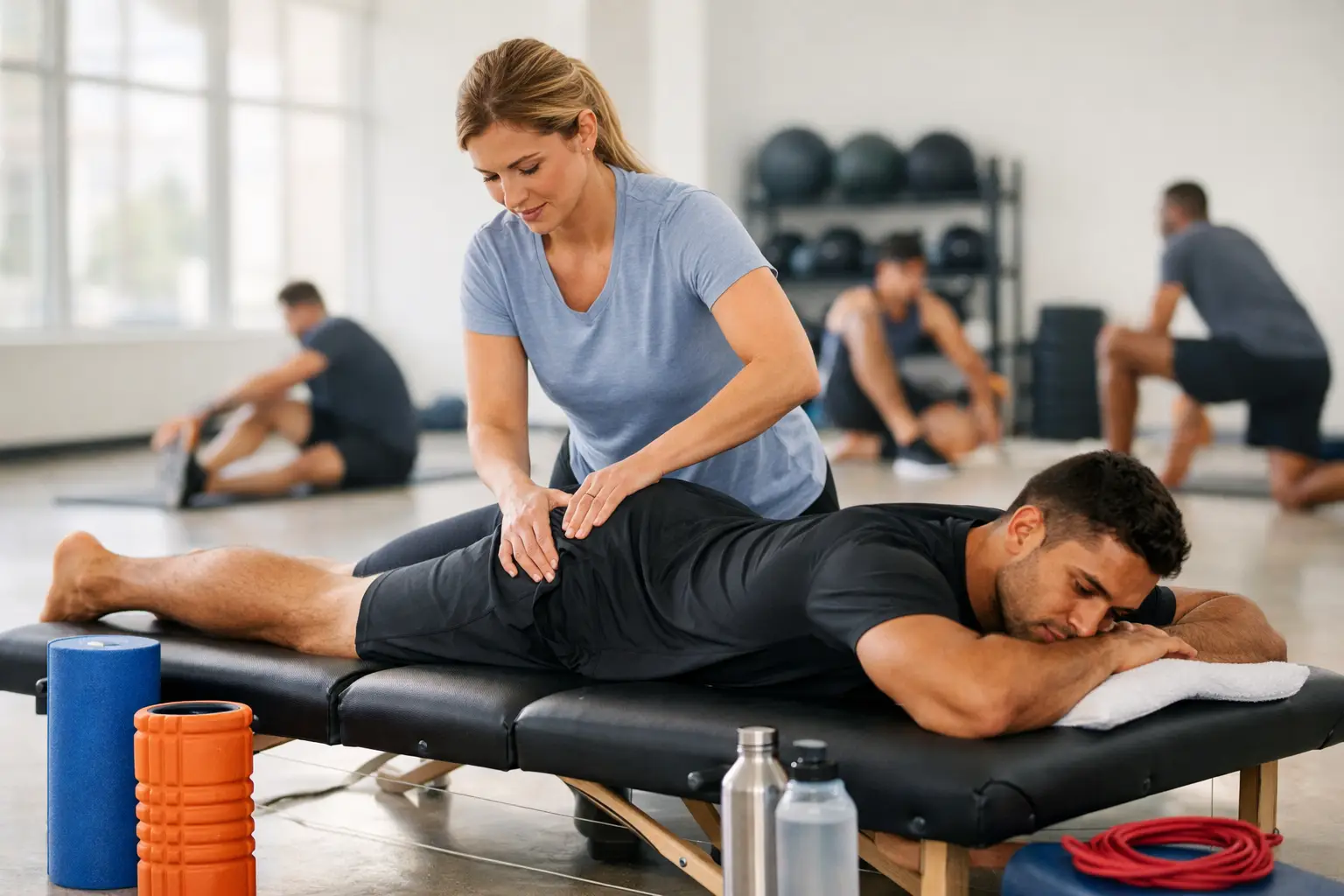
Hard training can leave more than sore muscles behind. Heavy legs, restricted movement, poor sleep and a nervous system that still feels switched on can all affect how you show up for the next session. Athlete recovery massage offers a practical way to slow down, assess what your body needs and create space for more comfortable movement.
Whether you train for a marathon, play weekend sport, lift regularly or simply enjoy staying active, recovery deserves the same attention as your programme. The right massage is not about pushing through pain or treating every tight spot with maximum pressure. It is a tailored treatment designed around your training load, current symptoms and next goal.
What is athlete recovery massage?
Athlete recovery massage is a targeted treatment that supports the body after physical exertion. Depending on how you are feeling, your practitioner may use flowing relaxation techniques, remedial-style muscle work, sports massage methods and gentle mobility-focused approaches.
The purpose is to help reduce the feeling of muscular heaviness and tension, promote circulation, support comfortable range of motion and encourage your body to settle after demanding activity. It can be useful after a big event, during a hard block of training, after travel, or when your usual exercise routine has left you feeling less mobile than normal.
A quality session starts with listening. Your practitioner should ask about the activity you have completed, where you feel restricted, any injuries or health conditions, and what is coming up next. A runner preparing for another long run has different needs from someone recovering after a gym session or a football match.
Why recovery is more than muscle soreness
Soreness is only one part of recovery. Training places physical and mental demands on the body, particularly when sessions are frequent, sleep is disrupted or work and travel are added to the mix. You might notice tension in the shoulders after cycling, stiff hips after strength training, or calves that feel constantly loaded during a running build.
Massage cannot replace sleep, nutrition, sensible programming or appropriate medical care. It can, however, complement those foundations by providing a calm, hands-on reset. For many active people, the greatest benefit is not a dramatic change overnight. It is the ability to move more freely, feel more aware of their body and step into the next training session without carrying unnecessary tension.
There is also a practical nervous system benefit. When your schedule is full, it can be difficult to move directly from work, training and family commitments into genuine rest. A quiet treatment can help create that transition, particularly when it is delivered in the comfort of your home or hotel room.
The right pressure depends on timing
A common misconception is that a recovery massage must be deep and intense to be effective. In reality, pressure should match your condition and timing.
After an event or especially strenuous session, aggressive work on already sensitive muscles may leave you feeling more tender. A lighter, circulation-focused treatment is often the more comfortable choice. During a normal training week, firmer remedial or sports massage techniques may be appropriate for an area that feels persistently tight, provided there is no acute injury or unusual pain.
If you have an important race, competition or training session within the next day or two, tell your practitioner. The goal may be to leave you feeling refreshed and mobile, rather than deeply worked over. This is where an experienced approach matters: more pressure is not automatically better care.
When massage may need to wait
Massage is not the answer to every post-training issue. Seek prompt medical advice for sharp pain, significant swelling, numbness, unexplained weakness, a suspected fracture, fever, chest pain or symptoms that do not settle as expected. A practitioner should also know about recent surgery, blood clotting concerns, skin conditions, pregnancy, medications and any diagnosed injury.
Good recovery care is never about ignoring warning signs. It is about choosing the right support at the right time.
When to book a recovery-focused session
There is no single ideal schedule. Some athletes book regularly during high-volume training periods, while others arrange a session after an event, a long flight or a particularly demanding week. Your preferred timing depends on your sport, training history, budget and how your body responds.
A recovery massage may be particularly helpful when your legs feel heavy for several days, your range of movement has reduced, you are noticing recurring tightness in familiar areas, or you simply need dedicated time to switch off. It can also be a considered addition before an event, as long as the treatment is lighter and you allow enough time to see how your body feels afterwards.
For busy professionals who fit training around early starts and late meetings, convenience can make the difference between recovering well and putting it off. A mobile appointment removes the extra commute, allowing you to finish your treatment and remain in a restful environment rather than heading back into traffic.
How to get more from your treatment
Your session works best when it is part of a broader recovery routine. Arrive ready to communicate honestly about your training and how you are feeling. If a technique is too strong, say so. If you are concerned about a particular area, mention it before the treatment begins rather than waiting until the end.
Afterwards, keep the rest of the day sensible where possible. Hydrate according to your normal needs, eat a nourishing meal, take an easy walk if it feels good and prioritise sleep. You do not need to avoid all movement, but it is wise to let your body respond before adding another very intense session.
It can also help to notice patterns over time. Perhaps your hips tighten after long drives, your upper back feels loaded during stressful work periods, or your calves need more attention when your running volume climbs. These observations give your practitioner useful context and make future treatments more precise.
A tailored treatment, wherever recovery fits
At Rejuvenators, qualified mobile practitioners arrive equipped to deliver a recovery-focused massage in your home, hotel or workplace. The experience is designed around your body and your schedule, with treatment pressure and techniques adjusted to your training demands, comfort and recovery goals.
For athletes and active people, that flexibility matters. You may need an easing treatment after a long event, more focused work during a training block, or a calming session that helps you settle before a busy week ahead. Professional care should feel considered, not generic.
Recovery is a skill worth practising
The most effective recovery routines are usually the ones you can maintain. They do not rely on a single treatment or a perfect schedule. They combine intelligent training, adequate rest, good nutrition, mobility where it helps and timely support when your body is asking for it.
Treat recovery as part of your training, not the reward you earn after it. A well-timed massage can be a valuable moment to check in, reset and give your body the care it needs to keep moving with confidence.