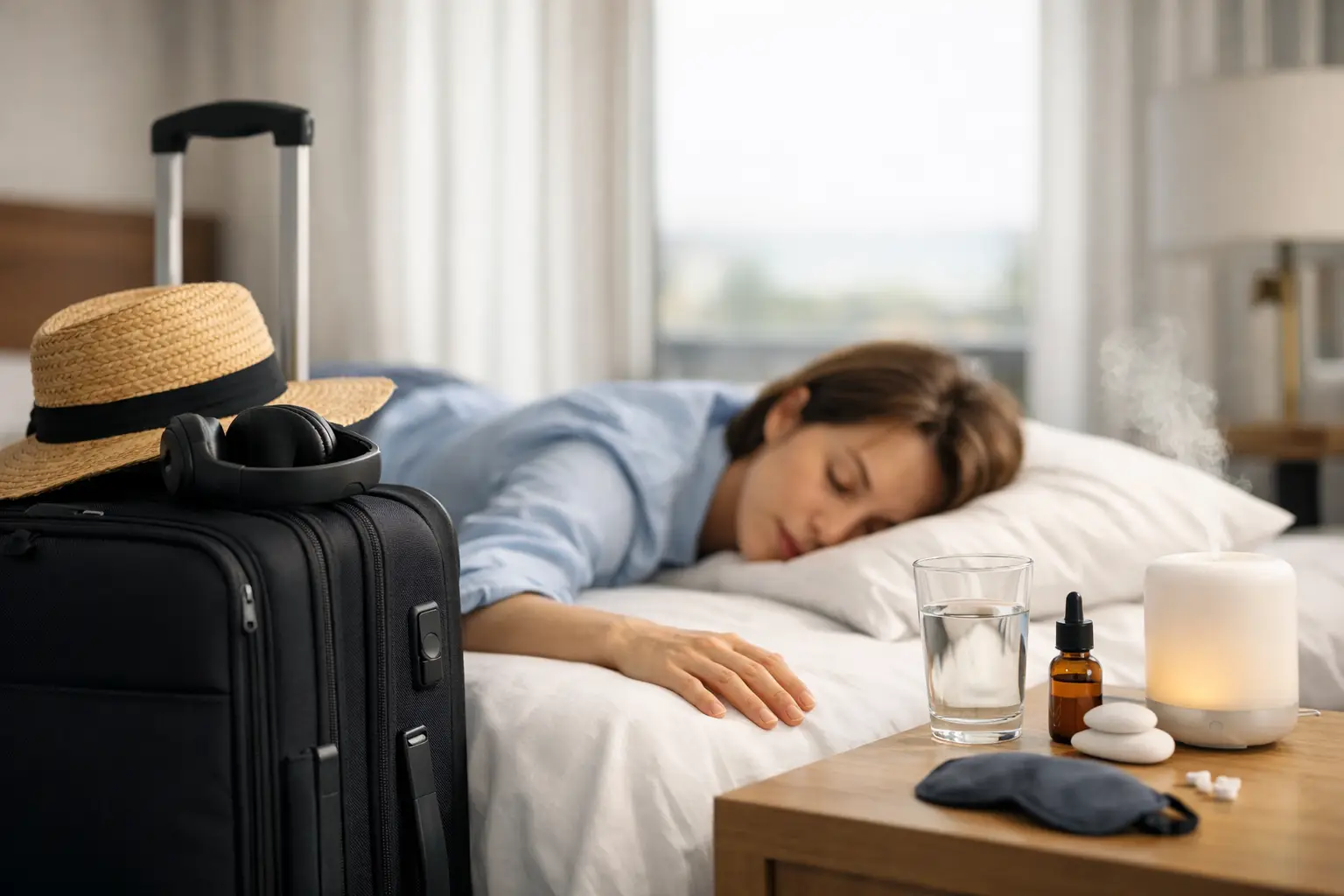
You have checked into the hotel, unpacked the essentials and finally stopped moving, yet your body is still somewhere between time zones. Your legs feel heavy, your neck is tight, your head feels foggy and sleep arrives at the wrong hour. The best treatments for travel fatigue address more than simple tiredness. They help settle a stressed nervous system, ease the physical effects of sitting still for hours and give your body the conditions it needs to reset.
Travel fatigue can follow a short interstate flight, a long-haul journey or several days spent moving between airports, meetings and unfamiliar beds. There is no single fix for everyone. The right approach depends on whether you are dealing mostly with muscular tension, disrupted sleep, dehydration, swelling or a combination of all four.
Why travel leaves the body feeling off balance
A flight may look restful from the outside, but the body experiences it differently. Hours of limited movement can leave the hips, lower back, calves and shoulders feeling restricted. Dry cabin air, missed meals and too little water can compound fatigue, while alcohol or extra coffee may make it harder to sleep properly later.
Crossing time zones adds another layer. Your internal body clock is guided by light exposure, meals, activity and sleep. When these signals suddenly change, concentration, digestion, mood and energy can all feel unsettled. Even without jet lag, the effort of travel can leave the nervous system switched on long after you have arrived.
Best treatments for travel fatigue: start with the body
Tailored massage for stiffness and heavy legs
A professional massage is one of the most effective ways to move from travel mode into recovery mode. The right pressure and technique can ease common post-flight tension through the neck, shoulders, back, hips and calves, while giving you a rare opportunity to properly stop and unwind.
For travellers who feel generally tense and overstimulated, relaxation massage can encourage a calmer, more settled state. Long, flowing techniques are particularly suited to the first evening after a demanding journey, when the goal is to rest rather than push through another task.
If your discomfort is more specific – perhaps your lower back has tightened after a long flight or your shoulders are aching after carrying luggage – remedial or deep tissue massage may be a better fit. These treatments can focus on particular areas of muscular restriction and support more comfortable movement. A qualified practitioner should tailor the session to how you are feeling on the day, rather than applying the same approach to every traveller.
For guests in a hotel or busy professionals arriving home late, mobile massage removes one more demand from the recovery plan. Instead of travelling to a clinic while exhausted, you can receive considered bodywork where you are already staying, then continue straight into rest.
Gentle movement to restore circulation
Massage works best alongside light movement, not instead of it. You do not need a hard gym session after a flight. In fact, intense exercise when you are under-slept and dehydrated can feel worse. A 15 to 30-minute walk in daylight, a few gentle calf raises and easy mobility through the hips, chest and upper back are usually enough to make a meaningful difference.
Think of movement as a signal to your body: the journey is over, and normal rhythm can begin again. If you have meetings ahead, a short walk before your first appointment can improve alertness without the energy crash that sometimes follows another coffee.
Recovery-focused therapies for a deeper reset
Some travellers need more than a standard unwind. Recovery-focused massage, reflexology and complementary therapies may suit people who feel physically depleted after a demanding itinerary, sporting event or several consecutive flights.
PEMF and vibroacoustic therapy are also options for those seeking a quiet, restorative session alongside hands-on care. The experience is designed to support relaxation and recovery, though the best modality will depend on your comfort, health history and what is available through your practitioner. These therapies are not a substitute for medical assessment where symptoms are concerning or persistent.
Rehydrate, refuel and reset your sleep cues
Treatments can make you feel more comfortable, but recovery also depends on what happens around them. Start with water regularly throughout the day, particularly if you have spent hours in air-conditioned cabins or consumed alcohol while travelling. Adding a balanced meal with protein, fibre and colourful fruit or vegetables can be more stabilising than grabbing sugary snacks between commitments.
Avoid trying to correct fatigue with excessive caffeine. A coffee in the morning may be useful, especially after a poor night, but late-afternoon caffeine can prolong the very sleep disruption you are trying to solve. Similarly, alcohol may make you feel sleepy initially, but it can fragment sleep and leave you less restored the next day.
For time-zone changes, daylight is one of the strongest tools available. Get outside in the morning if you need to shift earlier, or seek light later in the day if you are adjusting to a later schedule. Keep naps brief if you need one – ideally around 20 minutes – so they take the edge off without making bedtime difficult.
Make the first night easy
The first night after travel does not need to be perfect. Aim for a calm landing routine instead: a warm shower, a light meal, reduced screen brightness and a room that is cool, dark and quiet. If you are staying in a hotel, this is where an in-room massage can be especially valuable. You do not need to navigate a new suburb or spend more time in transit when your body is ready to settle.
Try to eat and sleep close to the local schedule, even if your appetite and energy are not fully cooperating yet. Consistency over the next day or two is usually more helpful than attempting an elaborate wellness routine all at once.
Choose the treatment that matches your trip
A business traveller arriving before a presentation may benefit most from a focused neck, shoulder and back treatment, followed by hydration and an early night. Someone returning from a long-haul holiday might prefer a slower relaxation massage to release whole-body tension and create a proper transition back home.
Active travellers have different needs again. If you have combined flights with skiing, hiking, cycling or a race, sports massage or recovery-focused bodywork may help address muscular soreness and mobility concerns. The pressure should feel purposeful, not punishing. More intensity is not always better when you are tired, dehydrated or not sleeping well.
At Rejuvenators, qualified mobile practitioners can tailor massage and complementary therapies for hotel guests, homes and workplaces across major Australian cities. It is a polished, practical option when recovery matters but time and energy are in short supply.
When travel fatigue needs medical advice
Most post-travel fatigue improves with rest, fluids, gentle movement and a few nights of consistent sleep. However, do not assume every symptom is normal jet lag. Seek urgent medical care for chest pain, shortness of breath, fainting, coughing blood, or new swelling, warmth, redness or pain in one leg. These symptoms require prompt assessment, particularly after a long flight.
It is also wise to speak with a health professional if fatigue is severe, lasts longer than expected, comes with fever or unusual symptoms, or if you have a health condition that affects circulation, sleep or recovery. A therapist can adapt bodywork to your needs, but they should not be asked to diagnose a medical problem.
Travel can be demanding even when everything runs to schedule. Give yourself permission to build recovery into the itinerary: a little daylight, a little movement, nourishing food, real rest and personalised care can help your arrival feel less like a crash and more like a reset.