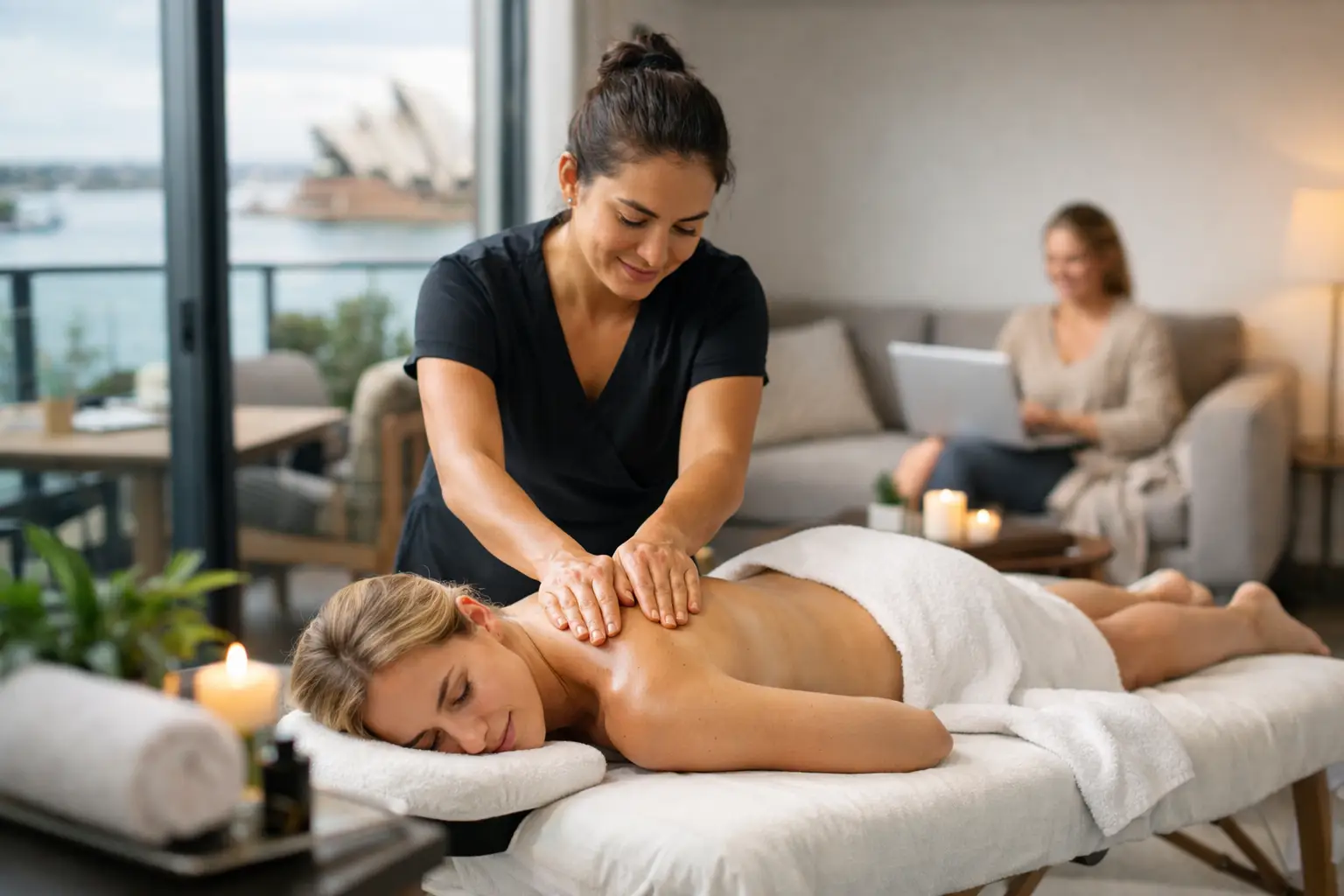
A tight neck after a long day in the CBD, heavy legs after training, or a hotel room that still feels like an extension of the office can make it hard to properly switch off. Mobile massage Sydney gives you a more considered option: qualified treatment delivered where you already are, without adding a commute, parking or a waiting room to your day.
The real value is not simply that the therapist comes to you. It is the chance to create a treatment around your body, your schedule and the outcome you need, whether that is a quieter nervous system, easier movement, support for post-exercise recovery or time set aside purely to rest.
Why mobile massage Sydney suits busy lives
Sydney runs on full calendars. Between work, family, training, travel and the everyday logistics of getting across the city, a clinic appointment can be one more task to organise. An in-home or hotel massage removes much of that friction. You can finish a session and remain in the comfort of your own space rather than stepping straight back into traffic or public transport.
That matters because rest is not limited to the time on the massage table. The slower period afterwards is often when people notice the benefit most. At home, you can have a shower, drink water, put your feet up or head to bed. In a hotel, you can return to your room rather than trying to navigate an unfamiliar area while feeling relaxed and sleepy.
Mobile treatment also makes sense for practical reasons. A parent with limited childcare, a professional working from home, someone recovering from a demanding week, or a guest attending back-to-back meetings may all find it easier to book care around real life. Convenience should not mean a rushed or generic experience. A well-run service brings a professional table, fresh linen and the equipment needed to create a calm, hygienic treatment setting.
Choose your massage around the outcome you want
The best massage is not necessarily the firmest one. It is the one that matches how your body feels, your health history and what you want from the session. A clear conversation before treatment helps the practitioner adjust pressure, focus areas and technique accordingly.
For stress, sleep and a complete reset
Relaxation massage is designed for the moments when your shoulders feel permanently raised and your mind is still moving at full speed. Long, flowing techniques and comfortable pressure can help you settle into a slower rhythm. It is a strong choice after an intense work period, while travelling, or when you want to make a quiet evening at home feel genuinely restorative.
For couples, a shared mobile massage can turn a birthday, anniversary, staycation or ordinary weekend into time that feels deliberately protected. The aim is not to fill the room with complicated wellness rituals. It is simply to create space to pause together.
For muscular tension and everyday aches
Remedial and deep tissue approaches may be more appropriate when particular areas feel tight, overworked or restricted. Common concerns include desk-related neck and shoulder tension, a sore lower back after a long drive, or tired hips and calves from a busy training block.
More pressure is not automatically better. Effective therapeutic work is responsive rather than forceful. Your practitioner should check in, work within your tolerance and adapt if an area is particularly sensitive. Some people prefer focused work on one or two problem areas; others need a balanced full-body session with extra attention where it is most useful.
For training, sport and recovery
Sports massage is often selected by runners, cyclists, gym-goers and people preparing for or recovering from physically demanding activity. Depending on timing and your goals, treatment may focus on easing post-session heaviness, maintaining comfortable movement or helping you feel more prepared before an event.
Recovery is personal. A deep, intense session the night before a race may not suit everyone, just as gentle work may feel too light for someone dealing with ongoing muscular tightness. Let the practitioner know what activity you have done, what is coming up and how your body has been responding. That context makes treatment more useful.
For a gentler wellbeing focus
Reflexology, lymphatic-style treatments and complementary recovery therapies may appeal when you are looking for a softer, more restorative experience. These options can be especially welcome after travel, during a period of high stress, or when you would prefer not to have deep pressure.
The right modality depends on your preferences and circumstances. A qualified practitioner can explain what the session involves and help you choose an approach that feels appropriate, rather than expecting you to know the technical differences before you book.
What to expect from a mobile massage in Sydney
A premium mobile appointment should feel organised from the first interaction. Before treatment begins, your practitioner will usually ask about your goals, areas of concern, relevant injuries, recent activity and any health considerations. This is not paperwork for its own sake. It helps shape a session that is safe, comfortable and tailored to you.
You do not need a dedicated treatment room. A clear, private area with enough floor space for the massage table is usually sufficient. Your lounge room, bedroom, hotel suite or quiet office space can often work well. The practitioner arrives equipped and sets up the table, linen and any required materials, so you can focus on settling in.
During the massage, feedback is encouraged. Mention if the room is too cool, the pressure needs changing, or an area feels tender in a way that is not comfortable. Skilled bodywork is collaborative. Your treatment should never feel like something being done to you without your input.
Afterwards, allow a little breathing room if possible. You may feel deeply relaxed, lighter through the muscles or pleasantly tired. Gentle movement, water and an unhurried evening can help you make the most of that change of pace.
Making room for care at home, at work or away
At home, mobile massage is ideal when comfort and privacy are the priority. It gives you the freedom to book an evening session after the household has settled, a weekend appointment between commitments, or a recovery treatment when leaving the house feels like the last thing you need.
For hotel guests, it can be a practical antidote to travel fatigue. Long flights, conference days and unfamiliar beds can leave the body feeling out of rhythm. An experienced mobile provider understands the standards expected in premium accommodation and can deliver a polished treatment experience that fits around dinner reservations, meetings or check-out times.
Workplace massage serves a different purpose. Short, well-timed sessions can provide a welcome reset for teams during demanding periods, wellness activations or corporate events. The format needs to suit the setting, available space and schedule, but the goal is consistent: help people step away briefly and return feeling more comfortable and composed.
Rejuvenators has spent 30 years delivering this kind of care across Australia, serving more than one million clients and working with over 800 premium hotels. Those details matter when you are inviting a practitioner into your home, hotel or workplace. Experience supports the quiet essentials: punctuality, presentation, practitioner quality and a service that feels dependable from booking through to pack-down.
How to prepare for a better session
A little preparation can make the appointment feel even more restorative. Keep it simple:
- Choose a room where you will not be interrupted and clear enough space for a massage table.
- Wear comfortable clothing before and after your session, particularly if you are heading to bed or travelling later.
- Tell your practitioner about recent exercise, injuries, sensitivities or areas you would rather avoid.
- Avoid booking a deep treatment immediately before an activity that requires maximum physical output, unless you have discussed the timing with your practitioner.
You do not need to clean the whole house, create a spa soundtrack or know exactly which massage style to request. A good practitioner will guide the conversation. Your only job is to arrive as you are and be honest about what would help.
When another kind of care may be needed
Massage can be a valuable part of a wellbeing or recovery routine, but it is not the answer to every physical concern. New, severe or unexplained pain, significant swelling, numbness, fever, a suspected fracture or symptoms following an accident should be assessed by an appropriate health professional before massage is considered.
It is also wise to share relevant medical conditions, pregnancy, recent surgery, medication changes or skin concerns when booking. In some cases, treatment can be adapted. In others, postponing or seeking medical advice first is the sensible choice. Professional care means knowing when a massage is suitable and when it is not.
The most useful wellbeing routines are the ones you can actually keep. Whether you need a quiet hour after a difficult week, focused support for hardworking muscles, or a more comfortable way to recover while travelling, bringing skilled care to your door can make looking after yourself feel possible again.