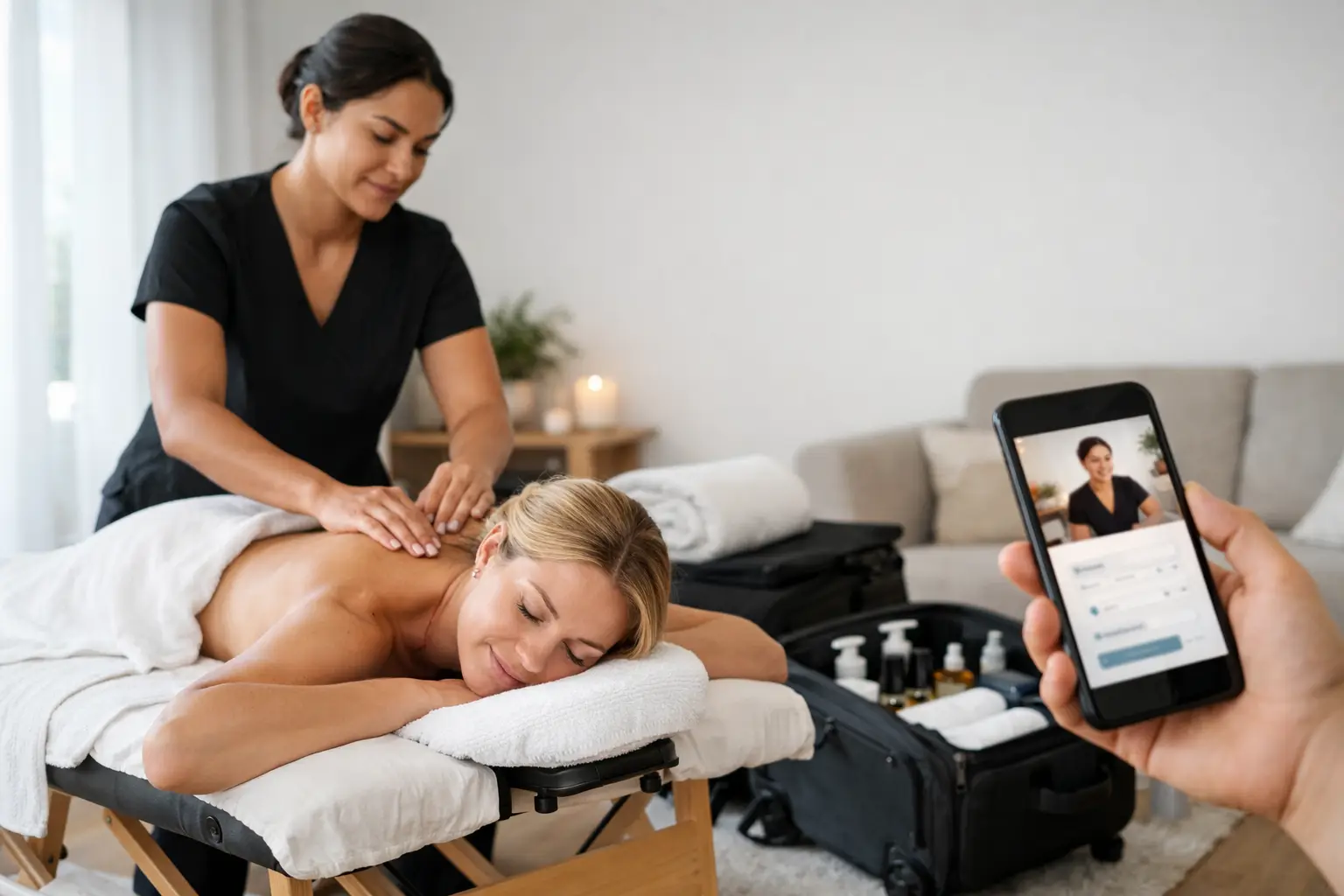
A quality treatment can lose some of its benefit when it starts with traffic, parking, a waiting room and the rush of getting back out the door. That is exactly why more Australians want to know how mobile massage appointments work. The short answer is simple: a qualified practitioner comes to you with the equipment, sets up a professional treatment space, tailors the session to your needs and leaves you free to keep resting afterwards.
What makes the mobile model appealing is not only convenience. For many people, it is the easiest way to fit proper bodywork into real life. If you are managing neck and shoulder tension from desk work, recovering after training, staying in a hotel between meetings or simply wanting to reset at home, mobile treatment removes a layer of friction without lowering the standard of care.
How mobile massage appointments work from booking to treatment
Most mobile appointments begin with an online or app-based booking process. You choose your location, preferred time, treatment style and session length, then provide a few practical details such as access, parking, room number or any health information relevant to the session. This part matters more than people sometimes realise. Good information helps the practitioner arrive prepared and shape the treatment around your goals from the outset.
Once the booking is confirmed, your therapist travels to your home, hotel, workplace or event venue with professional equipment. That usually includes a portable massage table, fresh linen, oils or balms and any other tools needed for the service. If you have booked a specialist therapy such as recovery-focused bodywork or a complementary modality, the equipment may vary, but the principle stays the same: the treatment room comes to you.
On arrival, there is a brief consultation before anything begins. This is where you discuss pain points, injuries, recent training load, stress levels, pressure preferences and what you want from the session. Some clients want deep, targeted remedial work. Others want a slower treatment to calm the nervous system and ease general tension. A good mobile appointment should feel personalised rather than pre-set.
The practitioner then sets up in a suitable space. In most homes, that means a bedroom, living area or another private room with enough floor space for the table and room to move around it. In hotels, it is often just a matter of clearing a small area near the bed or window. You do not need a dedicated wellness room or special equipment of your own.
What you need to prepare before the therapist arrives
Very little, which is part of the appeal. The main requirement is space. A portable table generally needs enough room for the therapist to walk around both sides, so moving a coffee table or chair can help. If the room is quiet, comfortably temperate and reasonably private, that is usually enough.
Fresh showered skin is appreciated, but there is no need to overthink presentation. Mobile massage is a professional service, not a performance. Wear comfortable clothing before and after the treatment, and if you are in a hotel, a robe can make the transition feel even easier.
If you have specific concerns, mention them in advance or during the consultation. That might include pregnancy, recent surgery, acute inflammation, a current injury or a medical condition that affects pressure, positioning or circulation. In some cases, parts of the treatment may need to be modified. Occasionally, a therapist may advise that a different service or medical clearance is more appropriate. That is a sign of professionalism, not inconvenience.
What happens during a mobile massage appointment
Once the room is set and the consultation is complete, the treatment follows much the same clinical and professional standards you would expect in a quality clinic. You will be given privacy to get on the table and position yourself under the draping. The therapist will explain what to expect, including whether they are starting face down or face up and how they will check in on pressure.
From there, the session is guided by your treatment goals. A relaxation massage may use broad, flowing techniques to reduce stress and create a sense of calm. Remedial or deep tissue work may focus more closely on restricted areas such as the neck, shoulders, lower back, glutes or calves. Sports and recovery sessions often respond to training load, event preparation or post-exercise soreness. The environment may be calmer than a clinic simply because you are already in familiar surroundings.
One of the biggest differences is what happens immediately after. Instead of getting dressed quickly, walking to reception and heading back into the day, you can stay where you are. That extra quiet time often helps the body absorb the benefits of treatment, especially if the goal is stress relief, sleep support or nervous system regulation.
How mobile massage appointments work for different settings
At home, the experience tends to feel the most restorative. There is privacy, no travel afterwards and the option to continue resting once the therapist has packed up. This is ideal for busy professionals, parents, people managing pain and anyone who values recovery without extra logistics.
In hotels, mobile massage is especially useful for business travellers, interstate guests and people arriving stiff from flights or long days of meetings. The convenience is obvious, but there is also a quality factor. Being treated in your room allows you to preserve your downtime instead of navigating an unfamiliar area to find a clinic.
In workplaces and at events, appointments are often adapted for the setting. That may mean shorter sessions, more structured scheduling and treatments designed around employee wellbeing, guest experience or recovery support. The format changes, but the core idea does not: qualified practitioners bring professional care to the location where people already are.
Common questions about comfort, safety and professionalism
A common first concern is whether mobile massage feels as professional as a clinic visit. It should. A reputable provider sends qualified practitioners, uses proper hygiene protocols, conducts a consultation and tailors the session with clear boundaries and professional standards. Convenience should not mean compromise.
Another concern is pressure and treatment quality. Some people assume a portable set-up means lighter or less effective work. In reality, the outcome depends far more on practitioner skill, communication and treatment planning than on whether the session takes place in a clinic room or your spare bedroom.
Privacy also matters. Mobile appointments are designed to be discreet and respectful. You can choose the room, control the environment and communicate any preferences around conversation, music, draping or focus areas. For many clients, that control makes the experience more comfortable, not less.
When mobile massage is the better option and when it depends
Mobile treatment is an excellent fit when time is tight, travel is inconvenient or rest afterwards is part of the outcome you want. It suits people with demanding schedules, limited mobility, busy family life or a preference for wellness at home. It can also be a strong choice for hotel guests and corporate settings where convenience is part of the value.
That said, it depends on your needs. If you require highly equipment-based treatment or a complex clinical assessment, another style of appointment may sometimes be more appropriate. Likewise, if your home environment is noisy or cramped, the experience may not feel as calming as it could in another setting. A good provider will be upfront about what works best for your goals rather than forcing a one-size-fits-all service.
Providers with depth of experience tend to manage these variables well. Rejuvenators, for example, has spent 30 years delivering professional mobile wellness services across major Australian cities, supporting everyone from home clients to hotel guests and corporate teams. That kind of scale matters because it shows the model is not a novelty. It is a refined service designed to be reliable, polished and effective.
After your appointment
When the treatment ends, the therapist packs down the table and leaves the space as they found it. You may receive simple aftercare guidance based on the session, such as drinking water, taking it easy for a few hours, stretching gently or noticing how the treated area responds over the next day.
Some people feel immediate relief. Others notice the change later, once the body settles. Deep or remedial sessions can occasionally leave mild soreness, much like exercise, especially if the work addressed long-held tension. That is normal when appropriate pressure has been used, but it should not feel alarming or excessive.
The real beauty of mobile care is what happens next. You are already where you need to be. No commute, no rush, no abrupt return to the outside world. If your goal was to recover, reset or simply feel more like yourself again, that extra ease is not a small detail. It is part of the treatment itself.