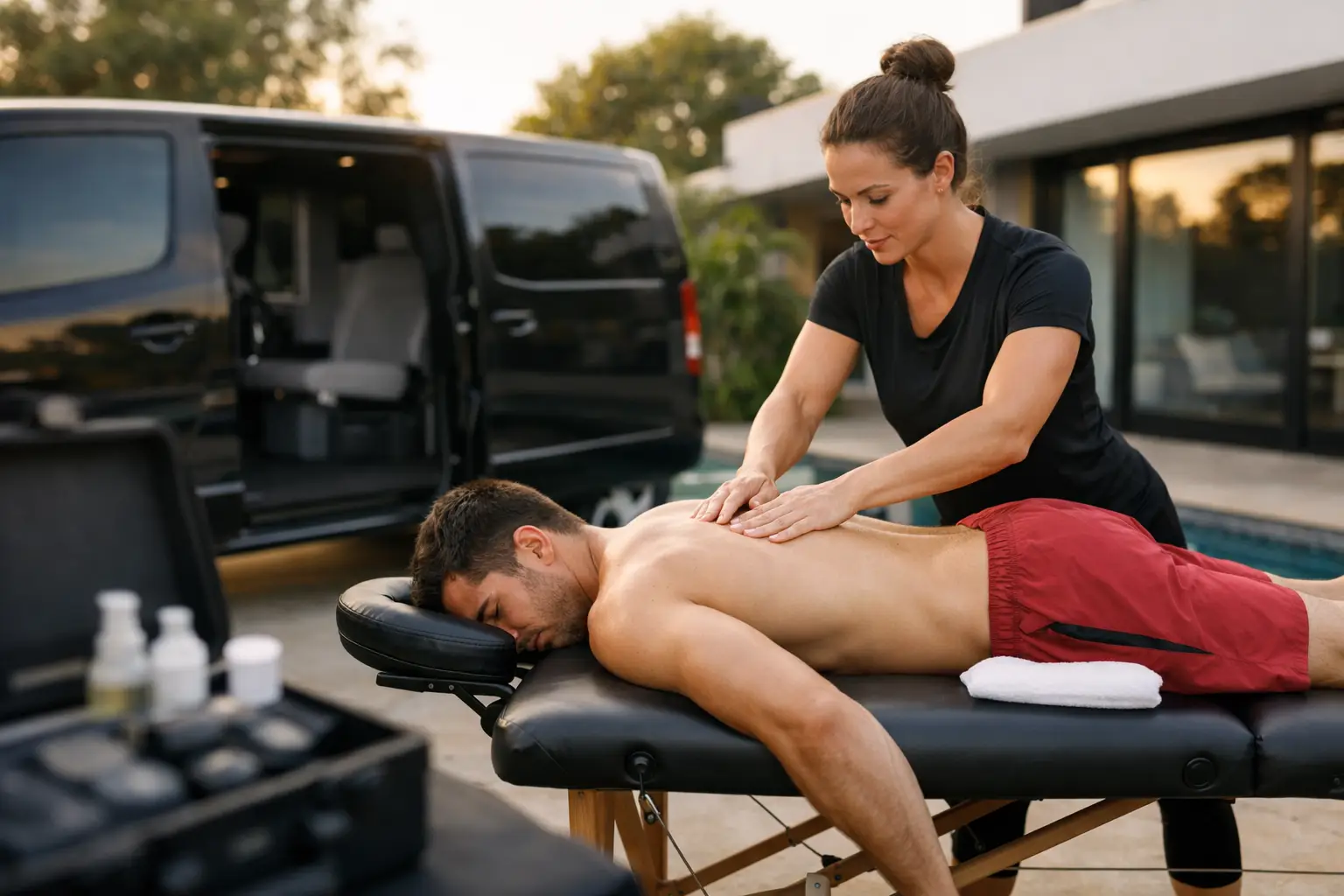
The day after a hard session can tell you more than the session itself. Heavy legs on the stairs, tight hips at your desk, shoulders that still feel loaded from the gym – this is usually when a sports massage recovery service becomes less of a luxury and more of a sensible part of training.
For active people, recovery is where progress holds or falls away. Training creates the stimulus, but recovery is what allows the body to adapt. The right treatment at the right time can help reduce muscular tension, improve movement quality and make the next session feel more productive instead of punishing. When that care is delivered in your home, hotel or workplace, it also removes one of the biggest barriers to looking after your body properly – time.
What a sports massage recovery service actually does
A sports massage recovery service is designed to support the body after physical exertion, repeated loading or sport-specific strain. That does not mean it is only for elite athletes. It suits runners, cyclists, gym-goers, tradies, corporate professionals training before work, and anyone whose body is carrying the effects of effort.
The treatment itself is usually more focused than a general relaxation massage. Your practitioner works with the areas under the most stress, which may include calves, hamstrings, glutes, lower back, shoulders or forearms depending on your sport or routine. The pressure and technique are adjusted to your condition, whether you need post-event flushing, targeted muscular release, or a more measured session to address persistent tightness.
Good recovery work is never one-note. Sometimes your body responds well to firmer pressure. Other times, especially after intense training or travel, a gentler approach supports better results. The point is not to push through discomfort for the sake of it. The point is to help tissue quality, circulation and mobility improve in a way that fits where your body is on that day.
Why recovery support matters more than people think
Most active adults are quite disciplined with training and far less consistent with recovery. That is understandable. Training has a start time, a program and a visible goal. Recovery can feel easier to postpone until stiffness becomes pain or performance starts to dip.
A well-timed sports massage recovery service can help interrupt that cycle. It may assist with the heavy, restricted feeling that follows hard effort, especially when muscle groups are repeatedly loaded without enough down time. It can also be useful when poor posture, long hours sitting, travel or stress are compounding what training is already asking of the body.
There is a practical mental benefit as well. When your body feels less guarded and movement feels easier, it is often simpler to stay motivated and train consistently. Recovery treatment is not a replacement for sleep, hydration or sensible programming, but it can support all of them by helping you feel more physically settled.
Who benefits from a sports massage recovery service
You do not need to be preparing for a marathon to benefit from this type of care. In fact, many clients who book recovery-focused treatment are balancing exercise with busy lives, long workdays and limited windows for self-care.
If you train several times a week, carry recurring tightness, or feel that one area is constantly compensating for another, a targeted session can be worthwhile. The same goes for hotel guests arriving after flights, people attending sporting events, and professionals who spend all day at a laptop before trying to train at night.
It is also useful for those returning to exercise after a break. When the body is rebuilding tolerance, it often sends clear messages through soreness, stiffness and restricted mobility. Recovery massage can help make that transition more manageable, provided expectations stay realistic and treatment is part of a broader approach.
What to expect from an in-home recovery session
Convenience only matters if the standard of care stays high. A professional mobile session should feel polished from the beginning – clear booking, confirmed arrival, proper equipment and a practitioner who takes the time to understand your goals, recent activity and any problem areas.
Treatment usually starts with a short discussion about what your body has been doing. That may include your training load, event schedule, prior injuries, current soreness and how you want to feel afterwards. From there, the session is tailored. One client may need lower-body work after a long ride. Another may need upper-back, neck and shoulder release after travel and back-to-back meetings.
The home setting has obvious advantages. There is no commute afterwards, no need to get back in the car while your body is trying to settle, and no waiting room eating into your evening. For many people, that makes it easier to actually book treatment when they need it, rather than delaying until the issue becomes harder to manage.
Sports massage recovery service and timing – when to book
Timing matters because the same body can need very different treatment depending on when the session happens.
After an event or demanding training block, some people benefit from a recovery-focused massage within the next day or two. The aim here is generally to support circulation, reduce the sense of muscular congestion and encourage easier movement. That does not mean the body should be worked aggressively. If tissue is already highly sensitive, heavy pressure can be counterproductive.
Before an event, treatment tends to be more selective. The goal is usually to help the body feel prepared and mobile without leaving muscles feeling overworked. If you are managing a niggle, the approach may be more about maintaining comfort and range rather than trying to force a big change just before performance.
For ongoing maintenance, it depends on your training volume, job demands and how your body tends to hold stress. Some people do well with regular sessions every few weeks. Others book around major events, busy travel periods or harder training phases.
The difference between recovery and remedial work
There is overlap between recovery massage and remedial-style treatment, but they are not identical. Recovery work is often centred on how your body feels after exertion and what will support your next phase of movement. Remedial treatment may be more directed towards specific dysfunction, pain patterns or long-standing muscular issues.
In practice, a skilled practitioner may blend elements of both. If you book for recovery and it becomes clear that a recurring restriction is affecting your training, the session can be adapted. That flexibility is one of the strengths of personalised mobile care. The treatment responds to the body in front of the practitioner, not a fixed script.
Why mobile care suits modern recovery habits
For many Australians, the problem is not a lack of interest in wellbeing. It is logistics. Between work, family, commuting and training, recovery often gets squeezed into whatever time is left. Mobile treatment changes that equation by bringing the service to the place where recovery can actually happen.
That matters for busy professionals, frequent travellers and active households. It also matters for people who simply recover better in familiar surroundings. When you can step straight from the massage table to the shower, couch or bed, the treatment tends to feel more integrated into your day instead of another errand to manage.
This is where an experienced provider stands apart. Rejuvenators has spent 30 years delivering premium mobile wellness services across major Australian cities, with more than 1 million clients served and preferred supplier status at over 800 premium hotels. That scale matters because reliability matters. Recovery should feel easy, not uncertain.
Choosing the right sports massage recovery service
Not every session marketed as sports massage is genuinely tailored. Look for a provider that treats the service as individual care rather than a generic deep-pressure routine. Recovery is not about how intense the massage feels. It is about whether the treatment matches your condition, your schedule and your goals.
Qualified practitioners, clear communication and a professional setup all count. So does flexibility. Some days your body will want targeted work. Other days it will need a calmer, more restorative approach that helps your nervous system settle as much as your muscles.
That is often the difference between a treatment that simply feels strong and one that actually helps you recover well.
If your training, travel or work routine keeps asking more from your body than your schedule comfortably allows, the smartest recovery plan may be the one you can realistically stick to – expert care, delivered where you are, exactly when your body is asking for it.